Lifetime Citizen Portal Access — AI Briefings, Alerts & Unlimited Follows
District leaders present $43.7M budget, propose fees and staffing shifts to close $2.5M gap
Loading...
Summary
Cedar Grove Township School District leaders presented a $43.69 million budget that closes a $2.5 million shortfall through staffing realignments, cuts to co‑curricular funding, a proposed annual activity fee ($75 middle, $125 high school, cap two per household) and referendum projects that would be 40% state-funded and 60% taxpayer-funded.
The Cedar Grove Township School District presented a $43,694,322 budget and a plan to close an initial $2.5 million shortfall at its April 14 public hearing.
Dr. T, the district leader who led the presentation, said the district recorded a net enrollment increase of about 50 students year‑over‑year and is projecting kindergarten enrollment of roughly 160–165 students, which will require opening an additional kindergarten section in South End. "The demand for our schools remains high in our community," Dr. T said, noting the growth pressures on space and services.
The presentation outlined major cost pressures. Dr. T said health‑care costs were projected to rise about 35%, which created the most significant challenge in building a balanced budget. "We began the building of this budget with a $2,500,000 gap," he said, and described several strategies to close it: eliminating one high‑school position, reducing co‑curricular funding by roughly 20%, moving some full‑time positions to part‑time through attrition, reducing overtime and introducing an annual student activity fee for grades 5–12.
Dr. T described the proposed activity fee as $75 per middle‑school student and $125 per high‑school student, capped at two students per household. "Those are some of the key right‑sizing strategies," he said, while emphasizing the budget still includes investments in curriculum and programs.
Business Administrator Cheryl Vallejo presented revenue and expenditure detail. Vallejo said the general fund tax levy base is $33,600,000 (a 2% base increase), with a health‑care levy adjustment of about $894,000 and an enrollment adjustment of about $286,832, producing a total general fund tax levy of $34,812,795. State categorical aid was shown as $2,922,197 and pilot funds at $1,200,000. "Our total budget is $43,694,322," Vallejo said.
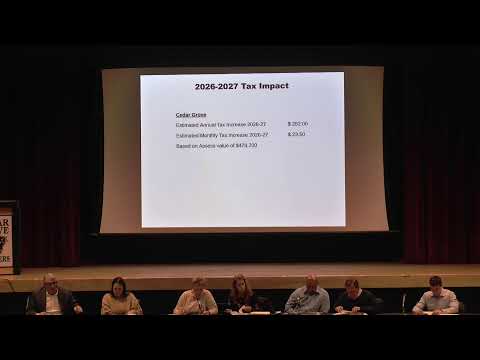
On the expenditure side, Vallejo said instructional programs total about $13,062,000, special education $7,900,000, employee benefits $9,900,000, support services $6,200,000 and operations and maintenance about $3,700,000. She provided a tax‑impact example: a house valued at $478,700 would see an annual increase of $282, or about $23.50 per month, under the proposed levy changes.
The superintendent and committee members tied facilities needs to a planned referendum: a facilities committee report listed multiple HVAC units beyond repair and roof work at elementary buildings and said the state would cover 40% of referendum costs with 60% borne by local taxpayers. Dr. T said the district is holding off large‑scale community outreach until final approval is received on one remaining referendum project; once finalized, the district plans a community newsletter and forums and is targeting a September 15 referendum vote.
Board members asked clarifying questions during and after the presentations, including which HVAC units were original versus temporary and details about co‑curricular reductions. The district leader said he would meet with paraprofessional staff to explain staffing steps and timelines.
The board did not take a final vote on the budget at the hearing; the meeting continued with consent and personnel items. The district said more details about the referendum projects and an updated cost for the one outstanding project would be shared with the community before engagement ramps up.