Bay City presentation says 73% of streets rated poor, estimates $15M/year needed to restore system
Loading...
Summary
City engineering manager presented the 2026 Transportation Asset Management Plan, reporting about 73% of the city's streets are in the PASER "poor" category, that the annual construction budget is roughly $2 million, and that raising the overall system to a fair condition would require roughly $15 million per year over 20 years; city will use a $5 million United Bridge Partners fund to match grants.
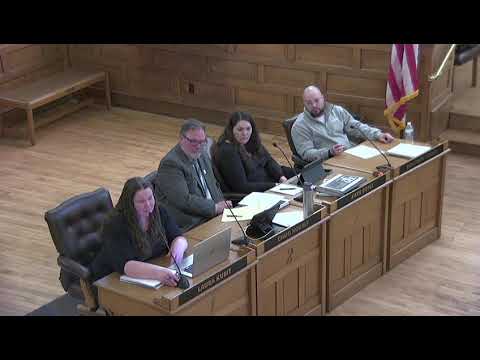
Rachel Phillips, the city engineering manager, told the Bay City Commission on April 20 that the city's road system is in poor condition and that current funding will not stop long‑term decline. "Our road system as a whole is about 73% in the poor category," Phillips said, citing the PASER pavement rating tool used by the department.
Phillips said the city's road network has a replacement‑construction value of about $600,000,000 and that the municipal road construction budget is approximately $2,000,000 per year. She explained lifecycle modeling that shows routine, timely maintenance keeps costs low, while neglect leads to far higher replacement costs: an example in the presentation estimated under $1,000,000 over 20 years for a well‑maintained mile, versus more than $2,100,000 for full reconstruction if left to fail.
The presentation compared investment scenarios for the next 20 years and concluded that, in current dollars, the system will worsen on a $2 million annual program. "It would take $15,000,000 each year over 20 years to be able to get our system overall up to a fair condition," Phillips said on the podium.
Commissioners questioned details about the PASER scale, fiscal year timing and how project lists map to construction seasons. Phillips clarified PASER is scored 1–10, with 1–4 considered poor and 5–8 fair, and explained some projects are shown in multi‑year slides that reflect fiscal timing and grant schedules rather than calendar construction seasons.
On funding, Phillips said roughly 93% of the city's road construction revenue currently comes from Act 51 distributions (state gas taxes and vehicle registration revenues). She described the city's reliance on grants in recent years and said the city is working to increase grant capture with a grant writer who has been on staff about nine months.
Phillips described a $5,000,000 contribution from United Bridge Partners that the administration plans to use as a grant‑matching pool. "This plan involves utilizing up to half of the funding to provide matching funds for grants at a capped amount each year," she said, adding that matching $2.5 million could leverage more than $3 million of construction work in a season.
Commissioners pressed for more local revenue options. The chair and other commissioners discussed the possibility of a roads millage; Phillips provided a back‑of‑envelope example during the meeting and staff estimated that a 3‑mill levy might translate to about $150 annually on a $100,000 property taxable value, though commissioners asked staff to provide precise figures. Phillips also said some limited local revenue sources have included marijuana tax receipts, permit fees and scrap sales, but cautioned those streams are irregular.
The presentation closed with a summary of outreach and transparency efforts: a construction update email group, interactive maps and a "construction corner" on the DPW Facebook page. Phillips gave an email for signups: engineering@baycitymi.gov.
The commission did not take formal action on policy changes at the meeting; the presentation was received and commissioners asked staff to provide more detail on specific project costs and funding allocations.