Get Full Government Meeting Transcripts, Videos, & Alerts Forever!
Get email alerts on the Housing Assistance topic
No spam. Unsubscribe anytime.
DART and NHSD describe relocation assistance and Opportunity Homes referrals
Summary
Neighborhood Housing staff outlined relocation assistance for renters, the SYNC referral program for high‑need clients, and an Opportunity Homes partnership with about 600 units available for referrals; staff gave case examples of aid provided and said most referrals are handled through partner agencies.
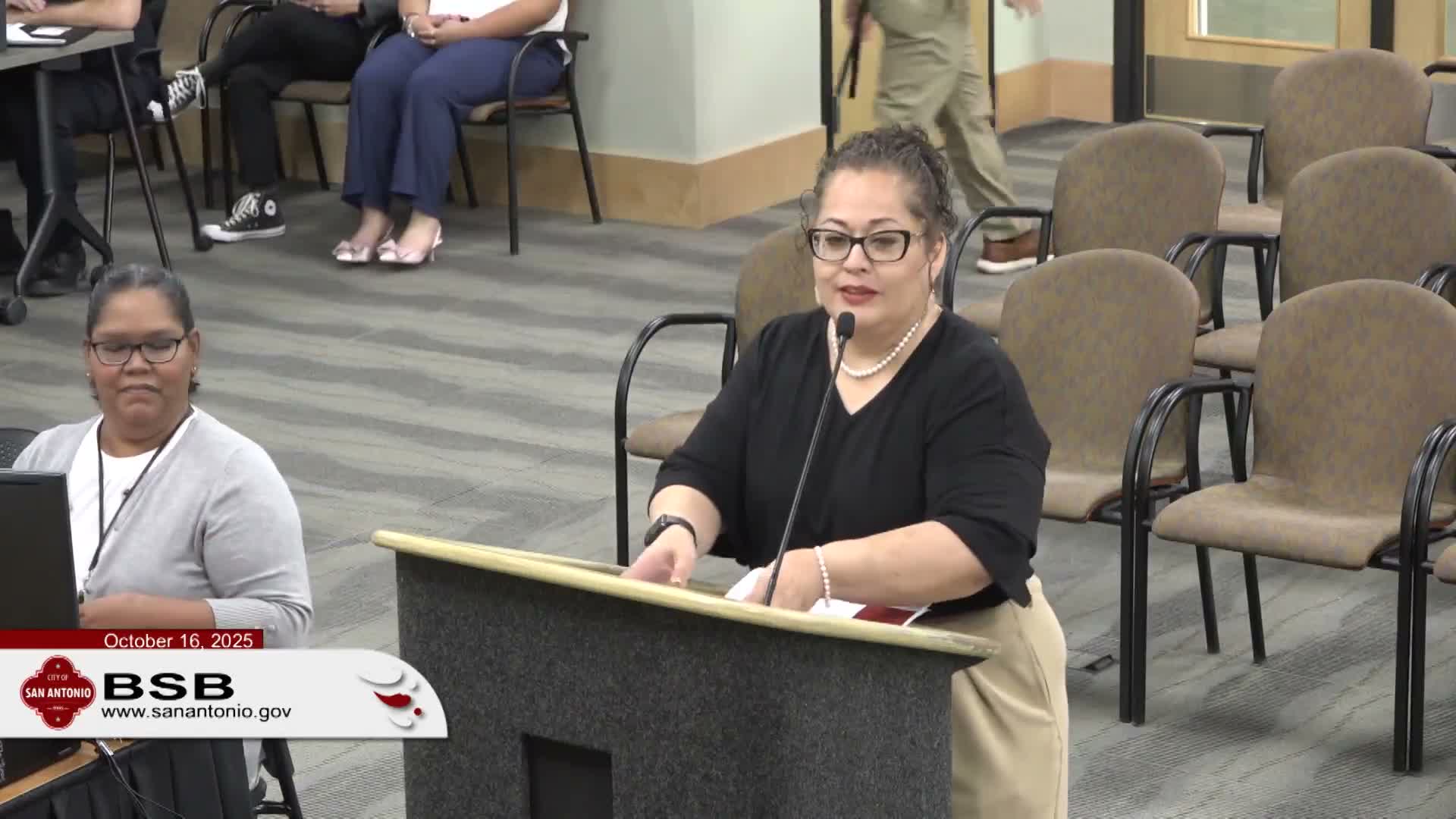
Emma Lara Rodriguez, a senior family support worker on the DART team, briefed the board on relocation-assistance tools and referral programs used to keep properties from advancing to enforcement. She said relocation assistance is administered through NHSD for renters only and can cover security deposits, application/admin fees, moving costs and related charges; payments are made directly to vendors or landlords and credited to tenants’ accounts.
Rodriguez reviewed examples from a two‑year period (2023–2025): five relocation applications were processed with mixed outcomes (one applicant received $467 in relocation assistance, others either did not qualify by area median income or received aid through partner organizations such as Haven for Hope). She described the SYNC program (referrals for high‑need clients including those recently incarcerated) and said referrals require a signed permission form for HIPAA‑compliant outreach to partner agencies.
On Opportunity Homes (the new name for a referral partnership formerly known to some members by a prior brand), Rodriguez said the program offers roughly 600 units across about 35 properties that provide below‑market rents for eligible referrals; staff said those units are available for referrals and that the DART team makes the initial referral to the Opportunity Homes representative.
Board members asked operational questions—whether relocation funds are reimbursed or upfront and how program packets are handed to residents; staff said funds are typically paid directly to vendors/landlords and that resource packets are carried to site visits and after‑action meetings to ensure residents receive information at first contact.