Get Full Government Meeting Transcripts, Videos, & Alerts Forever!
Get email alerts on the Vacant Buildings topic
No spam. Unsubscribe anytime.
City staff outlines vacant building program and plans to increase enforcement
Summary
The Office of Historic Preservation told the Building Standards Board the vacant building program covers roughly half the city, requires owner registration with a 90‑day registration window, and has an inventory that typically ranges from about 800–1,000 properties; staff said enforcement activity will increase under the FY2026 budget.
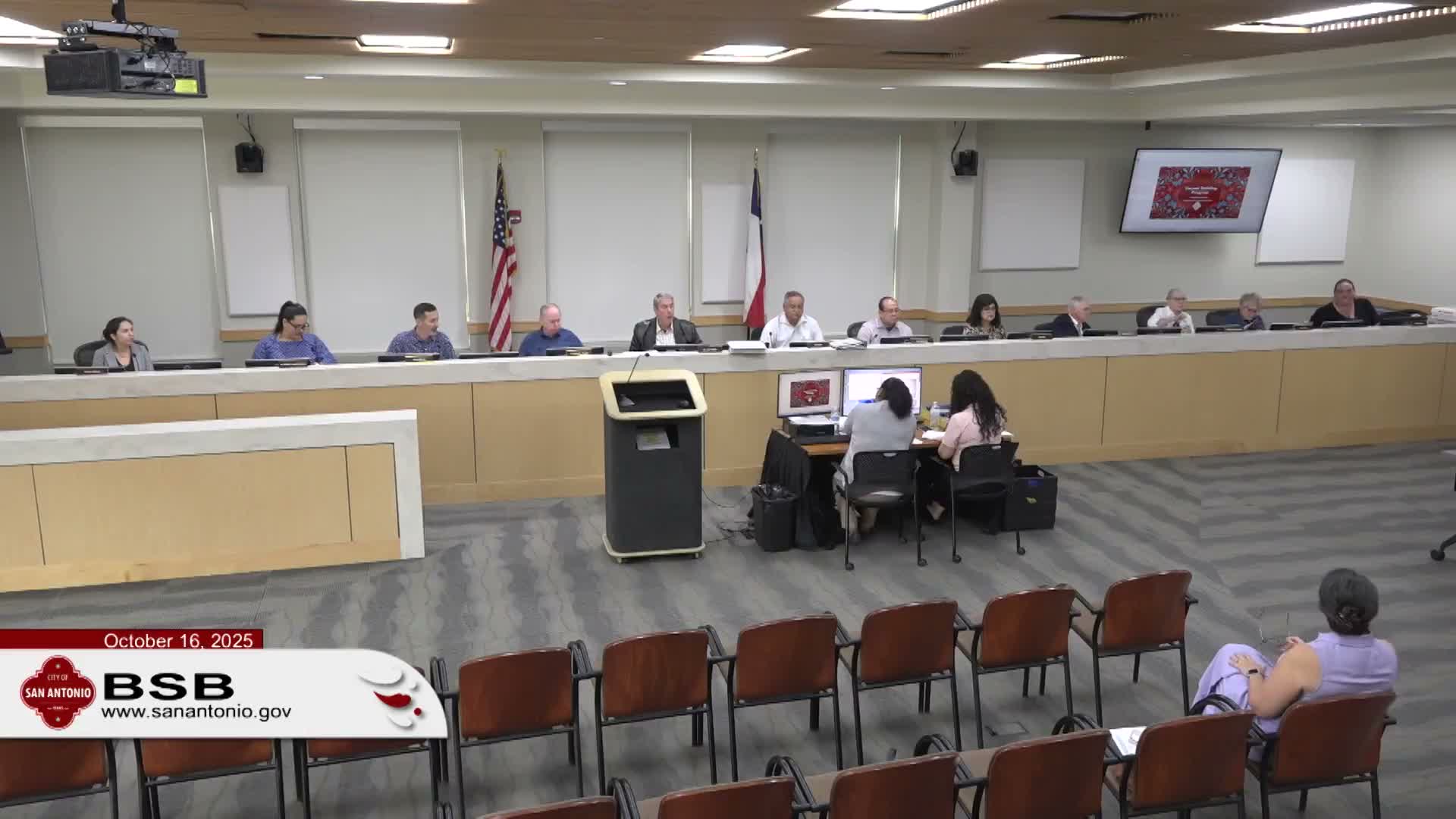
Kathy Rodriguez, deputy historic preservation officer, presented the city’s vacant building program and described how the program operates and how staff work with owners.
Rodriguez said the program began as a 2015 pilot focused on downtown and expanded to cover roughly 200 square miles (about half of San Antonio). Properties brought into the program are registered and owners are given 90 days to register; failure to register can lead to a municipal court filing. Rodriguez clarified that the program aims to prioritize reuse and rehabilitation rather than immediate punitive action and that from initial identification to potential court action the process typically takes about six months.
Staff said the inventory generally fluctuates between 800 and 1,000 properties, most of them single‑family and locally owned. Since the program’s creation, Rodriguez said about 1,100 properties have been repaired, reoccupied or sold. She told the board that the city has increased filings for failure to register, raised owner contact rates by about 40% over the previous period, and that the FY2026 budget authorizes heightened enforcement and a dedicated code officer to support increased filings and inspections.
Rodriguez described exemptions and practical steps for owners: single‑family owner‑occupied properties that meet a minimum ‘standard of care’ are not subject to the program; registered owners must annually renew registration, file a no‑trespassing affidavit and submit a plan of action for reuse or repairs. She also said staff provide case management and connect owners with nonprofit and city resources for title issues or repairs, and that the program’s website includes an interactive map and inventory for public lookup.
The board asked about how properties are identified and how the program coordinates with Development Services. Rodriguez and staff said identification is a mix of proactive surveys, DSD notifications of dangerous premises and public reports; the vacant building team aims to work early with owners so issues don’t reach the board level.