Lifetime Citizen Portal Access — AI Briefings, Alerts & Unlimited Follows
Lebanon council bars eminent domain for one parcel as wastewater-plant debate continues
Loading...
Summary
After lengthy public comments and staff briefings on plant capacity and regulatory notices, the council approved a resolution removing parcel 09504503900000026 from consideration for a new wastewater plant and prohibiting the use of eminent domain for that site.
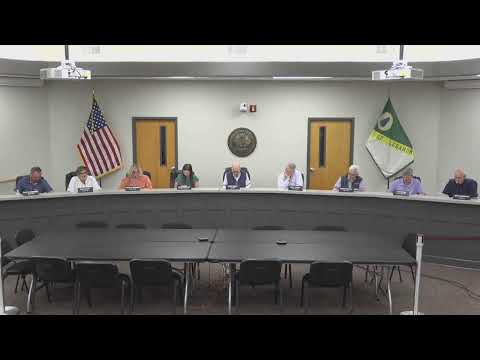
The Lebanon City Council on Monday approved a resolution removing parcel 09504503900000026 (the Canasta/Knatzer property) from consideration for a proposed new wastewater treatment plant and prohibiting the use of eminent domain for that site. The resolution (No. 26 28 41) was introduced and passed after the council temporarily suspended its rules to consider the item.
The move follows weeks of public concern and a packed public-comment period in which residents questioned the plant’s capacity and the process used to identify potential sites. “We need to start canceling contracts, which is what should be done, particularly the one on Maple Hill Road,” resident Charles Smith told the council, urging the city to address long-running infrastructure shortcomings.
Why it matters: Lebanon’s wastewater facility is nearly 60 years old and city staff have been studying upgrades and replacement options for several years. Residents and some council members warned that siting a new plant near homes could be controversial and urged the city to prioritize willing sellers and greater transparency.
City staff and the plant manager defended current operations while acknowledging the need for a new facility. Plant manager Jeremiah Exum said the permitted capacity of the plant is 10,000,000 gallons per day and that a three-year average daily influent was about 7,570,000 gallons per day—roughly 75.7% of permitted capacity. He added that wet-season averages rise (the three-year wet-season average was given as about 8,160,000 gpd, roughly 81.6%), while dry-season averages are lower (about 5,930,000 gpd, or 59.3%).
Exum also outlined causes of recent overflows and water-quality exceedances, blaming a cluster of extreme weather events, a power outage during a component failure, and aging infrastructure. He said corrective actions and rehabilitation projects are underway and noted that the city appealed a state director’s order; the transcript cites a penalty figure as $355,000 but contains an inconsistent reference later to $35,000. The city said it has not paid the cited penalty and is pursuing an appeal.
Council and staff also reviewed alternative sites discussed in a March work session—PermaPipe (an operating business with relocation costs), parcels near Rockwood (which have floodplain constraints), and a smaller TRW parcel (too small and partly in floodplain). The mayor said engineers recommend a new plant be sited along the existing pipeline to the river, on roughly 50-plus acres of relatively flat land, to ensure efficient operations and a buffer from neighbors.
Residents pressed the council on process and transparency. “How many appraisals have been done?” Councilor Burdine asked; staff said earlier outreach included letters of intent and later appraisals, that some real-estate contact had been exploratory, and that the intention was to negotiate with willing sellers rather than pursue condemnation. Assistant city attorney Andy explained that certain legal discussions about active appeals or litigation are handled through appropriate channels.
The council approved the resolution by voice vote after brief discussion. The city’s planning and engineering work on a replacement facility will continue; staff said more public meetings and infrastructure-committee sessions are available for residents to follow the process.