Lifetime Citizen Portal Access — AI Briefings, Alerts & Unlimited Follows
San Clemente council hears mixed feedback on parklet ordinance; staff proposes design standards and caps
Loading...
Summary
City staff proposed tightened design standards, height and umbrella limits, and numeric caps for downtown parklets; dozens of residents and business owners testified with both support and concern about parking, aesthetics and timing for implementation.
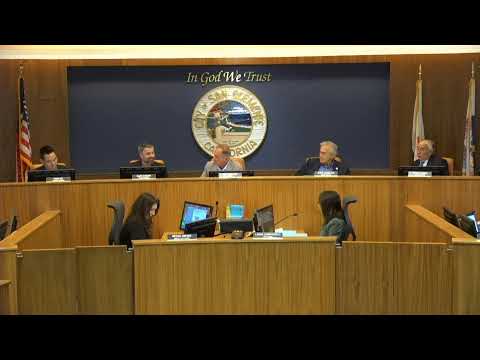
San Clemente staff presented proposed amendments April 21 to formalize the city’s temporary parklet (outdoor dining) program, recommending clearer design standards, stricter guardrail and umbrella limits, and numerical caps on parklets downtown.
Acting city planner Zach Reem told the council the Planning Commission and design review subcommittee had recommended stronger standards. Staff proposed “squared-off” parklet footprints (generally occupying up to three parking spaces), lower barrier heights (no more than 12 inches above grade for decks and barriers reduced from 42 to 36 inches where appropriate), limits on umbrellas (maximum two) and heaters (maximum two, not taller than 5 feet), and caps of 30 parklet parking spaces on Avenue to Del Mar and five elsewhere. Staff also recommended keeping existing fee levels on public and private property but tightening how fees are calculated and allocating some revenue for parking mitigation and transit (trolley) services.
Public testimony included a broad cross-section of views. Downtown business owners and the San Clemente Chamber of Commerce said parklets have supported restaurant revenue and downtown vitality; Susie Lance, CEO of the Chamber, said a recent member survey showed 80% of downtown respondents support continuing outdoor dining in some form and urged a block-by-block approach to balance vibrancy and parking.
Some retail owners and neighborhood residents urged stricter limits to protect parking and storefront visibility. Mickey Rathman, a downtown business owner, said parklets can disproportionately benefit restaurants at the expense of retail discovery and called for a plan to address parking impacts. A number of speakers urged timing changes and transition support so restaurants would not face costly rebuilds during peak season.
Councilmembers asked technical questions about enforcement, building-inspection requirements, timing relative to planned street maintenance and the possibility of designing smaller two-space parklets rather than three-space squared-off models. Staff said their recommended inspections would be planning reviews (not building-permit inspections), that the proposed caps reflect current conditions and that fees would continue to be invoiced quarterly. Staff acknowledged potential street maintenance around the Olympics and advised timing could be adjusted to avoid requiring parklet operators to rebuild twice.
No final ordinance vote was recorded at the April 21 meeting; the item remained under consideration after extensive public comment and council discussion.
What’s next: the council will deliberate on ordinance language and any modifications for implementation timing, caps, enforcement and design standards in subsequent hearings or readings.