Lifetime Citizen Portal Access — AI Briefings, Alerts & Unlimited Follows
Clay County commissioners adopt revised 2026 deer‑hunting zones, moving Zone 666 to rifle
Loading...
Summary
After hearing from dozens of residents and reviewing DNR guidance, the Clay County Board of Commissioners voted unanimously to adopt a draft ordinance adjusting 2026 deer‑hunting zones (including making Zone 666 rifle‑allowed) and instructed staff to draft final ordinance language for publication and DNR notification.
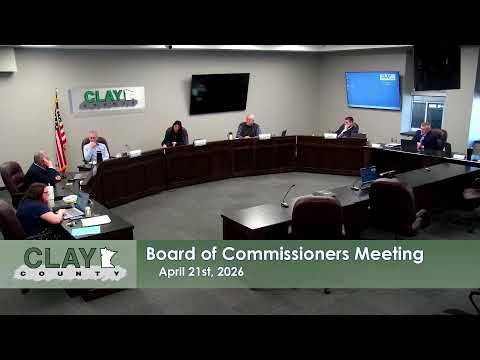
The Clay County Board of Commissioners voted unanimously April 21 to adopt a draft ordinance adjusting deer‑hunting zones for the 2026 season, including designating Zone 666 to allow rifle hunting while retaining rifle access in Zone 239 and keeping Zones 262 and 269 as shotgun only.
The board took the action after receiving 59 public comments (26 in person and 33 online) during an April 7 public hearing and a follow‑up work session. County staff summarized options ranging from taking no action—leaving the new state statute in place—to countywide shotgun only, or a split by highways. The adopted motion, moved by Commissioner Bair and seconded by Commissioner Campbell, applied a mix of DNR hunting‑zone overlays and locally drawn cut lines to reflect resident feedback.
Why it matters: county officials said the change tries to balance safety concerns, local hunting traditions and DNR enforcement responsibilities. Staff told commissioners the Division of Enforcement at the Minnesota Department of Natural Resources would enforce any county ordinance that differs from state statute and recommended including enforcement wording in the ordinance.
During debate, commissioners described sharply different perspectives from residents. “I’ve heard bullets over my head,” Commissioner Kravanoff said, urging limits on rifle hunting in some areas and stressing safety for long‑standing hunting communities. By contrast, Commissioner Bair said his constituents in Zone 666 wanted rifle access and moved the motion reflecting that input.
Quinn, a social‑services official who helped coordinate public outreach for the county, summarized the public input and the legal background, including references to state statute changes discussed at the April 7 hearing. The board asked county attorneys and staff to draft the precise ordinance language that captures the board’s map lines and to return final text for publication and DNR notification so the changes can be reflected in the 2026 hunting materials.
The board recorded the ordinance vote by roll call; each commissioner voted in favor. Commissioners and staff said the ordinance will be revisited as required by statute and that a one‑year review and another public hearing would be appropriate to assess effects and public safety concerns.
Next steps: staff will prepare formal ordinance wording that matches the board’s motion, notify the DNR to reflect the change in hunting materials, and schedule any statutory reviews or future hearings as required.