Get Full Government Meeting Transcripts, Videos, & Alerts Forever!
Get email alerts on the School Budget topic
No spam. Unsubscribe anytime.
School district pitches FY27 budget with targeted pay raises, 16-teacher reduction
Summary
The School District of Oconee County presented a FY27 budget that trims 16 teaching positions to align with enrollment while concentrating pay increases early in the teacher scale and adding safety, behavior and coaching support positions; district leaders said local collections and state formula shifts will shape the final local request.
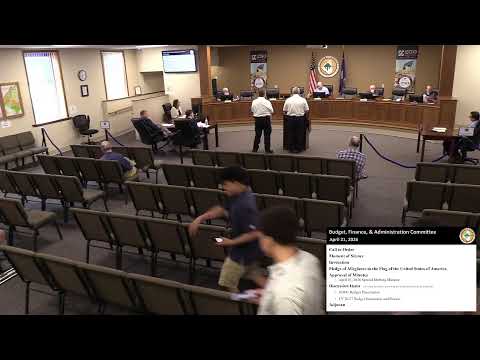
Mister Smith, a district official for the School District of Oconee County, told the Oconee County Budget, Finance & Administrative Committee at its April 21 meeting that the district’s FY27 budget “centers around the notion of balance” between honoring taxpayers and maintaining high-quality schools. The presentation outlined targeted compensation changes, program staffing adjustments and accounting shifts tied to state funding decisions.
In prepared remarks and slides, Mister Smith said the district would "diminish the teacher count by 16 teachers for this coming year" to align staffing with declining enrollment and emphasized the change was intended to “right size our staff” without increasing class sizes or cutting programs. He said the district also completed a vehicle audit and expects to reduce district vehicle provision at the district office.
Jay Schickling (introduced during the presentation as Mister Schickling), the district finance presenter, walked the committee through compensation comparisons with neighboring Anderson and Pickens districts (the AOP peer group) and explained the district’s pay strategy. Rather than a flat $2,000 across-the-board increase, Schickling said the district analyzed the state teacher pay scale and chose to concentrate raises where the teacher density and early-career retention risks are highest. He said a new three‑year partnership with Prisma for athletic trainers is projected to save “almost $300,000 over the next 3 years.”
Schickling reviewed state funding mechanics and differences between planning output and final allocations, noting that the planning figure the district had been given was $51,038,000 while the district’s current fiscal allocation appeared to be $49,946,000—a gap the presenters highlighted as more than $1 million and a reason for conservative budgeting. He said year‑to‑date local tax collections are nearing $62 million and that the district’s overall budget projection for next year is a 3.25% increase, with personnel costs representing roughly 88–90% of spending.
The presentation also described program‑level accounting shifts: several career and technology positions and reading‑coach funds are being recorded in separate state funds rather than the general fund, which will change how growth appears in the general‑fund totals though it may not affect operations. Schickling reported the district projects a total staff count of 642 and noted several positions would be moved onto the state‑funded Hamilton Career and Technology Center account for accounting purposes.
Committee members pressed for details on administrative reductions (Schickling said one assistant‑principal position was removed and the district anticipates up to two more changes under consideration) and on school safety coverage. The presenters described adding a safety and security position intended to coordinate weapons‑detection systems and serve as an SRO‑qualified liaison with the sheriff’s office, and they highlighted Syntegix badge rollouts at some schools.
The district introduced Brandy Runyon as the incoming CFO and said staff remain available for follow‑up. The presentation closed with committee members thanking district leaders and noting they would return with follow‑up questions as they review budget worksheets.
The committee did not take a final vote on the school budget at the meeting; presenters asked the committee to accept the presentation and follow up with questions and clarifications, particularly about fund allocations and the effects of state formula changes.