Get Full Government Meeting Transcripts, Videos, & Alerts Forever!
Get email alerts on the Local News Decline topic
No spam. Unsubscribe anytime.
League of Women Voters collaborator summarizes Washington study showing steep local news losses
Summary
Dr. Carolyn Beyerly presented findings from a League of Women Voters statewide study: Washington lost about 140 newspapers (20% of state titles) and newsroom staff declined about 67% since 2005; the League adopted five positions to support news access and credibility.
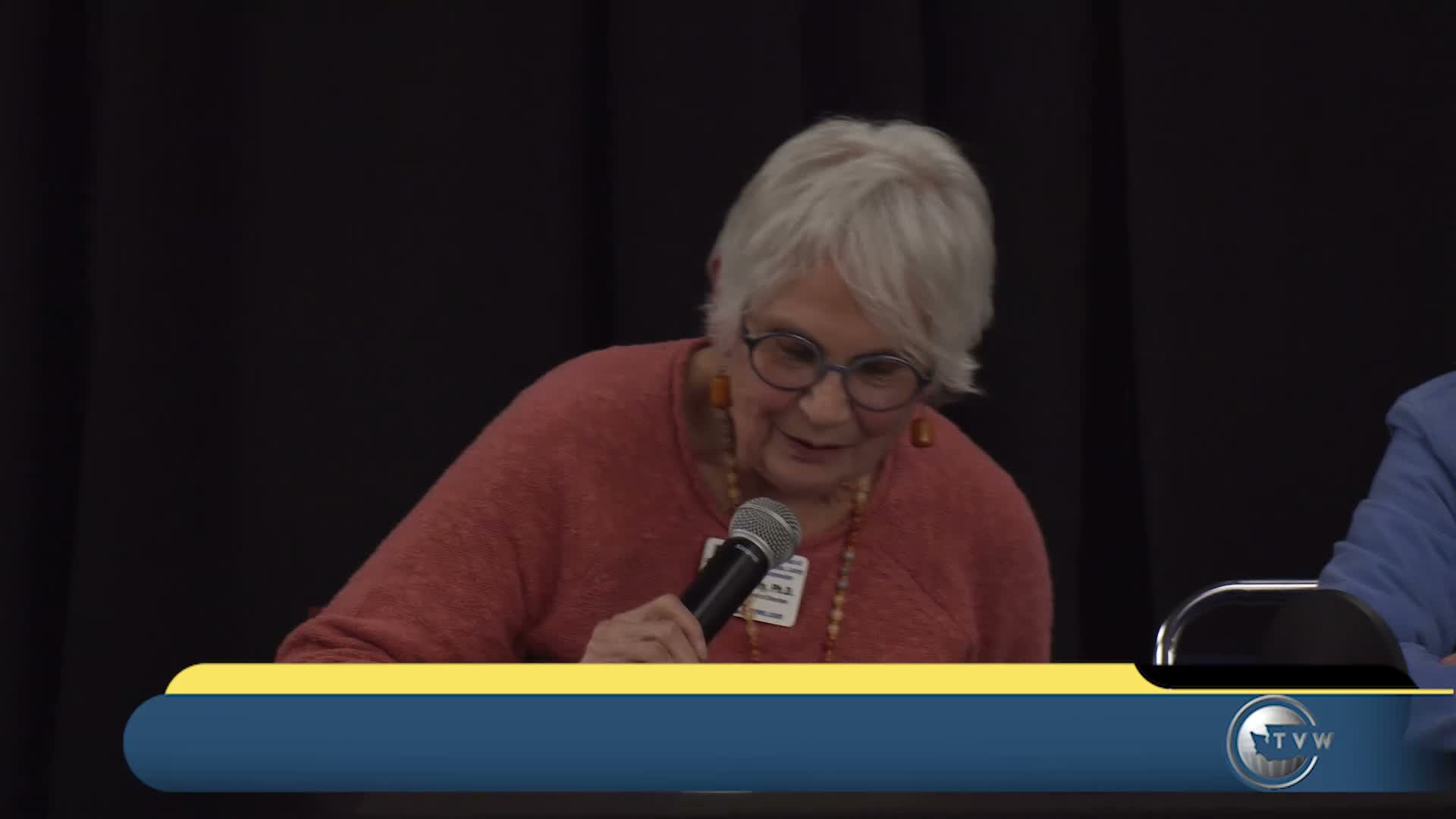
Dr. Carolyn Beyerly, who presented highlights of a League of Women Voters state study, told attendees that Washington state has experienced significant losses in local news coverage and newsroom capacity.
Beyerly described the study as a two‑year, vetted effort and said the research team found that between 2005 and 2020 nearly a quarter of U.S. newspapers had folded. For Washington specifically, she cited a decline of roughly 140 newspapers—about 20% of the state's outlets at the time of the study—and said newsroom staff in the state fell by about 67% since 2005.
The League’s study, Beyerly said, links local news decline to measurable civic harms: reduced voter knowledge and participation, greater partisanship among remaining news consumers, weaker reporting on local government and public health, and diminished scrutiny of corruption and fraud. The study mapped ‘‘news deserts’’ in the state and predicted a continuing spread absent interventions.
Beyerly summarized five positions the League adopted after the study: support for ethical, credible journalism; access to information necessary for voting; editorial control resting with news organizations rather than owners; media literacy and news education in schools and public contexts; and elimination of barriers to news access (geographic, economic and educational).
She framed these positions as foundations for public education and policy advocacy rather than immediate legislative actions. Panelists and audience members discussed replicable models, including public‑benefit newspaper conversions and nonprofit newsrooms, but Beyerly cautioned that many solutions work best where resources already exist and will not by themselves solve rural ‘‘news desert’’ problems.
The presentation was paired with a trailer for the documentary Strip for Parts, which panelists used to illustrate hedge‑fund behavior in local newspaper takeovers. Beyerly said the full League study was the only statewide case study of its kind to her knowledge and encouraged attendees to read the full report for methodology and citation details.