Get Full Government Meeting Transcripts, Videos, & Alerts Forever!
Get email alerts on the Economic Development topic
No spam. Unsubscribe anytime.
Planning commission approves coach‑bus manufacturing CUP at 5467 28th Street, citing jobs and infrastructure upgrades
Summary
Jurupa Valley planners unanimously approved a conditional use permit for an 85,570‑sq‑ft coach‑bus assembly facility at 5467 28th Street, finding the project qualifies for a CEQA Class 32 infill exemption; commissioners highlighted job creation, waterline and street improvements and asked for assurances on noise, air quality and truck routing.
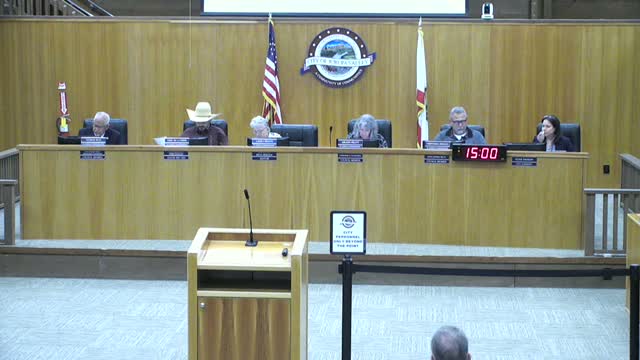
The Jurupa Valley Planning Commission voted 5‑0 to approve a conditional use permit (CUP 24013) allowing an 85,570 square‑foot facility for fabrication, assembly and finishing of coach buses at 5467 28th Street.
Senior Planner Renee Aguilar told the commission the site is zoned for manufacturing/service commercial and that the applicant proposes to consolidate two existing local operations into a single 85,570 sq ft building. Staff described the use as light manufacturing/assembly operating roughly 6 a.m. to 7 p.m., with about 63 current local employees expected to join the consolidated facility. The project includes roll‑up doors to facilitate bus movement, screening landscaping, parking exceeding minimum requirements (about 125 stalls) and frontage improvements including sidewalks, curb and gutter.
Aguilar said the project qualifies for a categorical CEQA Class 32 infill exemption and that staff received no written opposition within the 1,000‑foot notice radius before the hearing. The application package included a traffic study, noise analysis and air quality study; staff said spray‑booth permitting and any air‑emissions controls would be overseen by the regional air quality management district.
Applicant representatives (planner Foster Reyes and company president/owner's representative Rick) described the operation as an assembly process that purchases chassis (from Freightliner and other OEMs), installs body and interior components, conducts painting in contained downdraft booths and performs final testing. The applicant said typical production could be about four buses per week, that the chassis arrive with engines, and that finished vehicles are driven offsite for delivery or testing. The applicant emphasized existing operations in Missouri and the company's 50‑year history and said it would pursue local hiring and vocational partnerships.
Noise consultant Kate Wilson reported that modeled operational noise at the nearest sensitive receptors would peak between about 31.7 and 44.5 dBA, below the residential daytime standard of 65 dBA; ambient levels in the area ranged from about 52 to 67.4 dBA. Commissioners asked follow‑up questions about truck routes and whether large trucks would be routed through residential streets; staff and the applicant said routing would be refined in coordination with the city and that most deliveries are box trucks with only occasional large‑truck deliveries.
Applicants and consultants also described infrastructure work required for the project, including a proposed 1,200‑foot, 12‑inch water line to improve fire‑protection capacity and a commitment to underground existing power poles on the frontage. The applicant said hazardous or chemical wastes would be containerized and removed by a licensed hazardous‑waste contractor offsite.
After deliberation emphasizing jobs, site improvements and mitigation measures, Commissioner (speaker 8) moved to adopt a resolution approving the CUP and making the CEQA Class 32 finding; the motion was seconded and passed 5‑0. The resolution requires the applicant to complete required street and utility improvements, comply with noise and air‑quality mitigation measures in the project conditions, and obtain any permits from the regional air district and other agencies before occupancy.
Next steps: the applicant will coordinate final engineering, utility improvements and contractor selection, obtain permits and proceed to construction following compliance with the conditions of approval.