Get Full Government Meeting Transcripts, Videos, & Alerts Forever!
Get email alerts on the Land Use topic
No spam. Unsubscribe anytime.
Council approves Zinfandel Subdivision with flood mitigation terraces and monitoring program
Summary
After a public hearing that included neighborhood concerns about flooding, wildlife and privacy, the council adopted a mitigated negative declaration, map, design review and associated permits for the Zinfandel Subdivision, with conditions including terrace‑based detention, biological mitigations and monitoring.
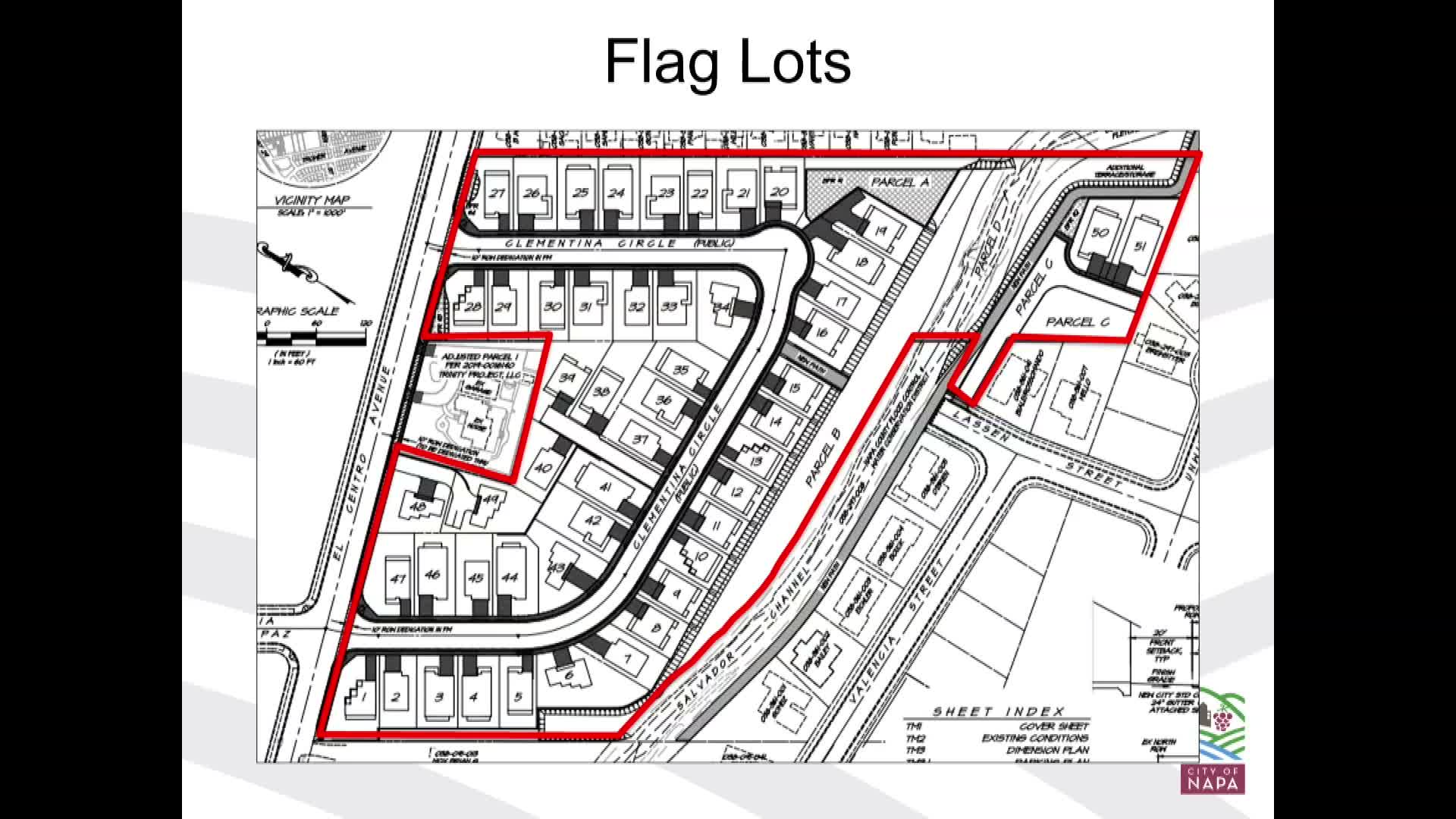
City staff and the applicant presented the Zinfandel Subdivision tentative map, a design that uses terraced basins to detain stormwater and reduce off‑site flooding. Engineers explained bioretention and detention designs intended to keep post‑development peak flows at or below existing conditions (no‑rise at the 100‑year event) while improving two‑year event impacts for nearby streets.
Neighbors voiced strong concerns, urging a full environmental impact report and warning that terraces and development could harm riparian habitat used by mink, otters and migratory birds. The applicant team and consultants said terraces will be vegetated, the existing vineyard bridge will be removed, and grading will stop midway up the bank so the creek bank itself is not disturbed. The hydrologic modelling included 2‑, 10‑ and 100‑year analyses and the project includes biological mitigation and monitoring requirements.
Councilmembers acknowledged the emotional concern around flooding but said the technical studies and mitigation measures (including a monitoring and reporting program) met CEQA thresholds for a mitigated negative declaration. Council moved and unanimously approved the staff recommendations to adopt the mitigated negative declaration, related resolutions, tentative map, design review permit and use permits with the recommended conditions.
Next steps: project conditions include monitoring and mitigation measures to be implemented and reported to the city; the applicant will work with city and county specialists on required mitigation and construction conditions.