Get Full Government Meeting Transcripts, Videos, & Alerts Forever!
Get email alerts on the Sb166 Schoolboard Eligibility topic
No spam. Unsubscribe anytime.
Panel advances bill limiting school‑board candidates with certain felony convictions, adds 10‑year exception
Summary
SB166 would bar adults convicted of specified violent or drug‑distribution felonies from running for school board; an amendment allows eligibility if 10 years have passed since sentence completion. The committee approved the measure 4–3 and sent it to the Committee of the Whole.
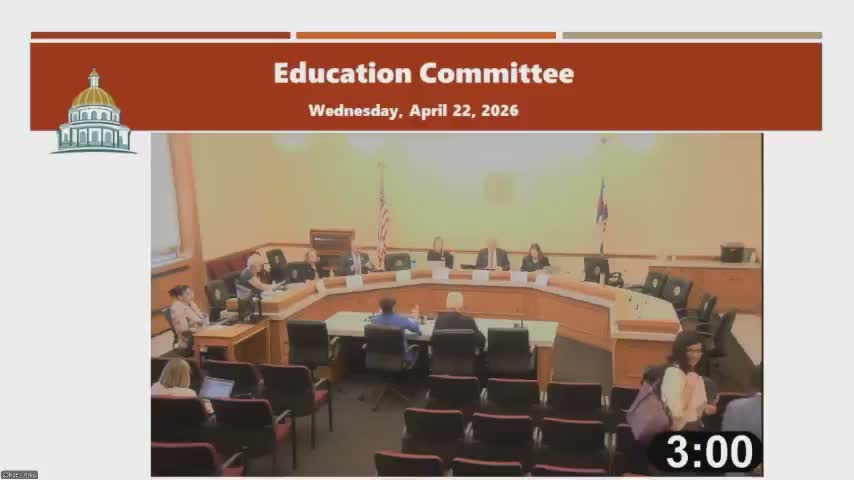
The Senate Education Committee on Wednesday advanced legislation that adds some felony convictions to the list of disqualifying offenses for school‑board candidates but, by amendment, allows eligibility once an individual has completed their sentence and 10 years have passed.
Senator Sarah Benavides presented SB166 as a narrow change to existing law. Under current statute, individuals convicted of certain sex offenses against a child are barred from running for school board. The bill would add adult convictions for enumerated crimes of violence and certain felony drug distribution, manufacturing or sale offenses as disqualifiers. Benavides said the intent is to protect children and ensure that board members set appropriate examples.
Senator Kipp, a former school‑board member and co‑prime on the bill, said the measure balances public‑safety concerns with the practical reality that school‑board service is often unpaid and hard to fill. The committee considered amendment L001, offered by Senator Benavides, which permits individuals convicted of the specified offenses to run for office if at least 10 years have passed since they fully satisfied their sentence, including probation or parole. The amendment passed on a roll call vote, and the committee later approved the amended bill by a 4–3 vote to send it to the Committee of the Whole.
Supporters argued the change protects students and mirrors actions other states are considering; some committee members who opposed the amendment said the 10‑year exception could allow individuals convicted of serious offenses to run too soon and cited recent local incidents during the debate. Benavides cited statutory cross‑references (including the definition of crimes of violence in state statute) when explaining which offenses are covered.
Next steps: SB166, as amended, will proceed to the Committee of the Whole for further consideration.