Get Full Government Meeting Transcripts, Videos, & Alerts Forever!
Get email alerts on the Rates topic
No spam. Unsubscribe anytime.
Albany mayor and staff preview rate increases and policy changes; board asks for more analysis
Summary
Board members heard a presentation previewing proposed rate increases (water 12%, stormwater 10%, sewer 5%, solid waste 5%) tied to a planned $3.5M water investment; staff and board also discussed deposit rules, estimated reads and extensions and asked staff to return with more analysis.
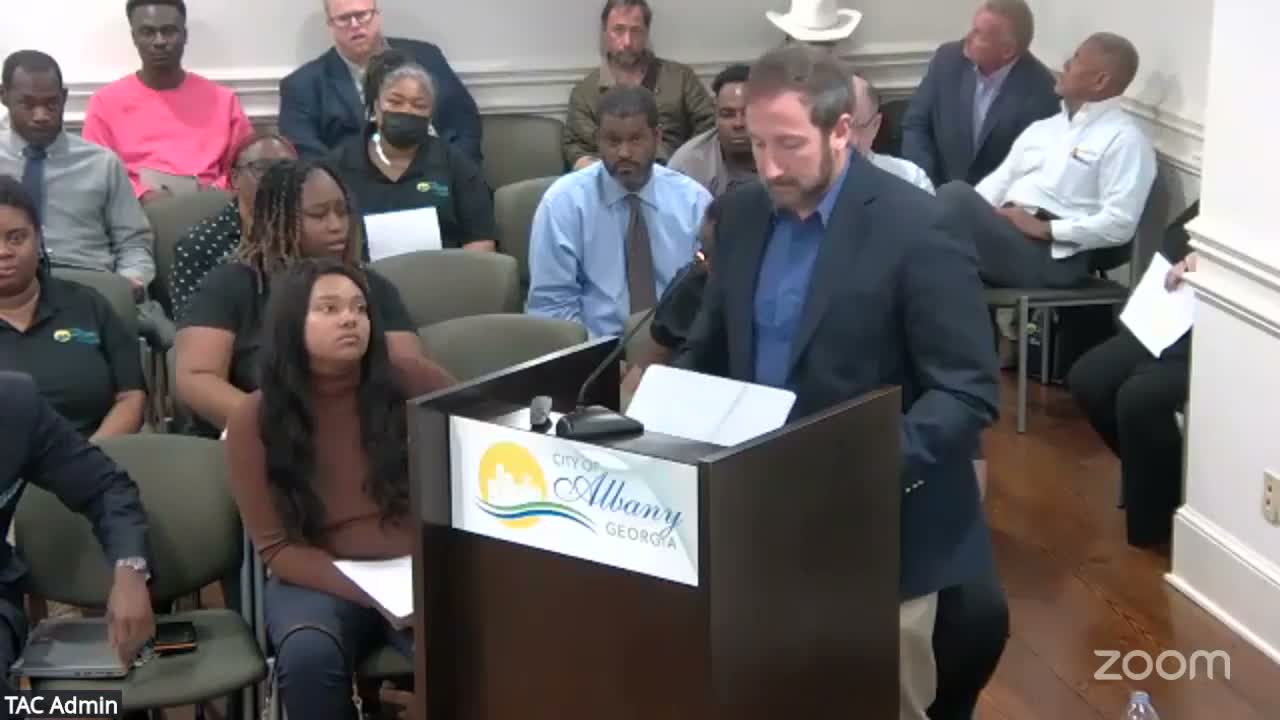
The Albany Utility Board spent a substantial portion of its March 26 meeting reviewing retreat takeaways and a draft of utility policy language while the mayor and staff previewed proposed rate changes to support expanded infrastructure work.
Mayor (acting as presenter) framed the discussion as an early review rather than a vote and outlined proposed percentage increases by fund: solid waste 5%, sewer 5%, stormwater 10% and water 12%. "Water the highest because we're transitioning into a strong investment in our infrastructure at 12%," the mayor said. Staff estimated the combined monthly effect for a household that receives garbage, sewer, stormwater, water, gas and light at about $8.42 a month (roughly a 3.18% increase for a household with all services).
Board members and staff also worked through multiple draft policy definitions carried over from a recent retreat, including formation of a standing Utility Appeals Committee (staff, administrative services and the city manager’s office), how to calculate "estimated utility cost" for commercial deposit purposes (staff suggested using 12 months of charges divided by two and doubled when available) and rules for back‑billing and estimated reads (staff proposed using six months of data when a physical read is not available).
A lengthy exchange focused on deposit levels for commercial turn‑ons and landlords. Staff noted the current maximum deposit practices (historically $200 per account with different maxima by service type) but board members raised examples — including a vacant restaurant with an annual bill the presenter estimated near $42,000 — that illustrated how the current structure could leave the city exposed. Board members asked staff to research alternatives used by other municipalities and to calculate example deposit levels for high‑usage commercial properties.
Staff asked for time to produce a more complete fee and rates package after recent training and requested that the board let staff return with a comprehensive summary at a future meeting. Several members also asked that the utilities assistance programs and long‑term budget planning groups be engaged as the board develops rate proposals.
No rate changes were adopted at the meeting; this was an informational presentation and discussion. Staff committed to provide recent infrastructure spending totals (24 months), procurement context and alternative deposit models for the board’s consideration at a later meeting.