Get Full Government Meeting Transcripts, Videos, & Alerts Forever!
Get email alerts on the Tourism topic
No spam. Unsubscribe anytime.
Tourism director: Wimberley collected just over $841,000 in hotel tax; office plans venue guide and stronger compliance
Summary
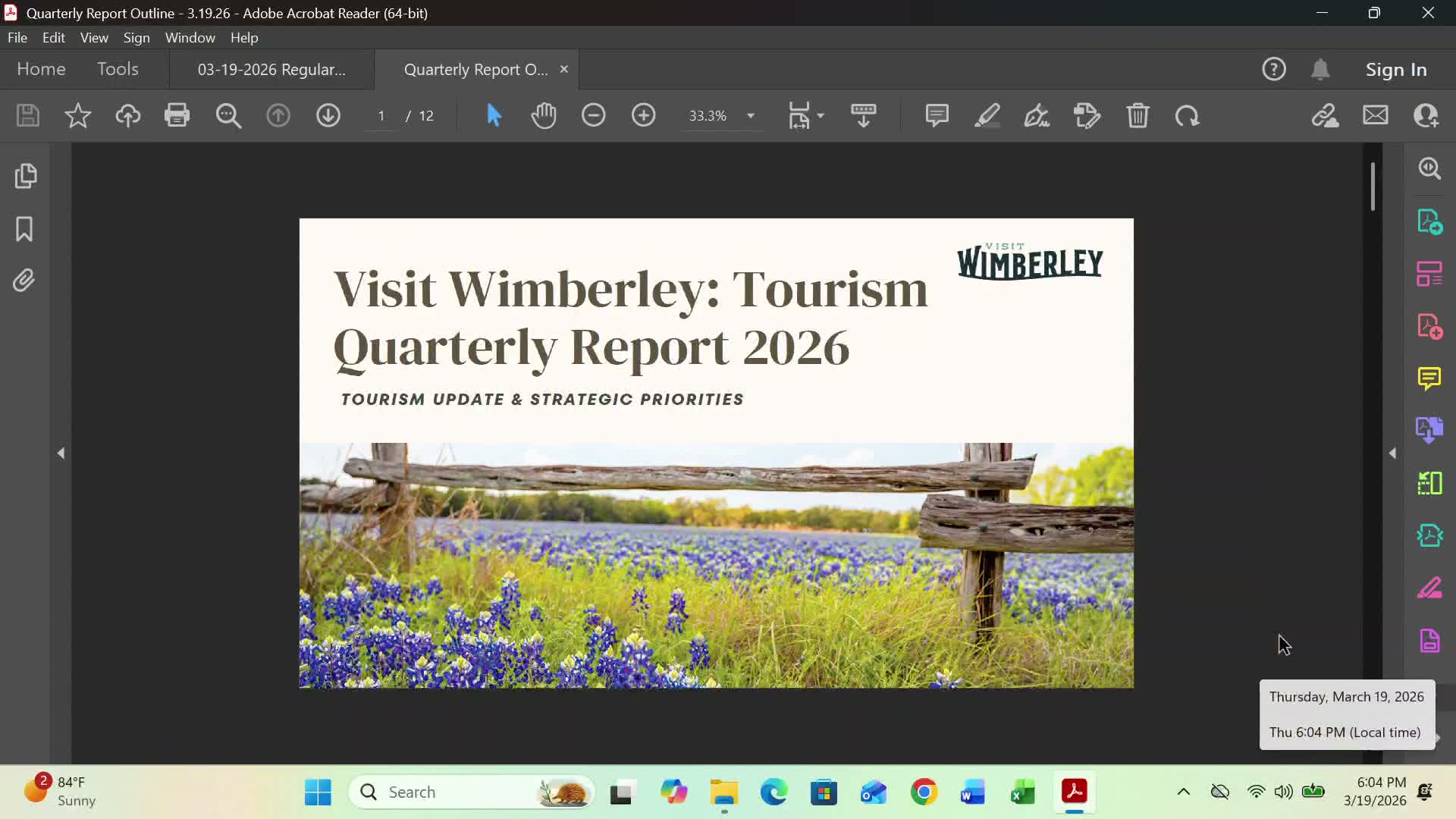
On March 19, Tourism Director Michelle Woods told the Wimberley City Council the city collected just over $841,000 in hotel occupancy tax in FY 2024–25, a roughly $40,000 increase year over year, and outlined steps to strengthen compliance, produce an in‑house venue guide and publish a full city visitor map.
Michelle Woods, Wimberley's tourism director, told the city council on March 19 that gross hotel occupancy tax (HOT) collections for fiscal year 2024–25 were "just over $841,000," about $40,000 more than the prior year.
Woods said the five‑month period from October through the most recent reporting month produced roughly $280,000 in HOT receipts, a 12% year‑over‑year increase that she said confirms tourism remains "a consistent and measurable contributor to Wimberley's economy." She reported 133 active, compliant lodging entities in the city and said staff are working with HDL as the city's collection partner to address noncompliance.
"In some cases of noncompliance, we are offering payment plans for operators who want to come into compliance and are willing to work with us," Woods said. She added the city currently has three accounts under audit that represent a minimum of about $50,000 in outstanding local HOT funds.
Woods described program and event performance that she said is driving overnight stays, including increases in visitor days around recent destination events and a first‑year New Year's Eve ball drop that contributed to a 6% increase in December gross HOT revenue and a 17% increase in January gross revenue compared with the prior year.
To improve transparency and consistency in grant awards, Woods said she has put a formal HOTT (hotel occupancy tax) grant scoring framework in place for the committee that reviews applications. She also outlined plans to produce an in‑house venue and events guide — aiming for a modest print run and a digital version with QR codes — and to create a full city‑limits visitor map that shows attractions outside downtown.
Council members asked how the state occupancy tax is handled and whether the state helps with local compliance. Woods said the city collects the local 7% HOT, while a separate 6% is collected and remitted to the Texas comptroller; she said the state does not participate in local compliance efforts.
Woods said the city and the Chamber are coordinating on marketing ideas, including a proposed venue crawl and a Chamber HOTT grant to support that effort. She said the guide is planned for internal production with small print batches starting around September and digital tracking via QR codes.
The tourism office's next steps include continuing follow‑up with delinquent lodging operators, finalizing the grant scoring framework, producing the venue/events guide and advancing the full visitor map project. Woods closed by inviting council questions and offering to return with further details if council members want additional budget or distribution data.