Get Full Government Meeting Transcripts, Videos, & Alerts Forever!
Get email alerts on the Housing Policy topic
No spam. Unsubscribe anytime.
Monterey Park council directs staff to study and pause inclusionary housing ordinance amid legal uncertainty
Summary
Staff outlined recent court rulings and a local settlement that could expose the city’s inclusionary housing ordinance to legal challenge; council voted unanimously to direct staff to pursue feasibility analysis with a consultant and consider continuing the ordinance pause while legal developments unfold.
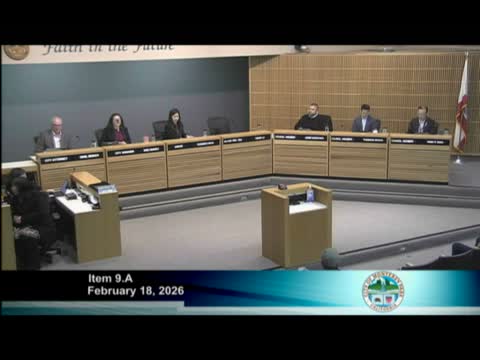
Monterey Park — The City Council on Tuesday directed staff to take further legal and market feasibility steps on its inclusionary housing ordinance (IHO), and agreed to keep the measure paused while staff and a consultant study options to reduce litigation risk.
Timothy Howe, the city’s director of community development, told the council that recent public-law developments — including a U.S. case about government exactions and a recent settlement in East Palo Alto — show courts are scrutinizing city requirements that require developers to provide affordable units or pay in-lieu fees. “The case law suggests that a case-by-case or project-by-project nexus study or alternative compliance options may be necessary,” Howe said.
The staff presentation reviewed the IHO’s history in Monterey Park (adopted Sept. 6, 2023), earlier feasibility findings and two choices for council: amend the ordinance now — for example by carving out SB 9 projects and adding exemptions — or continue the pause while monitoring further legal developments. Howe said staff is prepared to return with an updated market feasibility analysis and that a consultant is ready to begin work.
Council members pressed on timing and effects. Howe reported about 44 building permits were issued in 2024, mostly accessory dwelling units, and that 2025 permit counts are still under 100 to date; he also said several hundred units are currently in entitlement review. Several council members said they wanted an IHO that is legally defensible and economically feasible. “We’re under pressure from the state to make sure that we’re meeting our RHNA numbers,” a council member said, and urged moving forward on an updated IHO that would not disincentivize development.
Councilmembers discussed two practical paths: amend the ordinance now to add exemptions and revise language, or continue the pause and return after receiving updated legal guidance and consultant analysis. Staff estimated the consultant work would take roughly 90 to 120 days.
Council Member Wong moved and Council Member Sanchez seconded a motion to give staff direction consistent with the options outlined by staff — pursuing analysis and returning with recommended amendments while retaining the ability to pause enforcement — and the motion passed unanimously.
What happens next: staff will work with the consultant to update market-feasibility findings, examine in-lieu fee options and potential carve-outs (including SB 9 projects), and return to the council with recommendations in the coming months. The council’s action preserves the existing pause on enforcement while it considers how to align the IHO with recent case law.