Lifetime Citizen Portal Access — AI Briefings, Alerts & Unlimited Follows
Board advances $100,000 CHF ADU loan program with eligibility guardrails, debates income cap
Loading...
Summary
Board members approved moving forward with a $100,000 interest‑free ADU construction loan program tied to Community Housing Fund guidelines, debated a 300% AMI income cap and primary‑residence requirement, and agreed to monitor uptake and adjust rules if needed.
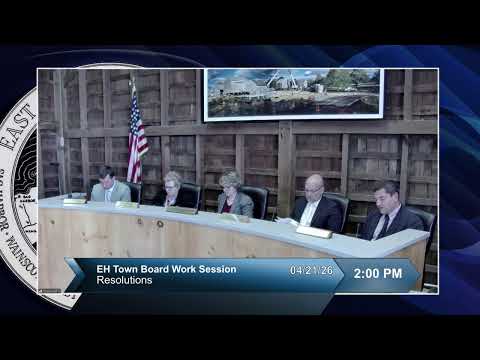
The East Hampton Town Board on April 21 discussed and moved to adopt parameters for a Community Housing Fund (CHF)‑backed accessory dwelling unit (ADU) construction loan program intended to spur additional affordable year‑round housing.
Mark Morgan Perez returned to present a revised proposal clarifying that the program follows CHF tenant income guidelines (not the town’s own income tiers) and that loans will be $100,000, interest‑free, secured by a town lien and repayable upon sale of the property. Perez said the CHF guidelines roughly equate to 140–150% of AMI for some household sizes and emphasized the distinction between CHF and town income rules.
The board debated several eligibility guardrails before reaching a working consensus. The proposed program limits recipients to households at or below a maximum income threshold tied to 300% of area median income (AMI) for a four‑person household (approximately $494,700 under the presented calculation), allows only year‑round tenants (no short‑term rentals), and requires that tenants live or work in town or have lived in town within the past five years or be a family member of the owner. The board additionally discussed whether to require applicants to be the property’s primary resident or sole legal resident; members agreed to start with a primary‑residence requirement and to monitor uptake before changing the restriction.
Members noted the program is limited in scale — roughly 10 loans at $100,000 each were discussed as the initial allocation — and said the design should prioritize households least able to self‑finance ADU construction. Council members argued both sides: some urged fewer eligibility restrictions to maximize construction of ADUs; others contended scarce CHF funds should favor lower‑income applicants and those with clear local ties. The board also discussed whether a forgivable grant or a loan is more appropriate (the town opted for a loan in part to avoid potential IRS/tax complications associated with forgiven grants without a more aggressive income cap).
Several clarifications were added to the program language at the meeting: family members of the property owner can occupy ADUs if they meet income requirements; the loan must be repaid while the ADU remains under affordable standards (and could be repaid early); and program implementation will be coordinated with pending ADU code changes so applicants can take advantage of regulatory relief and tax incentives under development.
The board instructed staff to schedule a budget public hearing related to CHF funding and to monitor program performance closely; members said they will revisit income thresholds, the residency requirement and the number of loans if initial uptake is lower or higher than expected.