Get Full Government Meeting Transcripts, Videos, & Alerts Forever!
Get email alerts on the Sanctuary Ordinance topic
No spam. Unsubscribe anytime.
Berkeley council adopts first reading of sanctuary city ordinance with transparency amendments
Summary
Berkeley’s City Council voted unanimously on Sept. 9 to adopt the first reading of a municipal ordinance codifying sanctuary protections, adding a 10-business-day reporting requirement and an annual aggregated reporting amendment to the Berkeley Police Department’s annual report; advocates urged stronger enforcement and a private right of action.
Berkeley’s City Council voted unanimously on Sept. 9 to adopt the first reading of a new sanctuary city ordinance that codifies and clarifies existing protections for immigrants and limits city cooperation with federal immigration enforcement.
Deputy City Attorney Katrina Island told the council the draft ordinance “forbids city agencies and personnel from using city resources to assist with immigration enforcement,” and added new features including definitions of "protected personal information," a 10-business-day reporting requirement for contacts with federal officials, and clearer applicability across schools, hospitals and other city settings.
The mayor read into the record two amendments developed with community input: an amendment to require city agencies to report described requests within 10 business days and to include an aggregated annual summary of those reports in the Berkeley Police Department’s regular annual report, and replacement of the enforcement subsection with language modeled on San Francisco’s ordinance that clarifies the ordinance promotes general welfare and does not create a new private monetary cause of action.
The ordinance drew wide public comment. Representatives from East Bay Sanctuary Covenant, Social Justice Collaborative, the Multicultural Institute and dozens of residents urged passage while several speakers and organizations asked for stronger accountability measures, including a private right of action for people who claim harm. Mirna Cervantes of the Multicultural Institute said advocates ‘‘urge you to strengthen this ordinance and include a private right to action and more meaningful and robust accountability provisions so that our community can have real access to justice.’’
Councilmembers framed the vote as both a policy and civil-rights measure. Councilmember Blackaby said the ordinance ‘‘creates a new reporting procedure so that the council and public will know about incidents as soon as they happen’’ and praised the broader definitional clarity. Councilmembers who spoke described personal family histories tied to immigration and defended the ordinance as necessary to protect civil liberties amid federal actions they described as increasingly aggressive.
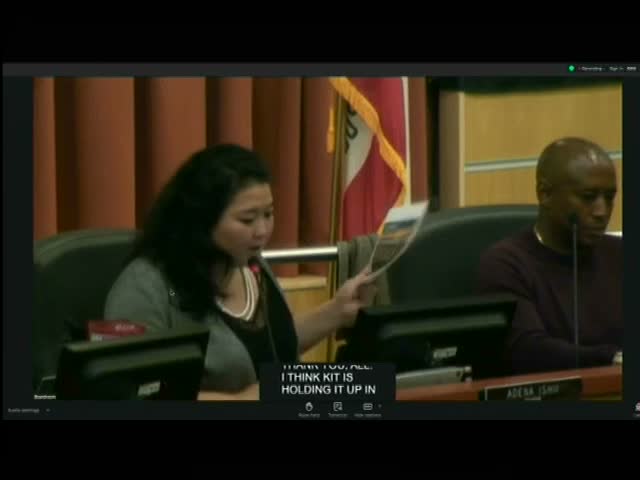
Mayor Ishii moved the ordinance (including the two amendments read into the record) and the council approved first reading in a roll-call vote; the clerk announced the motion carried unanimously.
The ordinance now proceeds to a second reading and final adoption process; council staff and the mayor said they will train city personnel and host community information to ensure implementation and awareness of the new reporting procedures.