Lifetime Citizen Portal Access — AI Briefings, Alerts & Unlimited Follows
Committee adopts public‑records committee substitute adding 30‑day window for family access to body‑worn footage; witnesses urge fee waivers
Loading...
Summary
The House State Affairs Committee adopted a committee substitute for HB 377 that narrows a new public‑records timeline to police body‑worn camera footage in use‑of‑force incidents (30 days, with a possible 30‑day agency extension and court extensions). Public testimony urged faster family access and fee waivers; DPS said it will review fiscal impacts.
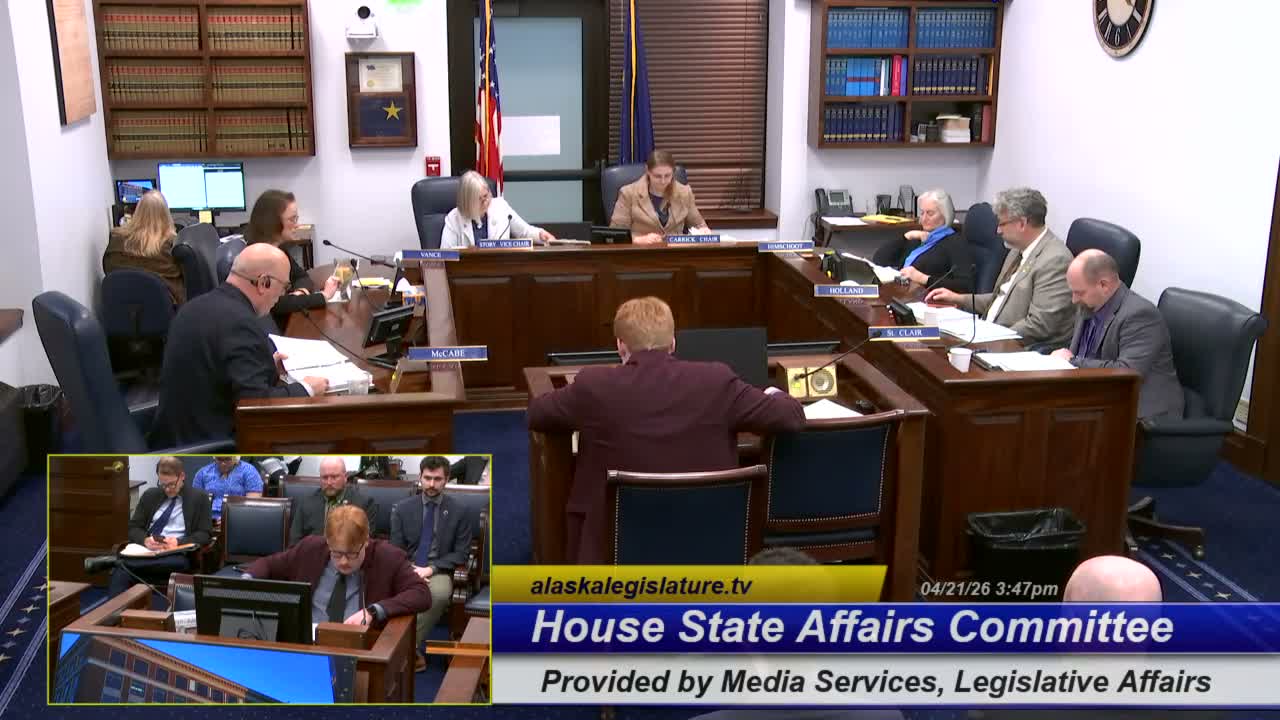
The Alaska House State Affairs Committee on April 21 adopted a committee substitute for House Bill 377 that adds text messages to the statutory public‑record definition and requires police body‑worn camera footage of use‑of‑force incidents resulting in death or serious injury to be released to victims’ families within 30 days, subject to a possible agency 30‑day extension and further court extensions.
Stuart Relay, committee staff, summarized the CS and said the change is narrowly focused to police body cameras in use‑of‑force incidents. Austin McDaniel, communications director for the Department of Public Safety, told the committee DPS was reviewing the updated language and would provide any necessary revisions to its fiscal note. McDaniel described current review timelines as “over 30 days, usually less than 90 days,” and explained multiple agencies (investigators, crime lab, state medical examiner, Office of Special Prosecutions) may be involved in reviews that can delay public release.
Several witnesses urged the committee to prioritize faster, affordable access for families. Gerald Rexford, who said state troopers shot two of his sons and his family still has not received full unedited footage, told the committee HB 377 was important because “families like mine should not be the last to know what happened inside their own home.” Cynthia Gatchapane of Empowerment Advocacy Alaska supported defining audio and video as public records and the 30‑day release but warned that cost‑recovery provisions could become a “pay‑to‑play justice system,” and urged fee waivers for victims. Journalists and a longtime public‑access attorney urged more study of fee structures and requester classifications to avoid curtailing access.
Committee members debated fee tiers, municipal capacity, and exemptions for active criminal investigations. Chair Kerrick described the CS as a compromise from broader proposals and said she was open to amendments. The committee adopted the CS as its working document and closed public testimony; members asked DPS and other agencies for updated fiscal information and signaled possible future amendments to clarify exemptions and fee waivers.