Get Full Government Meeting Transcripts, Videos, & Alerts Forever!
Get email alerts on the Utilities topic
No spam. Unsubscribe anytime.
CPUC official outlines how residents and counties can engage after Mono County's outage letter
Summary
A CPUC local government liaison briefed the Mono County Board on the commission’s role, consumer resources and upcoming proceedings affecting communications and energy reliability; supervisors pressed for guidance on reporting extended outages and network resiliency in remote areas.
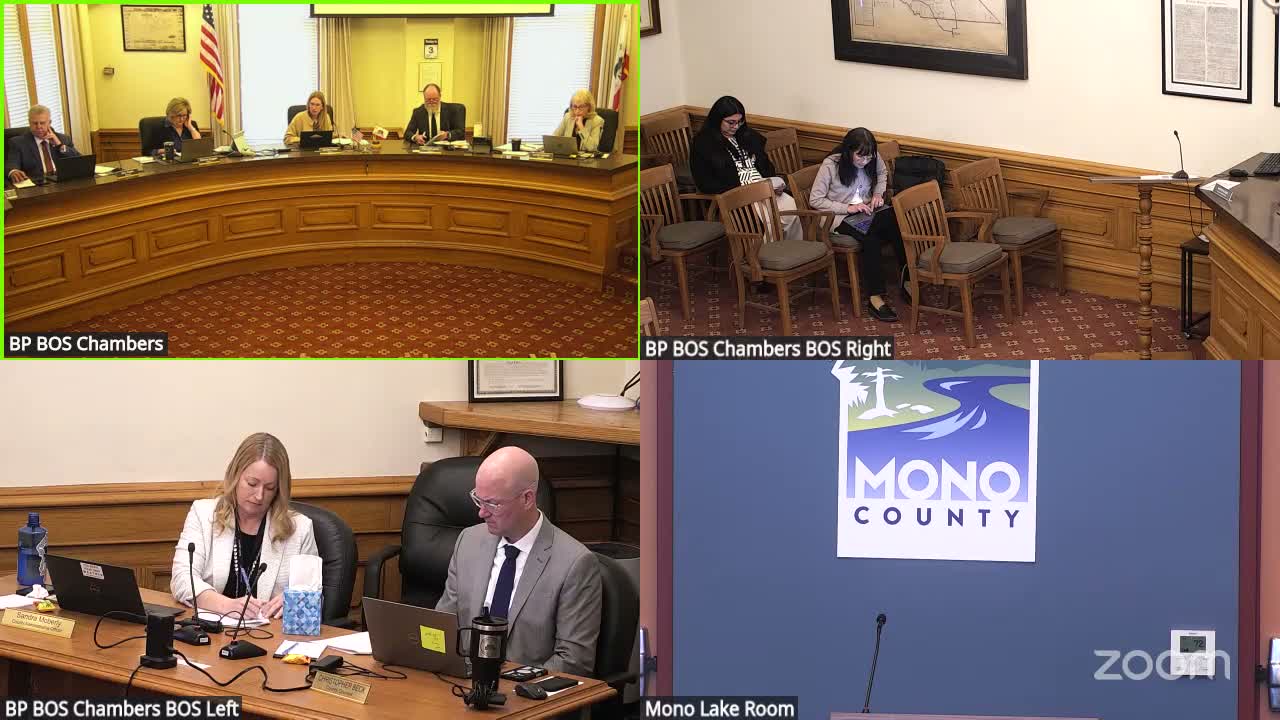
Heather, a local government and community liaison with the California Public Utilities Commission, visited the Mono County Board of Supervisors on March 3 to explain the CPUC’s regulatory role and how residents and local governments can participate in CPUC proceedings.
Heather described the commission’s authority under the California Public Utilities Code, the three basic types of proceedings (rate setting, quasi‑legislative and adjudicatory), and resources available to consumers and local governments, including the Consumer Affairs Branch, the Public Advocates Office (Cal Advocates) and the Public Advisor's Office (PAO). She encouraged residents with utility complaints — for example, unresolved bills or service failures — to contact the CPUC’s Consumer Affairs Branch or the Public Advisor's Office and to file complaints through the CPUC complaint portal when appropriate.
Board members repeatedly raised the county’s recent experience with extended outages and power shutoffs (PSPS). Supervisor McFarland asked where members of the public should be directed if they want to register reliability concerns; Heather recommended starting with the Public Advisor's Office for formal engagement and reiterated that the Consumer Affairs Branch handles casework on bills and service complaints. Supervisors asked about emergency backup power for remote cell towers, the CPUC’s role with propane and small utilities, reassessment of universal service obligations as communications patterns change, and oversight of large new energy demands such as data centers. Heather said several CPUC proceedings in 2026 touch on communications access, last‑mile grants, BEAD/NTIA coordination and energy rate cases, and offered to connect county staff with subject‑matter experts in CPUC divisions.
Supervisors expressed concerns about network resiliency for remote towers (backup power and access during snow events), the adequacy of CPUC staffing for a large docket load and the potential cost shift to local ratepayers if energy‑intensive projects increase demand. Heather said the commission is considering resiliency and emergency management issues in upcoming proceedings and urged coordinated local comments to dockets and participation in public hearings.
The visit provided staff contacts and suggested avenues for future engagement; Heather offered to follow up on specific questions about the county’s letter and any active CPUC investigations involving investor‑owned utilities.