Get Full Government Meeting Transcripts, Videos, & Alerts Forever!
Get email alerts on the Disaster Recovery topic
No spam. Unsubscribe anytime.
Board reviews draft right‑of‑entry and cleanup options for Pac Fire victims; asks staff for parcel‑level numbers
Summary
After an evening outreach and an inspection scheduled with debris‑removal contractor DRC, the board held a workshop on a draft resolution and right‑of‑entry that would enable a county‑led cleanup program for Pac Fire‑damaged private properties; staff was asked to produce parcel‑level cost estimates, plain‑language FAQs and a single point of contact for owners.
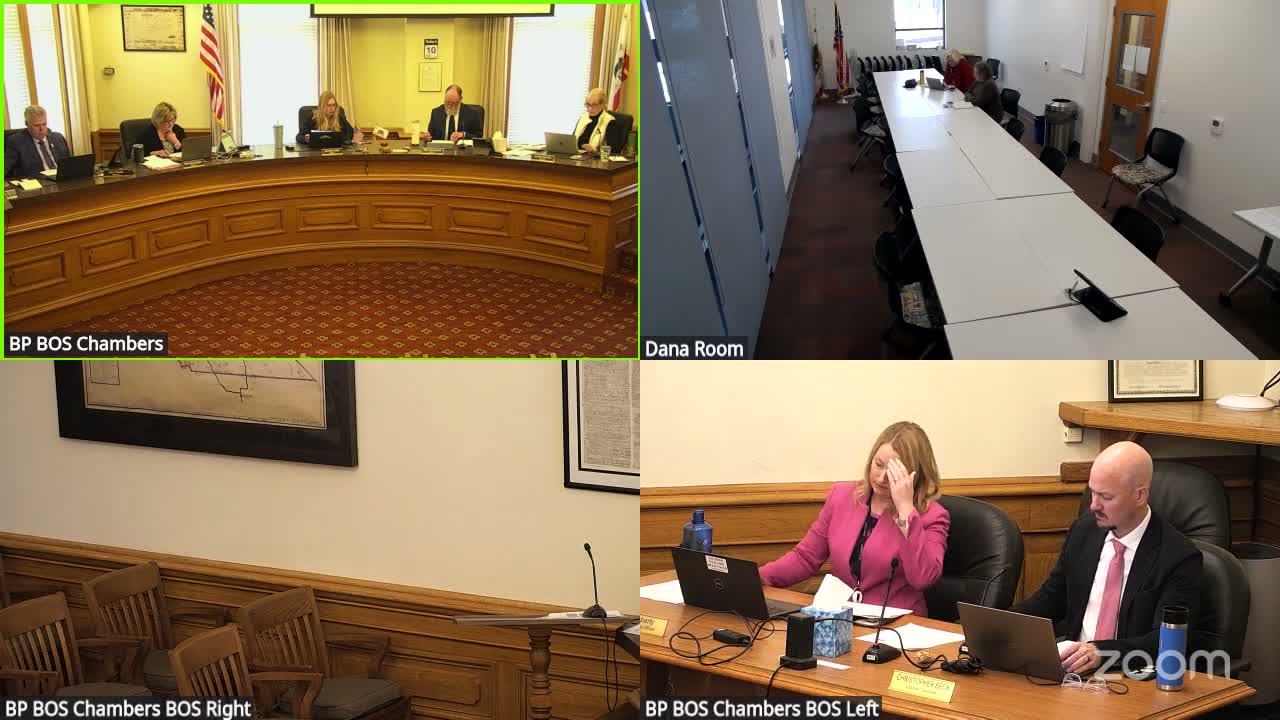
The Mono County Board of Supervisors held a workshop Feb. 10 on a proposed framework to support cleanup and remediation after the Pac Fire. Staff presented (1) a draft resolution describing how a county‑run cleanup program could operate and (2) a right‑of‑entry form that would allow the county and its contracted remediation company to access private properties to perform work under the program while protecting the county with indemnity and hold‑harmless provisions.
County counsel and staff told the board that the documents are intended to give property owners a clear option for participating in a county‑led remediation program, but they also laid out how homeowners could proceed privately. Public‑works staff said private contractors can do work sooner and possibly more cheaply because county work may require paying prevailing wage; conversely, county procurement would be necessary where federal or state reimbursement (CDAA or other) is expected.
Staff noted DRC — a debris‑removal company working with governments in other disasters — will perform a site inspection and provide cost estimates. The county also has SBA disaster‑assistance loan services available in June Lake and Lee Vining for eligible applicants. Board members asked staff to produce parcel‑level cost estimates (a spreadsheet) and a plain‑language FAQ explaining options (county program vs. private cleanup), consequences, and timelines so owners can decide. Multiple supervisors emphasized the need for a single county point of contact to coordinate permits, work‑plan reviews and insurance questions; staff identified Christine (Office of the CAO) as the intended clearinghouse and said backup staff will be available.
The item was treated as a workshop and not adopted as a resolution. Staff said they expect more definitive cost numbers after DRC’s inspection and will return to the board with a recommended program structure, cost estimates and an FAQ that property owners can use to make informed decisions.