Get Full Government Meeting Transcripts, Videos, & Alerts Forever!
Get email alerts on the Paving topic
No spam. Unsubscribe anytime.
Napa City Council authorizes in‑house paving operations, citing Measure G funding
Summary
The council voted unanimously Jan. 6 to authorize the Public Works director to carry out in‑house paving operations and found the maintenance paving action exempt from CEQA; staff said the 2026 plan targets more than 40 lane miles, building on 41 lane miles paved in 2025.
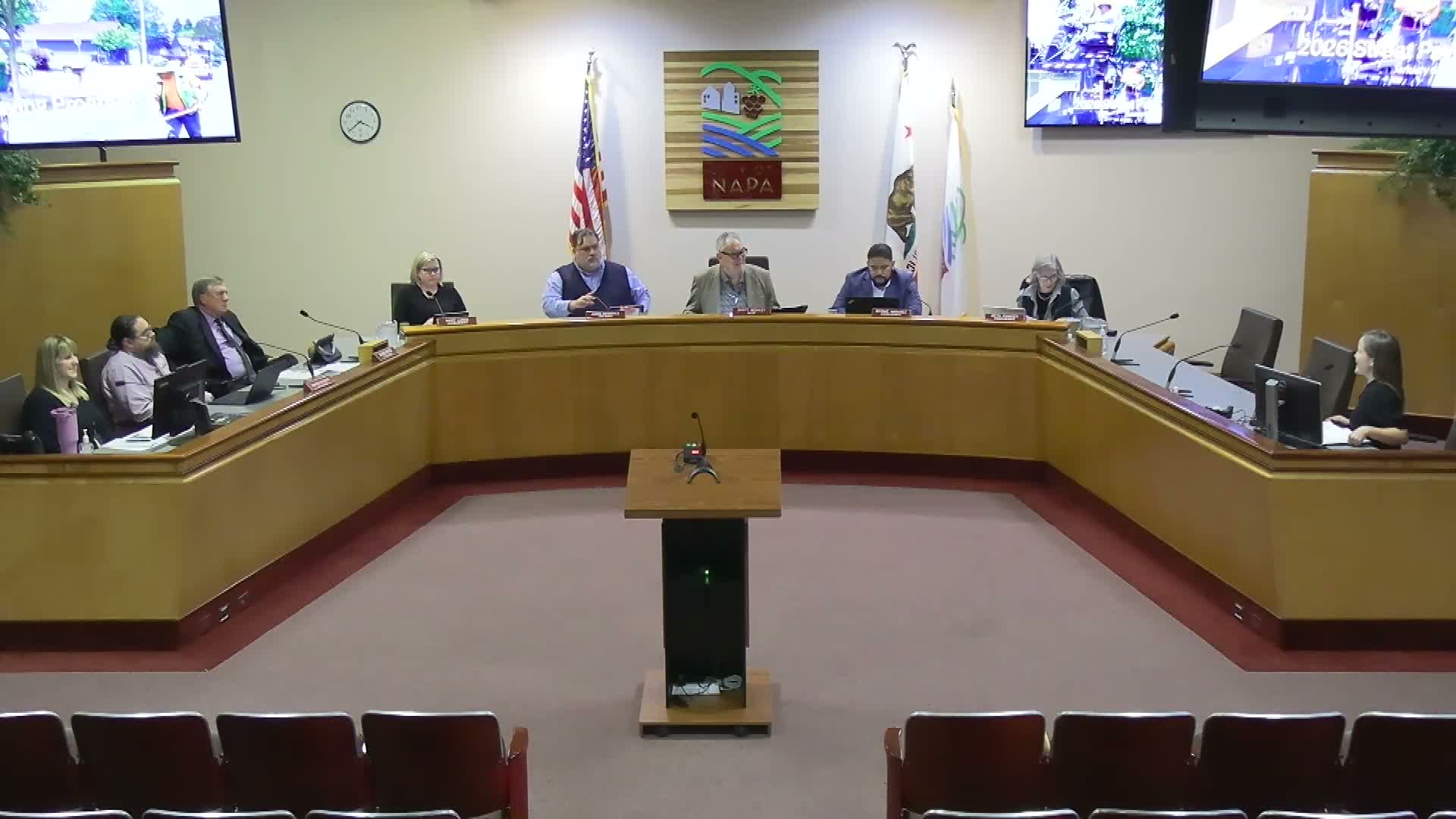
The Napa City Council on Jan. 6 unanimously adopted a resolution authorizing the Public Works director to conduct in‑house paving operations and determined the maintenance paving actions are exempt from the California Environmental Quality Act (CEQA).
Jessica Lowe, deputy public works director, told the council the department paved roughly 41 lane miles in 2025 and improved the city’s pavement condition index (PCI) to 66. She said Measure G provided additional funding and that the 2026 work plan anticipates another “40 plus lane mile year,” with in‑house crews focused on maintenance and preventive work and larger projects completed under construction contracts.
Why it matters: the authorization allows the city to deploy its maintenance crews for resurfacing and preventive treatments without bringing those specific maintenance actions back for separate approvals. Lowe said staff plans to begin the paving season around April 1 and continue through early November, weather permitting, and will prioritize heavily used streets in poor condition to maximize benefit for residents and road users.
Lowe outlined examples of streets included in the plan: Solano (to the northern city limits), Howard Lane, El Centro, Redwood Road, Linda Vista (impacted by recent water‑main work), and multiple downtown and riverfront segments including portions of Main Street, 1st Street, Imola, and others. She noted some streets are tied to flood‑control or utility projects and may be delayed until those works are complete; several larger projects listed on her slides will be carried out by contractors and were not part of the council action.
Councilmembers emphasized safety and data transparency. Councilmember Painter praised the maps staff uses to show current conditions and suggested expanding the public GIS to display where flashing beacons, bike‑lane improvements and sidewalks have been installed; Lowe said the department is recruiting a GIS specialist to publish more of that information. The council also asked about “quick builds” such as restriping or temporary bulb‑outs; Lowe said maintenance paving projects will include safety treatments where appropriate, while speed‑limit reductions are handled by separate traffic‑engineering programs.
The council’s motion, made by Councilmember Painter and seconded by Councilmember Neves, carried unanimously. The resolution authorizes implementation of the non‑contracted (in‑house) paving plan and formally finds those maintenance activities exempt from CEQA.
Next steps: staff will publish the full paving list and post updated maps; larger contract work will be returned to council for award when ready. The council adjourned to closed session after routine announcements.