Lifetime Citizen Portal Access — AI Briefings, Alerts & Unlimited Follows
Panel hears challenge to 1998 plea, dispute centers on whether defendant was warned about immigration consequences
Loading...
Summary
A three-judge panel heard argument in a personal restraint petition by Martinez Salgado, whose counsel says he pleaded guilty in 1998 without adequate advisement about immigration consequences; the state says the record and plea form indicate warnings and urged denial or a limited reference hearing.
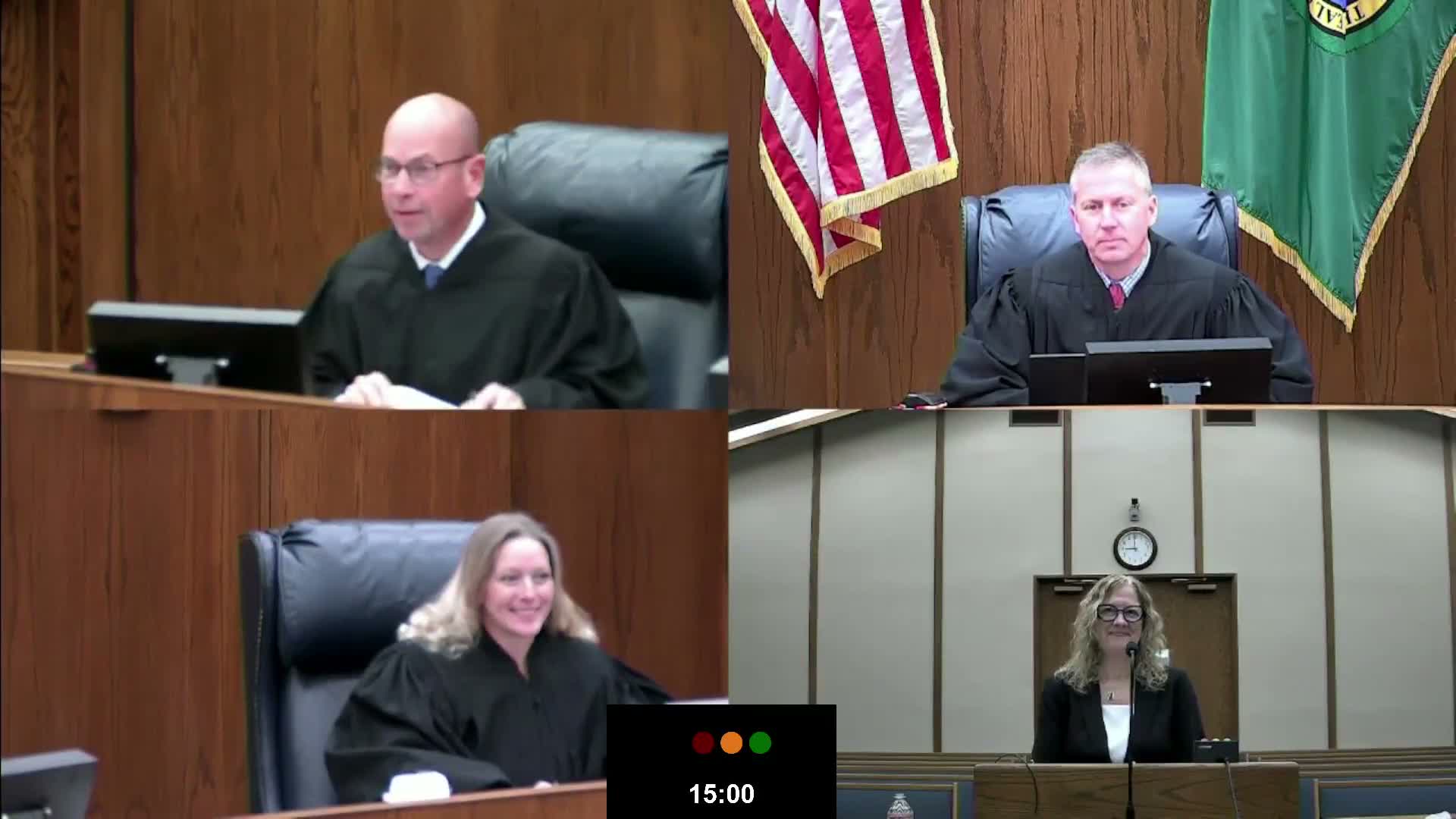
A three-judge panel in Yakima heard argument on a personal restraint petition filed by Martinez Salgado, whose attorney told the court that he pleaded guilty in 1998 after a short window between charge and plea and without adequate advisement about immigration consequences.
"Mister Salgado Martinez was advised to accept a guilty plea in a very short time after his arrest without being adequately advised of the significant collateral and direct consequences of pleading guilty to [a] drug crime," petitioner’s counsel, identified in the record as Miss Tolan, told the panel.
The petition rests chiefly on counsel's alleged failure to provide the sort of immigration advisement discussed in cases such as Padilla, and petitioner’s counsel said the state conceded the collateral-relief request was not time barred and that there was not accurate advisement. Counsel told the court the plea occurred "1 month and 23 days" after charge and argued that level of counsel contact and investigation was insufficient to protect the client’s rights.
The panel pressed for contemporaneous evidence that immigration consequences were a salient factor at the time of the 1998 plea. Presiding Judge John Cooney and his colleagues queried whether statements made now about the importance of staying in the United States establish what the defendant knew or felt at age 21. "What do we have here to show that the immigration consequences were important to mister Salgado Martinez?" the presiding judge asked.
The petitioner’s lawyer cited the client's sworn declaration, which says he had family and a life in the United States, had attempted to adjust his status, and would not have accepted the plea had he understood it would result in deportation and bar future adjustments. Counsel acknowledged additional fact development might come at an evidentiary (reference) hearing but argued the record lacks counterevidence and that the trial court should have held a hearing rather than merely transferring the matter.
Kevin McCray, who identified himself as "special deputy prosecutor for Grant County," told the court the record contains indicators that the defendant received warnings and that the guilty‑plea form and police report weigh against relief. "Lee answers that question when it says that the court should not rely solely on post‑facto allegations," McCray said, arguing the court should look for contemporaneous evidence rather than a later recantation.
McCray also noted the trial record shows no request for a reference hearing below and called the petitioner’s post‑plea statements "20/20 hindsight," saying the state would therefore urge the court to affirm the lower court and deny the PRP. He described practical options if the panel grants relief: return the case for a reference hearing to resolve credibility issues, allow withdrawal of the plea, or deny the petition.
In rebuttal, petitioner’s counsel emphasized problems with a confidential informant referenced in the police report and said reliance on that report would itself justify an evidentiary hearing. Counsel offered supplemental briefing and reiterated the request that the court grant the PRP or, at minimum, order a reference hearing to assess credibility and prejudice.
The panel noted it did not have the full police report before it and thanked counsel for the filings. The judges said they would take the arguments under advisement and review the briefing before deciding whether to remand for a reference hearing, grant relief, or deny the petition.