Lifetime Citizen Portal Access — AI Briefings, Alerts & Unlimited Follows
Panel advances AB 24 97 to modernize physical‑therapy practice; dry‑needling sparks large opposition
Loading...
Summary
The committee voted to send AB 24 97 to appropriations after protracted testimony. Supporters said removing direct‑access limits and authorizing dry needling (with training safeguards) would improve access; acupuncturists and medical groups staged extensive opposition centered on safety and scope.
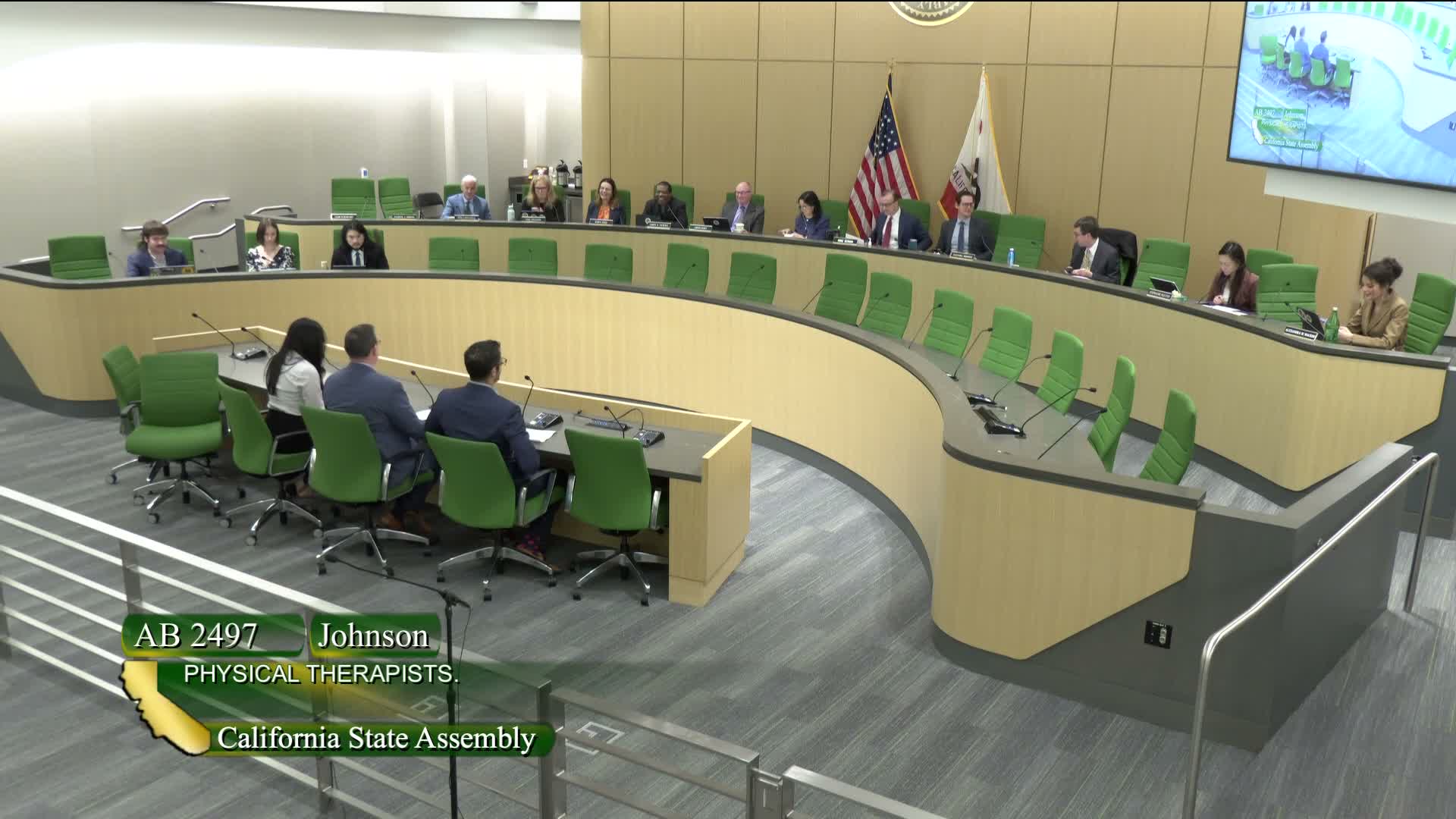
The Assembly Business and Professions Committee advanced AB 24 97, a wide‑ranging modernization of California’s Physical Therapy Practice Act, sending the bill to appropriations as amended. The measure removes the 45‑day/12‑visit limit on direct access to physical therapy and would allow dry needling after required competency validation by the Department of Consumer Affairs and Board‑defined training.
Assemblymember Johnson, the bill’s author, said the changes bring California into alignment with most other states, expand timely access to care and help retain physical therapists who might otherwise move out of state. "California is one of the few states that still restricts direct access," Johnson said, noting that delays can jeopardize recovery from neurologic injury.
Supporters included the California Physical Therapy Association, VA clinicians and a number of individual therapists. Dr. Chris Reid, who testified for the sponsor, said other states that allow dry needling have not seen increases in complaints or disciplinary actions and that training requirements in the committee amendments would protect patients.
Opposition was large and vocal. Hundreds of acupuncturists, students and patients packed the hearing room to oppose the dry‑needling provisions; many said dry needling is equivalent to acupuncture, requires substantially more training than the bill provides, and would create a two‑tier system for the same invasive procedure. The California Acupuncture community and several medical societies urged removal of the dry‑needling language, arguing the public‑safety risk and cultural impacts on a long‑regulated profession were not adequately addressed.
Medical groups also expressed concerns about direct access and diagnostic risk. The California Medical Association said bypassing physician evaluation for undiagnosed conditions could place patients at risk and urged tighter safeguards.
Committee members acknowledged the intensity of public comment and the remaining concerns, but accepted committee amendments that narrowed certain provisions and added implementation guardrails. The committee recorded a roll‑call and moved the bill, as amended, to the Appropriations Committee. Members and staff said further technical work and stakeholder negotiations are expected before any floor vote.
Outcome and next steps: AB 24 97 passed out of committee as amended and will be considered in Appropriations; opponents urged further changes, particularly removing dry‑needling authority.