Get Full Government Meeting Transcripts, Videos, & Alerts Forever!
Get email alerts on the Water Quality Watershed Monitoring topic
No spam. Unsubscribe anytime.
Napa presents five-year watershed sampling results; PFAS detected in one creek, treated water shows no detections
Summary
City water staff reported 41 sampling events and more than 680 samples from Hennessy and Milliken watersheds since 2020; transient detections of pesticides and plasticizers appeared at isolated sites and persistent PFOA/PFOS signals were limited to one creek system, but treated drinking water has shown no detections to date.
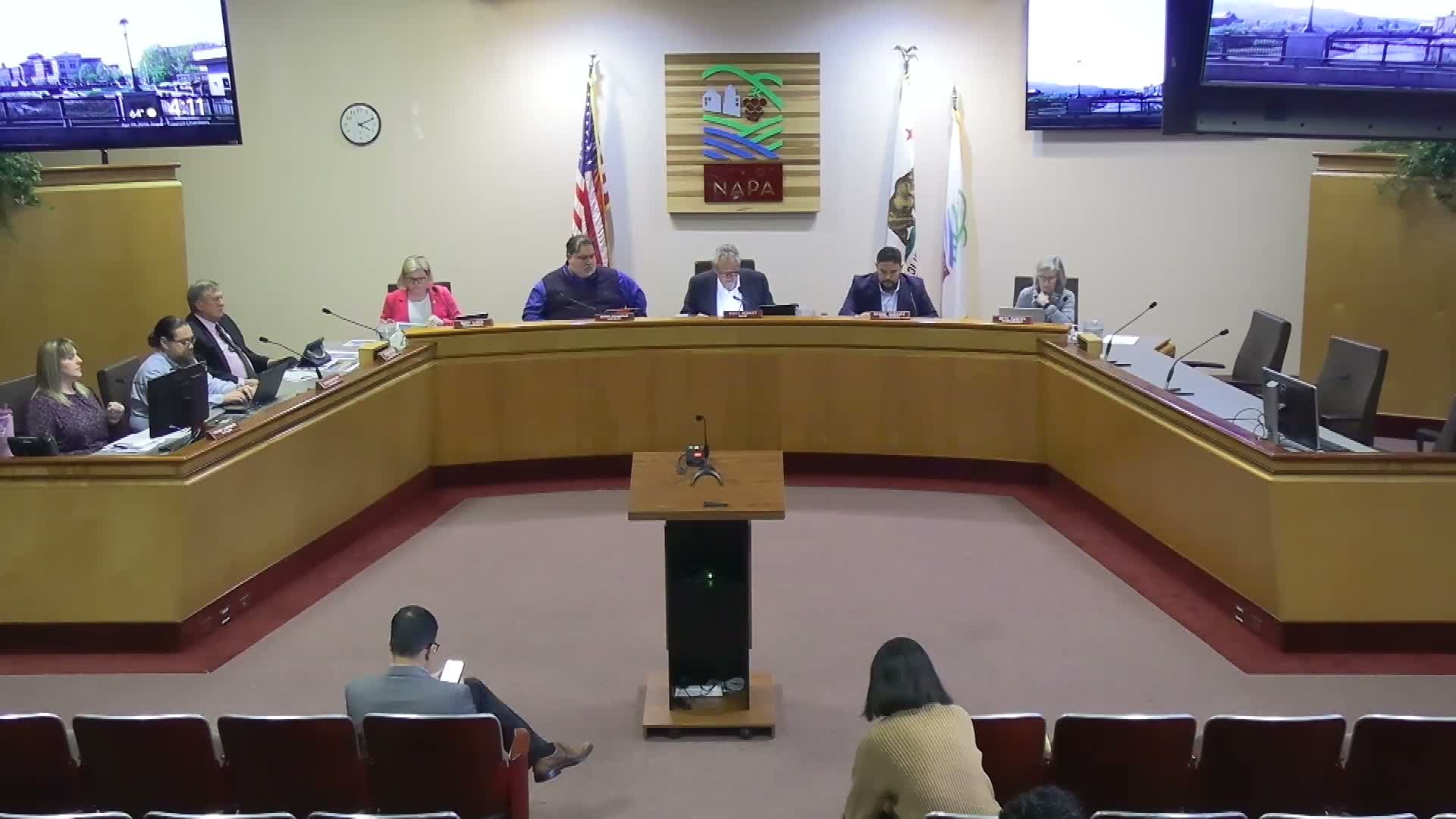
City water staff on Tuesday gave the council an update on a multi-agency watershed sampling and monitoring program for Hennessy and Milliken reservoirs.
Erin Kvas, water quality manager, said the program is a collaboration among the City of Napa, Napa County and the Napa County Resource Conservation District and that regular joint sampling began in 2021 after initial planning and a 2019 memorandum of understanding. "We set the sampling dates, we work with our sub-laboratories and collect approximately 10 liters of water from each location," Kvas said, describing field protocols and chain-of-custody measures.
Water laboratory analyst Candice McKenzie summarized findings to date: "We have had 41 sampling events to date with over 680 individual samples collected," she said. Staff reported intermittent, low-level detections of pesticides, herbicides, roadway contaminants and plasticizers across several locations, and persistent detections of PFOA and PFOS compounds in one creek system (upper Concrete Creek). Presenters emphasized that these results are raw-water detections collected in creeks and inflows, not treated finished drinking water; as Joy Eldridge and other staff noted, "For now, our treated water has seen no detections."
Officials explained typical sample turnaround and interpretation: field sampling occurs monthly when locations have flow, samples are sent to a sub-laboratory and analytical results return in roughly 6–8 weeks. Staff said the program aims to build a baseline to detect anomalies as land use changes and to train models to forecast wet-year versus dry-year water-quality conditions; about 10 years of data will be needed for robust predictive modeling.
Council members asked whether detections require notifications or further action. Staff said current detections in surface water prompt interagency outreach and investigation where patterns emerge; groundwater and private wells are not part of the regular sampling program and would be sampled by well owners or county programs if concerns arise.
What’s next: continued monthly sampling, interagency coordination on any detected patterns, and use of the dataset to inform potential treatment-plant responses and watershed management strategies.