Get Full Government Meeting Transcripts, Videos, & Alerts Forever!
Get email alerts on the Sales Tax Capital Penny topic
No spam. Unsubscribe anytime.
Beaufort County considers 2026 'capital projects' penny sales tax, outlines commission, timeline and project list approach
Summary
County staff and councilors discussed a proposed 2026 capital‑projects penny sales tax, recommending a six‑member commission, allocation by 2020 Census population and a ballot with specific, finite projects (public safety campus, detention expansion, SC‑170 corridor). Council directed staff to continue planning and outreach.
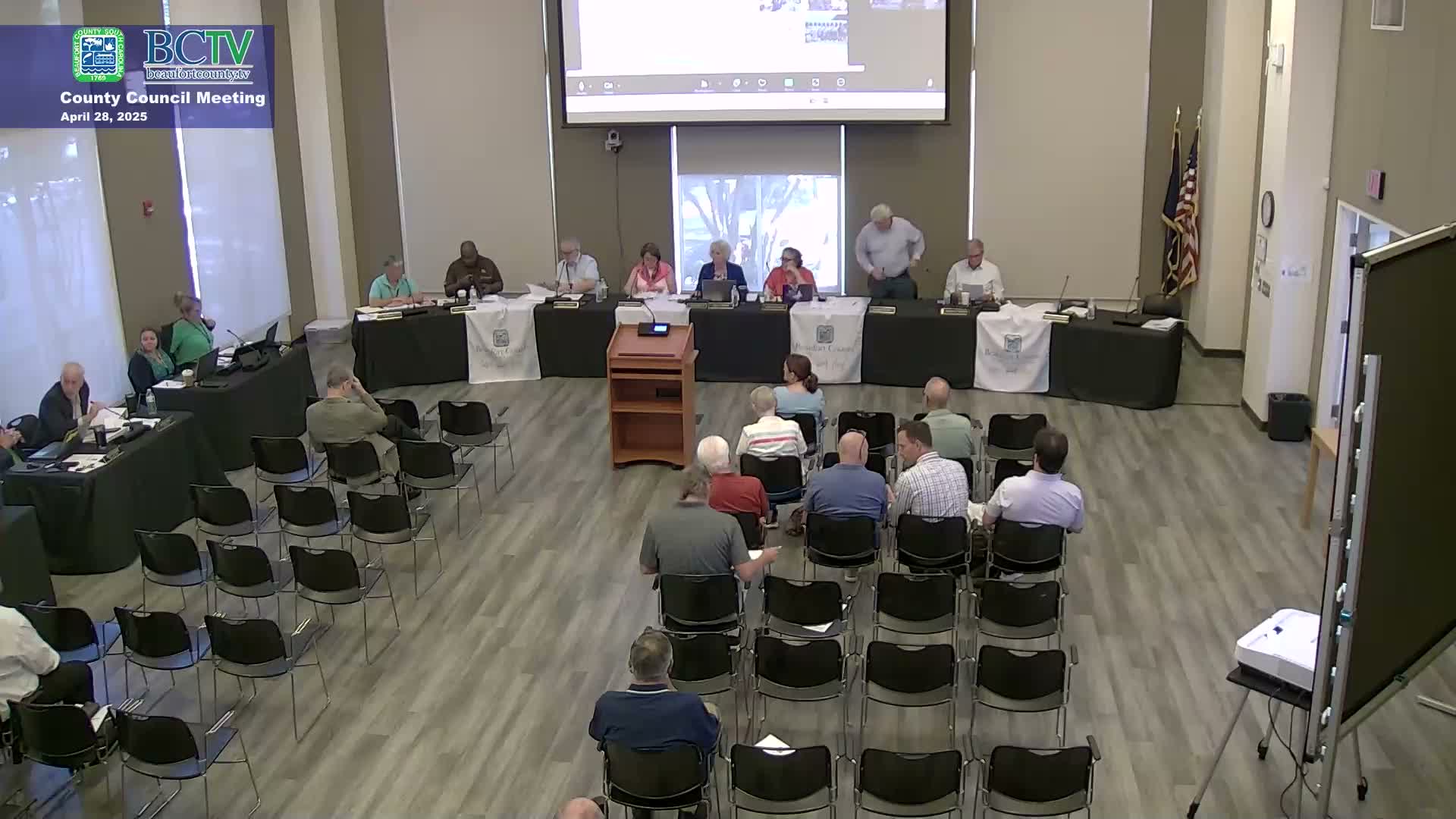
Beaufort County officials on Tuesday discussed plans to pursue a 2026 capital‑projects penny sales tax that would fund a predefined list of projects across municipalities and unincorporated areas.
The presenter told the council the study team was tasked to gather lessons from other counties and recommend a structure that avoids the “bucket of money” problem that helped sink past referendums. The presenter said the law allows an eight‑year, one‑penny sales tax and that “everything is clearly listed on a ballot” — a point the presenter and multiple council members stressed as central to restoring public trust.
Why it matters: proponents say a capital penny can fund large, long‑range needs — including a consolidated public‑safety campus, a phased detention‑center expansion and targeted transportation projects in the SC‑170 corridor — without increasing property tax. Opponents and some council members said the county must be precise about projects and timelines to avoid repeating the voter mistrust that helped defeat prior measures.
What was proposed: staff recommended forming a six‑member commission (three county appointments; municipal representation determined by population) to solicit and vet projects from municipalities. The commission would produce a specific ballot question listing each project and its location; staff recommended using 2020 Census population to allocate proceeds so each municipality has a known, finite dollar allocation. The presenter described a timeline that would establish the commission by an August council vote, allow September–February for cost estimates and project refinement, and place public education in an August–November window ahead of an election cycle.
Council and staff debate: councilors asked whether commission membership should be known before the ordinance is adopted so the commission can begin work sooner; staff recommended informal selection conversations start immediately with formal appointments in August. Members also debated whether to scale the proposal (e.g., a smaller total or shorter program), or to split capital and transportation into separate referendums or half‑penny measures. One council member urged matching program length to the projects included — for example, buildings typically move faster than multi‑year road projects.
Public trust and prior funds: several speakers pressed staff to explain the status of money collected under the 2018 sales tax. One attendee said the county “collected $80,000,000” and asked where that money went; staff responded that funds from prior referendums are monitored and that the county will present reconciled project lists and accounting in forthcoming materials.
Next steps: councilors gave staff direction to continue developing options, including a pro‑con and timeline evaluation for a split (transportation vs. capital) approach, and to return with refined project lists and cost estimates. The council did not vote on a referendum today but signaled support for continued work and community outreach.
Attribution: Quotes and attributions are drawn from the meeting transcript. The presenter (identified in the transcript as the presenter delivering the briefing) emphasized the need for specific, legally eligible projects on the ballot; councilors asked for precinct‑level voting analysis and for staff to use the 2020 Census for allocation. Public commenters and local stakeholder representatives urged robust, targeted outreach and offered experience with prior referendums.
What to watch for: staff return with a formal commission ordinance, a draft ballot question (specific project list), project cost estimates and a proposed public‑education plan. The council signaled it expects to review those materials before any decision to place a referendum before voters.