Lifetime Citizen Portal Access — AI Briefings, Alerts & Unlimited Follows
Senate advances and amends bill to create pathways for people with serious mental health disorders
Loading...
Summary
The Colorado Senate advanced Senate Bill 149 on second reading April 23 after adopting multiple amendments that narrow some near-term fiscal assumptions and remove an over-expenditure authority for Department of Human Services; the bill—sponsors say—creates placements for people incompetent to proceed and includes a five-year repeal provision for review.
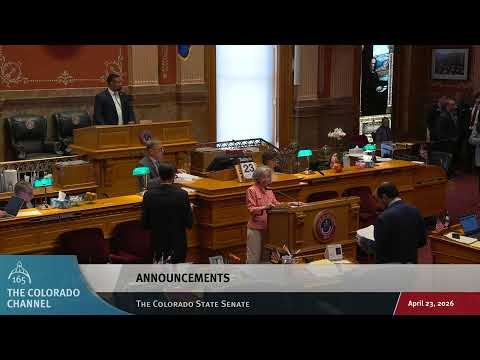
Senate members on April 23 advanced Senate Bill 149, a measure sponsors say creates pathways into placements for people who are incompetent to proceed in court because of serious mental health or neurocognitive conditions. The Senate took the bill up on special order, considered and adopted several amendments, and ordered it engrossed for third reading and final passage.
Senator Amabile, a sponsor, told colleagues the bill reflects months of work in judiciary and appropriations committees and a large drafting effort to address gaps that have left some people without appropriate placements. "I ask for a yes vote," Amabile said as the committees' reports were adopted by the Committee of the Whole.
Supporters said the measure targets people who are both dangerous and unlikely to be restored to competency through the usual processes, creating specialized placement pathways and related civil-procedure adjustments. Sponsors and cosponsors described the bill as a response to high-profile cases where lack of placement options led to people being released and, they said, reoffending; the sponsor said media attention and public safety concerns helped drive the work.
Senators adopted a series of amendments by voice vote. Amendment L049 reduced immediate fiscal assumptions tied to judicial hiring—shortening the front-loaded FTE request and allowing the Judicial Department to pursue normal budget processes in the next fiscal cycle. Sponsor amendments L055 and L051 removed an over-expenditure authority for the Department of Human Services and added clarifying language requested by district attorneys and agreed with the Department of Human Services. Technical fixes (L050, L052, L053) addressed statutory language choices, repeal dates, and publication corrections.
Senate staff noted the measure carries a substantive fiscal impact; supporters described the sum as substantial but did not provide a single dollar figure on the floor. Debate included acknowledgments of uncertainty in estimating the population that will need these placements, with floor discussion citing a range of estimates and stressing that supplemental appropriations or future budget processes could adjust resources as data emerge.
After amendment votes, the Committee of the Whole adopted the committee reports and the body recorded the committee's report vote as 35 ayes, 0 no, 0 absent or excused. The bill was placed on the calendar for third reading and final passage.
What happens next: Senate Bill 149 will appear for third reading and final passage on a later calendar; sponsors said additional technical amendments may be offered on third reading to address outstanding implementation details.