Get Full Government Meeting Transcripts, Videos, & Alerts Forever!
Get email alerts on the Municipal Budget topic
No spam. Unsubscribe anytime.
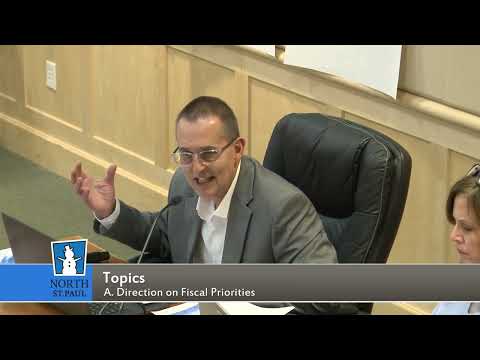
North St. Paul finance director warns of steep property-tax shifts, seeks council direction on levy range
Summary
At a Nov. 18 workshop Finance Director Dan Winnick told the City Council that parcel‑level projections and county and school levies could push a median homeowner’s bill up notably; staff asked whether an 8–10% annual levy cap (starting from a 6% infrastructure baseline) is acceptable while balancing CIP priorities.
Finance Director Dan Winnick told the North St. Paul City Council at a Nov. 18 workshop that a mix of market-driven property-value increases, county and school levies and the city’s capital-improvement commitments have produced sharp changes in who pays and how much.
Winnick presented sample household numbers and parcel statistics provided by Ramsey County, saying the city portion of taxes rose substantially between 2021 and 2025 and that a typical median-value home could see roughly a 7% bottom-line increase under the 2026 proposed figures. “So obviously, I think those are staggering numbers,” Winnick said, summarizing parcel-level breakouts that showed nearly 56% of parcels facing a 0–10% increase and smaller shares facing larger increases.
The presentation framed the levy decision in two parts: staff proposed a baseline roughly equivalent to a 6% levy to cover long-delayed infrastructure work included in the 2026–35 capital improvement plan, and then asked council whether a broader 8–10% annual range would be an acceptable cap given likely operating and insurance cost pressures. “We’re gonna be starting pretty close every year for the next 9 years at a 6%,” Winnick said, adding that rising costs for labor and insurance would add pressure beyond that baseline.
Winnick attributed much of the change to market-value shifts that hit residential property harder than commercial property, shifting tax burden to homeowners; he also noted county actions (Ramsey County’s proposed 9.75% levy) and potential state reductions to local government aid could force additional levy increases if not covered by other revenues.
Councilmembers said they understood the need to catch up on deferred maintenance but stressed trade-offs. Councilmember McKenzie said the 8–10% range “is pretty safe” and would allow the city to manage planned projects; Councilmember Woods cautioned that a 6% infrastructure baseline leaves only 2–4% of operational flexibility and urged careful prioritization to avoid passing problems to future councils.
Councilors and staff agreed on a few practical points: use cost-benefit and life-cycle analyses before approving projects, include concise financial-impact statements on future agenda items, and prioritize utility and street infrastructure while balancing public-safety needs. Staff will compile the workshop post-it prioritization results and return to department heads with cost impacts and recommended sequencing.
The workshop included no formal levy vote; Winnick said staff will present detailed options and financial impacts at upcoming meetings and at the Truth in Taxation session scheduled for Dec. 2.