Get Full Government Meeting Transcripts, Videos, & Alerts Forever!
Get email alerts on the Border Cities Employer Credit topic
No spam. Unsubscribe anytime.
EDA weighs expanding border‑cities credit to cover workers’ compensation; refers details to loan committee
Summary
East Grand Forks Economic Development Authority discussed expanding its Border Cities employer credit to subsidize businesses’ workers’ compensation costs, noted a roughly $484,000 fund balance and state approval requirements, and agreed to refer detailed policy design to the loan committee.
The East Grand Forks Economic Development Authority discussed whether to broaden its Border Cities employer credit program to subsidize employers’ workers’ compensation costs and asked the loan committee to draft the details.
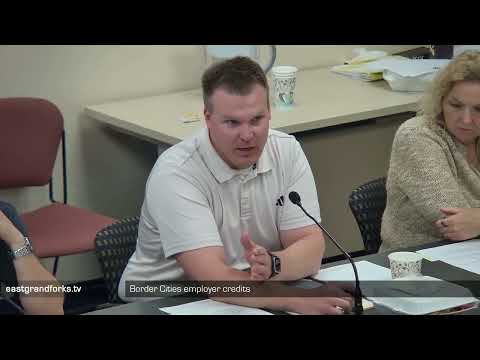
EDA Director Maggie said the city’s Border Cities pot “is, like, 484,000,” and noted the state distributes an installment of about $104,000 every other year. She explained officials are exploring examples from Moorhead and Dilworth and have prepared a draft program description that would let East Grand Forks use some Border Cities dollars for workers’ comp buy‑downs.
Members debated tradeoffs. One member noted Moorhead limits eligibility geographically by enterprise zone, while East Grand Forks’ enterprise zone covers the entire city, which would broaden who qualifies. Board members raised concerns that broad eligibility and large caps could quickly exhaust the fund and that the state may view unused funds unfavorably if they appear underutilized.
Maggie described administrative steps and timing: applications for tax credits and related filings go through the state Department of Employment and Economic Development (DEED) and the Department of Revenue and can take months to complete. She said modernization of state language and additional appropriations have been requested at the legislative level to help expand the program.
Rather than adopt a new policy immediately, the board agreed to table detailed changes and send the item to the loan committee to develop eligibility criteria, per‑business caps, application procedures and reporting requirements before returning to the full EDA.
The loan committee will review potential caps (members discussed examples including program maximums cited in other cities), how to carve funds without jeopardizing property tax incentives, and the state reporting steps required for DEED and revenue approval.