Get Full Government Meeting Transcripts, Videos, & Alerts Forever!
Get email alerts on the Land Use topic
No spam. Unsubscribe anytime.
Council approves Northwest Rocklin General Development Plan amendment to allow outdoor retail and parking flexibility
Summary
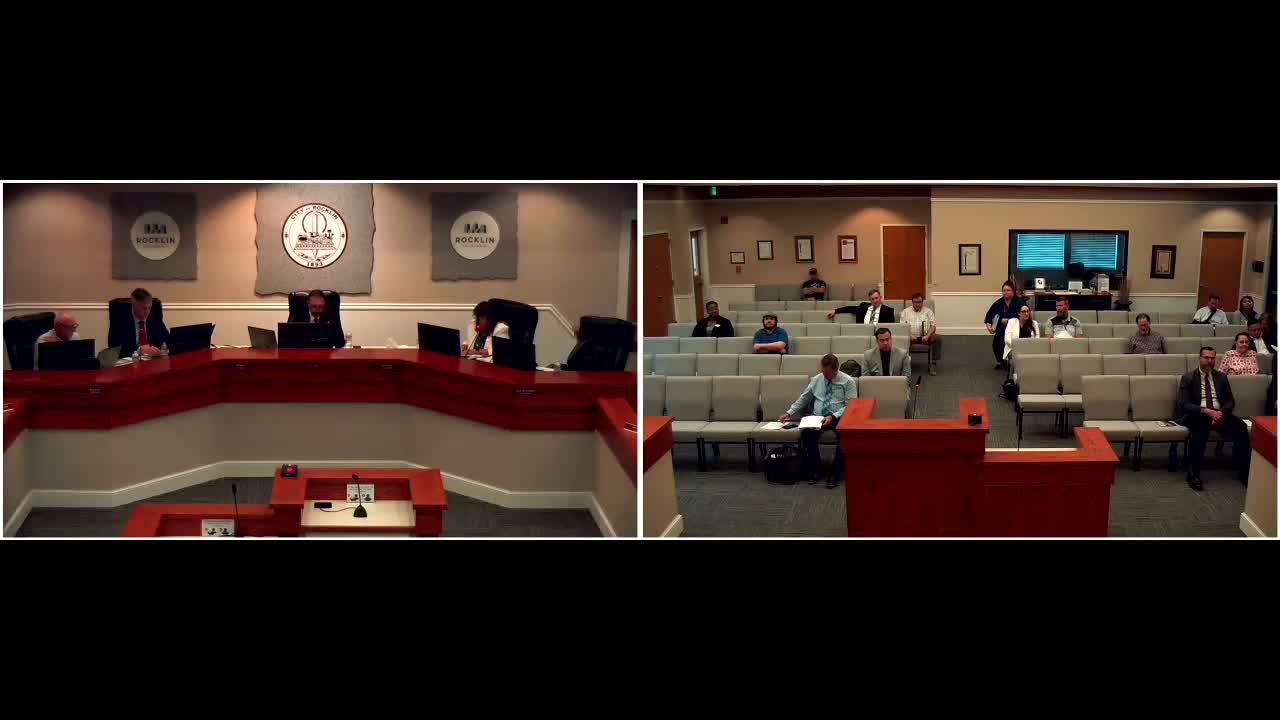
Council unanimously approved a General Development Plan amendment and introduced an ordinance to allow exterior retail sales, storage, and conditional deviations from parking standards for seven properties in the Northwest Rocklin GDP area to support hardware/garden‑center type tenants.
The City Council voted unanimously to approve changes to the Northwest Rocklin General Development Plan that add retail sales (including exterior sales and storage) as an allowed use through conditional use permits and permit deviations from off‑street parking standards when justified.
Principal Planner Nathan Anderson told the council that the 1,900‑acre Northwest Rocklin area contains most of the remaining undeveloped commercial land in the city and that the amendment is intended to make the district's nonresidential rules consistent with other commercial areas. "This amendment proposes a new allowed use category within the Northwest Rocklin General Development Plan: retail sales, exterior sales, and storage," Anderson said. Staff emphasized that any outdoor retail or storage would still be subject to site‑specific conditions via a conditional use permit (screening, location, circulation, lighting, hours).
The amendment applies citywide within the GDP area to seven properties (three currently vacant) near SR 65 and is intended to broaden the pool of viable retail tenants for those sites, such as home‑improvement retailers with garden‑center components. The Planning Commission recommended approval; Council moved and seconded the first‑reading ordinance and passed both PH2A and PH2B unanimously.
What's next: The ordinance was introduced and read by title; developers seeking to use the new allowance will need to apply for conditional use permits and show how site‑specific conditions will mitigate impacts.
Why it matters: The change provides zoning flexibility to attract retailers that require outdoor sales or storage (for example, garden centers or building‑supply yards) and could shorten entitlements for prospective tenants by allowing an established CUP pathway.