Get Full Government Meeting Transcripts, Videos, & Alerts Forever!
Get email alerts on the College Disability Transition topic
No spam. Unsubscribe anytime.
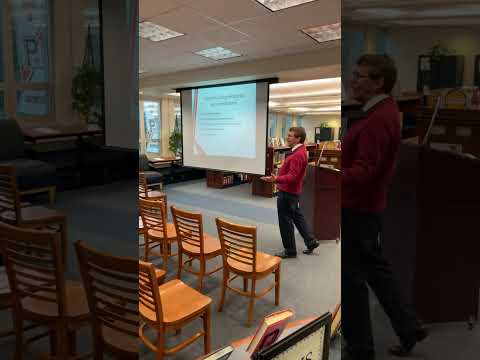
Dr. David Nast of Ramapo College advises parents on legal differences, disclosure and housing for students with disabilities
Summary
At a Special Education Parent Advisory Group event, Dr. David Nast explained how K–12 protections differ from college law, when students must disclose disabilities, the documentation colleges expect, common accommodations and housing challenges including emotional support animals and single‑room requests.
Dr. David Nast, director of the Office of Specialized Services at Ramapo College, told parents at a Special Education Parent Advisory Group meeting that students and families must treat college disability support differently than K–12 services because the governing laws and practical expectations change.
"In the high school set, the primary law that supports students with disabilities is IDEA," Nast said, noting IDEA’s protections end at graduation. "What becomes paramount when we're talking about disability laws is Section 504 of the Rehabilitation Act as well as the Americans with Disabilities Act." He added those federal laws require reasonable accommodations and equal access but do not obligate colleges to fundamentally change degree‑program requirements.
Why that matters, Nast said, is that an individualized education program (IEP) and certain high‑school modifications do not transfer automatically to college. Parents should not assume college will continue IEP‑level supports: "Students choose whether to affiliate with the disability support office," he said, but "to receive support they must disclose if they want any support regarding their disability." He recommended families prepare recent documentation and delay submitting nonessential records until the student has deposited, because many colleges will not review files until a student commits.
Nast described common academic accommodations: extended time (often time‑and‑a‑half), use of a computer for essay exams, audio recording of lectures (allowed under New Jersey’s single‑party consent rules when supported as an accommodation) and, in some cases, double time. "Triple time is a possibility," he said, "but most colleges would push back regarding, like, triple time, and they would want a clear explanation why double time is necessary." He cautioned that colleges can deny a requested substitution if a course is fundamental to a major, though they must deliberate rather than simply say no.
Housing and emotional support animals drew sustained attention. Nast said single‑room requests and ESAs are frequent and complicated: housing offices evaluate whether a single room is needed for disability‑related reasons (not merely quiet study) and must balance roommates’ needs. ESAs are considered under the Fair Housing Act, but Nast warned the office receives many weak or internet‑sourced letters and must evaluate the documentation’s validity.
On documentation timing, Nast recommended families update evaluations during the last three years of high school where possible because many colleges request recent professional reports. He said Ramapo often requires documentation not older than three years and uses standardized forms completed by qualified professionals instead of brief notes.
Nast also described programs beyond basic accommodations. Disability services that implement legally required accommodations should not carry extra fees, he said; programs that offer additional supports (peer facilitators, counseling, structured workshops) may be capped and charge extra. As an example, he said Ramapo’s enhanced program for students on the autism spectrum requires an application and an additional fee (he referenced an approximate annual figure of $8,000) and is separate from the federally funded Trio student support services program that provides tutoring and advising for eligible students.
Practical transition advice included early campus visits, updating evaluations in junior/senior years, practicing typing and writing skills, taking internships or summer programs, and limiting first‑semester credit loads to allow time for adjustment. Nast said students affiliated with Ramapo’s disability office graduate at rates similar to the general student population and urged early affiliation where supports may be needed later in a short semester.
During Q&A, parents asked about Trio and enhanced programs. Nast said Trio covers up to 185 students under a federal grant and offers additional tutoring and career help; program spots are often limited and funding can vary based on federal priorities. He also advised students to indicate accommodations when registering for placement tests and noted testing centers typically coordinate accommodated testing rather than large general test settings.
The session was livestreamed and the organizers said they will post the recording to the CPEG YouTube page.