Get AI Briefings, Transcripts & Alerts on Local & National Government Meetings — Forever.
Denton approves performance‑based incentive for drone manufacturer Criteo Sky after heated debate, 5–2
Loading...
Summary
Council approved a Chapter 380 incentive package capped at $870,064 for Criteo Sky to lease a 167,000 sq ft facility and create projected jobs and investment; the vote followed extensive questioning about company maturity, military sales potential and transparency and a string of public objections.
The Denton City Council voted 5–2 on April 21 to approve a performance‑based Chapter 380 economic development package for Criteo Sky, a recently founded unmanned aerial systems (UAS) company proposing to lease space at 3411 Mingo Road and create jobs and capital investment over time.
Staff recommended incentives capped at $870,064 that include a 65 percent ad valorem rebate on qualifying new improvements and business personal property for eight years (with performance conditions and a cap of $498,564), a sales‑tax rebate on construction materials (cap $94,500), a job‑based grant and residency bonus (cap $227,000), and a small headquarters grant (cap $50,000). Brittany Sotelo, the city’s economic development director, said the company projects $23.5 million in capital investment and up to 258 jobs and that staff scored the application 84 in the city’s evaluation matrix.
Supporters emphasized jobs and regional competitiveness. "We're focused on creating jobs," Sotelo said, noting the company’s plan to hire engineering, production and quality technicians and to partner with local universities.
Opponents — including public commenters and several council members — pressed for greater transparency and raised ethical and national‑security concerns about companies that make dual‑use UAS technology. Graduate student Jeremy Gingrich told council that Criteo Sky has no production history or verified revenue and warned that incentives are concrete while returns are hypothetical: "Every single number justifying this deal is a projection from a company that has not yet proven [it] can deliver at any scale," he said.
Chance Harrington and other public speakers asked staff to hold formal public hearings on grant clauses tied to federal awards and to implement mandatory grant‑review protocols to flag immigration‑enforcement collaboration clauses.
Council debate was divisive. One councilor said the deal’s math and job prospects checked out but struggled to secure assurances on downstream uses for the technology; another council member explicitly declined to support incentives for entities she worried could supply military applications.
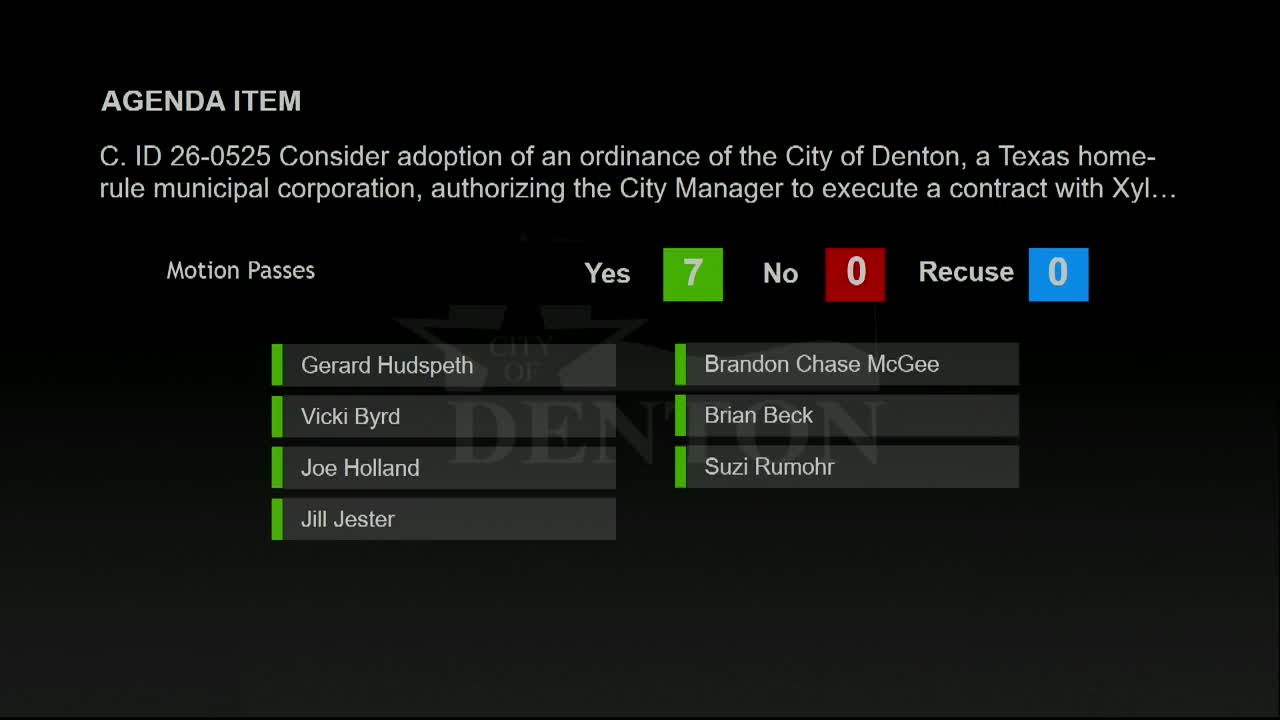
The council motion passed, and staff will enforce the performance‑based terms — including clawbacks — if targets are not met, per the agreement. The ordinance and incentive agreement require specific deliverables (certificate of occupancy, verified payroll and residency documentation and purchase thresholds for the sales‑tax rebate) before payments are made.