Get Full Government Meeting Transcripts, Videos, & Alerts Forever!
Get email alerts on the Financial Policy topic
No spam. Unsubscribe anytime.
Denton CFO proposes 10-year financial policy to guide budgets, reserves and rate adjustments
Summary
City finance staff proposed a four‑phase initiative to create a single comprehensive financial policy with 10‑year forecasts, reserve targets across funds, depreciation‑based reinvestment planning and benchmarking to national standards. Council gave staff direction to proceed.
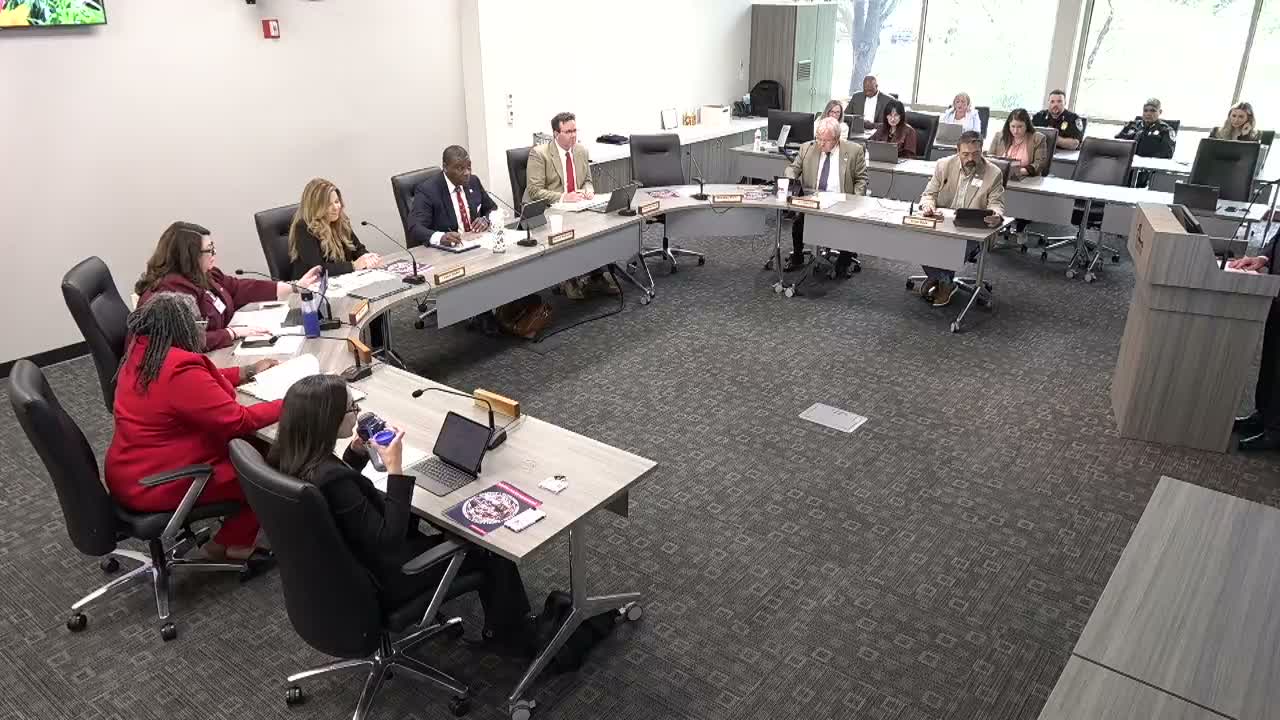
Matt Hamilton, Denton’s chief financial officer, told the Denton City Council on April 21 that staff is asking for direction to develop a comprehensive financial policy that will bring standalone policies — fund balance, debt and investment policies — under a single strategic framework.
The proposal would require producing 10‑year pro forma forecasts, setting formal reserve targets for the general fund and major enterprise funds (electric, water, wastewater, solid waste and airport), creating depreciation‑based reinvestment strategies for capital assets, and documenting revenue‑to‑expense linkages. "What we're looking to do is to start an initiative that would establish a comprehensive financial policy," Hamilton said, describing phases that include technical development, draft adoption and ongoing monitoring.
Why it matters: staff said the work is intended to protect bond ratings, improve predictability for residents and businesses, and reduce the chance of sudden large rate spikes by enabling steady, incremental adjustments tied to a long‑range forecast.
Key details: Hamilton referenced GFOA, AWWA and APPA best practices and noted GFOA recommends forecasts beyond five years for governments that issue debt or set utility rates. He said the city currently produces five‑year forecasts and would expand to 10 years so structural imbalances can be identified earlier. Hamilton also cited industry guidance suggesting a general fund unrestricted balance at or above 20 percent of annual expenditures, and noted rating‑agency thresholds are often nearer 15 percent.
Council response: Council members expressed support for predictable, gradual rate adjustments and for documenting current practices in a consolidated policy. One councilor representing District 1 urged caution about a 10‑year horizon, arguing turnover in administrations can make longer forecasts less reliable. Multiple members asked staff to return with a red‑line showing what in the proposed policy is new versus what the city already does.
Next steps: Council directed staff to proceed with the four‑phase approach outlined by Hamilton and to bring draft policy language and targets to future meetings for review and adoption.