Get Full Government Meeting Transcripts, Videos, & Alerts Forever!
Get email alerts on the Water Supply topic
No spam. Unsubscribe anytime.
Glendora staff say invasive mussel mitigation could restore deliveries by May; Sierra snowpack remains low
Summary
City staff told commissioners that invasive mussel detection in regional conveyance has delayed deliveries but regional treatment and testing may allow releases in May; staff also reported Sierra snowpack near 20% and that local well levels improved modestly.
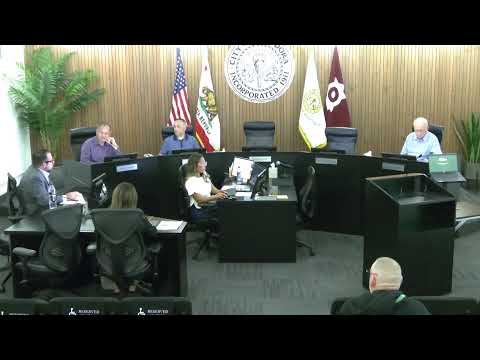
Paul Zampello presented the local water supply outlook, giving a regional update on precipitation, reservoir status and invasive species work affecting deliveries.
Zampello said Southern California saw above‑average rainfall in the region while the Sierra snowpack remained very low — "we're at 20%" of normal at the point he cited — and that those long‑term conditions could reduce imported supplies. He said invasive golden mussels were found in regional infrastructure and in the state water project; regional partners, county flood‑control and Watermaster have been coordinating mitigation and legal/status hearings. "It isn't a water quality concern," Zampello said, characterizing the mussel as a maintenance and infrastructure problem that can clog intakes and valves rather than a contaminant risk.
Staff reported that treatment proposals and testing are underway and that some deliveries could resume in May pending proof that treatments control mussel impacts. Zampello also noted local storage and extraction conditions: Cogswell Dam was reported at roughly 70% and San Gabriel reservoir levels and maintenance plans were discussed; the Baldwin key well rose to 267 feet by March, improving some basin metrics. He cautioned that Lake Mead and Lake Powell remain well below historical averages for capacity, a long‑term concern for Colorado River supplies.
Commissioners asked about forecasted snowpack trends, the San Gabriel draining and how purchasing imported water would affect the city's budget. Staff said the city has budgeted for some purchased water; shutting wells off would reduce pumping costs and partially offset purchases, but full reliance on purchased water would have catastrophic budget impacts. The commission moved to receive and file the report; the motion carried with three votes in favor.
The presentation framed immediate regional coordination on mussel mitigation and continued monitoring of local and imported supplies as the primary near‑term priorities.