Lifetime Citizen Portal Access — AI Briefings, Alerts & Unlimited Follows
Port Royal Sound Foundation outlines volunteer monitoring expansion and new data tools for Beaufort County watershed
Loading...
Summary
Courtney Kimmel of the Port Royal Sound Foundation told Beaufort CountyStormwater board that expanded volunteer monitoring, a public data portal and a $125,000 grant aim to close gaps in long-term water-quality data across the roughly 1,500-square-mile watershed.
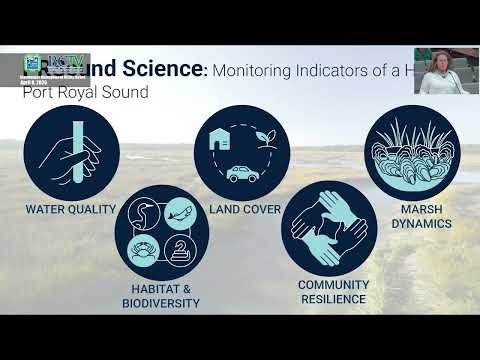
Courtney Kimmel, director at the Port Royal Sound Foundation, told the Beaufort County Stormwater Management Utility Board on April 8 that the foundation is expanding local monitoring to better detect and respond to change across the Port Royal Sound watershed.
Kimmel said the watershed covers about 1,500 square miles and includes most of Beaufort County. She summarized an assessment of CCAP and state data showing the estuary remains relatively healthy but is changing, especially in tidal creeks. "We are not in a place of restoration. We are still in a really fortunate place of conserving and protecting a really healthy estuary," Kimmel said.
To address gaps in spatial and temporal coverage, Kimmel described a state-approved volunteer monitoring protocol using YSI meters for field measures (temperature, salinity, dissolved oxygen, pH) and lab analysis at a partner laboratory for total suspended solids, chlorophyll and nutrients. Kimmel said the foundation has trained about 75 volunteers under the protocol and is monitoring roughly 35 additional sites on a bimonthly (twice-monthly) schedule.
Kimmel also cited a practical constraint in existing state data streams: state laboratory turnaround times can be long "about 8, 10, 12, 14 months," she said, which limits near-term responsiveness. To shorten the feedback loop and make historic and current data more usable, the foundation is building a public data portal and a geospatial "drop tool" that can model likely capture for different stormwater interventions at parcel, neighborhood and community scales.
The foundation received a $125,000 grant from the Community Foundation of the Lowcountry to produce outreach materials, videos and tools to help smaller counties and towns better understand and act on stormwater impacts. Kimmel listed partners including the state Department of Natural Resources (DNR), Department of Environmental Services (DES), SCORE (state resilience office) and the Nature Conservancy; she said SCDOT remains a challenging partner in some retrofit and right-of-way contexts.
Kimmel urged local managers to focus on preventing further degradation, noting DNR research that subwatersheds often show water-quality effects when impervious cover exceeds about 10 percent. She described the monitoring work as a foundation for targeted interventions and said the portal will allow users to pull historic parameter data for specific sites and run simple intervention scenarios to estimate benefits.
The presentation closed with an offer to share the portal link with the board and to hold follow-up workshops with stakeholders and county staff.
What happens next: the foundation will continue volunteer training and local coordination; county staff and municipal partners discussed linking the portal and data into permit and planning discussions.