Get Full Government Meeting Transcripts, Videos, & Alerts Forever!
Get email alerts on the Water Utility Regulations topic
No spam. Unsubscribe anytime.
Georgetown staff outline consolidated water utility service regulations and developer reservation fees
Summary
City staff presented a plan to consolidate scattered water and wastewater rules into a single utility service regulations document, propose annual reservation fees for developers and add two conservation inspector positions; staff will return with drafts to the water utility board and council.
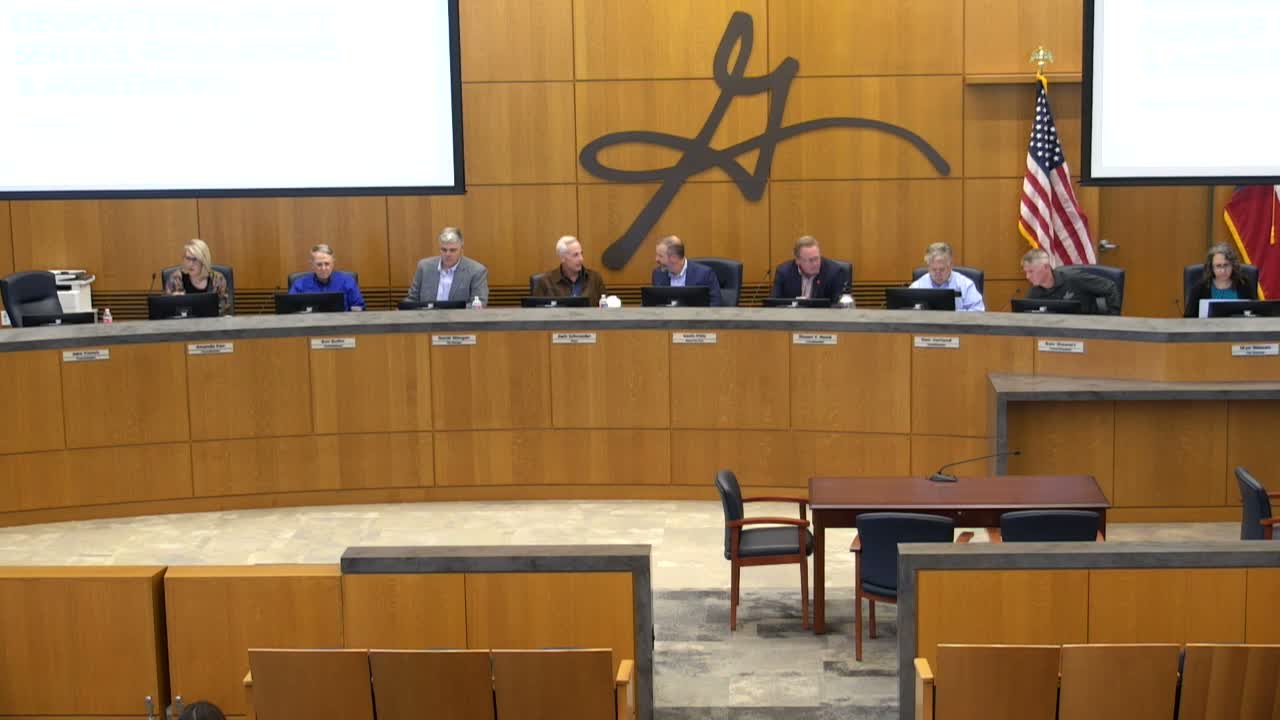
Caleb Feuer, assistant engineering director with Georgetown’s development engineering department, told the City Council at a workshop that staff are consolidating water and wastewater rules and drafting standard utility service agreements to improve clarity for developers and the city’s administration. “This is an update on the progress that we’ve made so far,” Feuer said, adding that the new document will gather regulations that currently exist in “about a dozen different locations.”
Why it matters: staff said rapid growth across Georgetown’s city limits, extraterritorial jurisdiction and a 400‑square‑mile Certificate of Convenience and Necessity (CCN) requires clearer, centralized rules so the city can plan water supply and infrastructure and apply conservation standards uniformly across its service territory.
What staff proposed: Feuer said the effort is twofold: (1) create a consolidated utility service regulations (USR) document that pulls code of ordinances, master-plan guidance and design criteria into one place and (2) develop a template utility service agreement and an administrative application workflow so the city can reserve water capacity for developers. Staff noted they are using the San Antonio Water System’s utility service regulations as a model.
Conservation and staffing: Feuer said the FY2026 budget included two conservation landscaping inspector positions to enforce irrigation and conservation standards. Those positions would sit within permits and inspections and, if needed, obtain state irrigator licenses to review and inspect irrigation systems across the CCN. “Irrigation is one of the number‑one uses of water for our utility,” he said.
Reservation fees and impact fees: Council members asked whether a proposed reservation fee would simply convert into an impact fee. Feuer and other staff clarified the city’s intent: reservation fees would be annual charges tied to the number of reserved living unit equivalents (LUEs) and would be separate from statutorily calculated impact fees; as developers entitle lots, pull meters and create active customers, reservation fees for those units would be reduced. A staff member added that agreements would include takedown schedules and default provisions and that fees would include an escalation methodology so long‑term reservations reflect changing water costs.
Eligibility and term lengths: Feuer shared draft eligibility thresholds for “significant size” projects that could include developments over 100 service units, projects larger than roughly 50 acres, or developments on sensitive aquifer areas. Staff said agreement terms could be flexible—ranging from a few years to longer commitments—but would include escalation and performance (takedown) requirements.
Process, outreach and schedule: Feuer said staff are working with legal on agreement language and plan to route drafts to the water utility advisory board and the development community for feedback before returning to council. He said staff are coordinating USR timing with Unified Development Code updates and aim to bring the draft to the water board in February–March and seek initial adoption in May. Deliverables listed by staff included the consolidated USR document (initial conservation focus), an application form, a contract template, an administrative workflow and customer outreach materials.
What’s next: staff will incorporate council feedback, seek additional stakeholder input (water advisory board, impact fee committee, development community) and return with draft regulations, agreement templates and a proposed implementation timeline.