Get Full Government Meeting Transcripts, Videos, & Alerts Forever!
Get email alerts on the Rezoning Princeton topic
No spam. Unsubscribe anytime.
Planning and Zoning Commission denies Princeton rezoning for high‑density apartments in Addison
Summary
The Addison Planning and Zoning Commission unanimously recommended denial Aug. 19 of a rezoning request for the 4.7‑acre Princeton site at 14651 Dallas Parkway after staff said the rental‑only, high‑density plan failed to meet housing‑policy criteria and raised tree, park and design concerns. The applicant had asked to postpone.
The Addison Planning and Zoning Commission voted Aug. 19 to deny a rezoning request that would have converted the 4.7‑acre Princeton property at 14651 Dallas Parkway into a large multifamily development.
Leslie Knipe, the town’s director of development and neighborhood services, told the commission that "staff recommends denial of the request as proposed," citing the proposal’s rental‑only product, high density relative to surrounding office land uses, limited cohesive open space and insufficient demonstration that the project met the town’s housing‑policy criteria for an "exceptional" approval.
The project as presented would have removed the existing Princeton office building on the Addison portion and built a 5‑ to 6‑story multifamily building (staff initially cited up to 400 units for the overall project; the applicant later described 365 units on the Addison side) plus amenities. The Farmers Branch portion of the development—separate from the Addison rezoning—already has approval for 135 units added atop a five‑story parking garage. Staff said the overall proposal relies on approximately 1,200 garage parking spaces shared between the two jurisdictions and would provide about 1.2 spaces per bedroom and a minimum of 3% of required parking with electric vehicle charging capability.
Knipe also detailed tree‑mitigation and open‑space issues: the applicant proposes removing more than 1,000 caliper inches of trees, can mitigate just over 400 caliper inches on site and proposed a fee‑in‑lieu for the remainder of just over $115,000. Staff reported that the applicant did not hold a community meeting and that only two letters of support had been received from tenants and owners within the 200‑foot notice radius.
The applicant team asked the commission instead to postpone, saying they wanted more time to revise the design and pursue "extraordinary" status. Daniel Box, a zoning attorney for the applicant, said it was "our formal request that we actually be postponed this evening" to continue work with staff. Scott Florsham, an owner representative, described the building’s condition and why redevelopment was pursued, saying the property suffered a severe failure that included "a catastrophic loss of their fire suppression system underneath the foundation," forcing evacuation and constraining viable leasing options.
Commissioners pressed the applicants on product type, public engagement and design. Several members said they would be more receptive to a revised proposal that included mixed uses or ownership‑type housing, more relief in the front façade and additional publicly accessible open space. Commissioners also asked to review the market research the applicant had commissioned assessing sellout timelines and regional supply. Staff clarified the process should the commission deny the request: a denial can be appealed to city council (an appeal window of roughly 10–14 days), and, unless substantially changed, a denied application may be barred from resubmission for about one year under town rules.
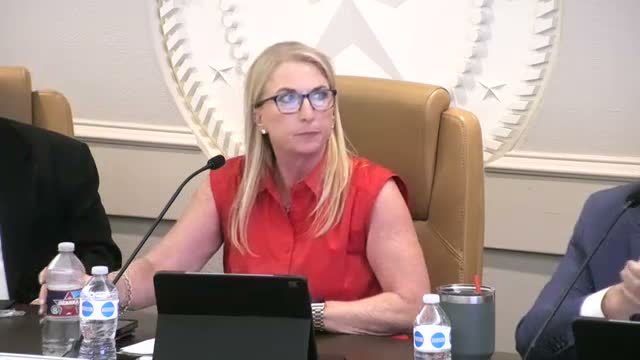
After deliberation a committee member moved to deny case 1925‑Z (Princeton); another committee member seconded. The motion carried by voice vote with no recorded opposition. The chair urged the applicant to reach out to residents and suggested the applicant could return with substantial changes rather than face the one‑year bar. The commission adjourned after closing the meeting.
The applicant may revise and resubmit the proposal or appeal the commission’s recommendation to the city council; the record indicates Farmers Branch has already approved its portion of the project for 135 units.