Get Full Government Meeting Transcripts, Videos, & Alerts Forever!
Get email alerts on the Housing Policy topic
No spam. Unsubscribe anytime.
Consultant urges ‘missing middle’ housing, council asks staff to pursue targeted redevelopment
Summary
A consultant told the Addison City Council work session that boosting owner-occupied housing will require non-townhome products, targeted commercial-to-residential redevelopment and outreach to developers; council asked staff to return with parcel analyses and implementation options.
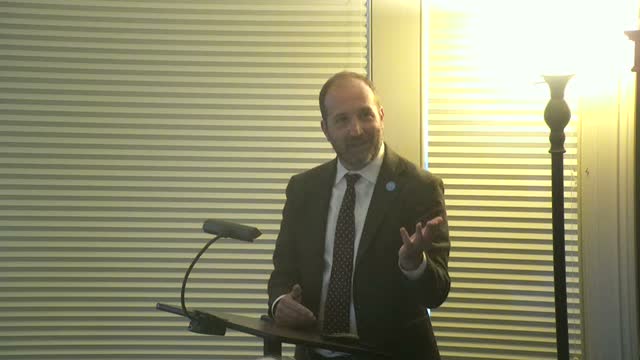
Paris Rutherford, a consultant with Catalyst Urban Development, told the Addison City Council work session that the town's low owner-occupancy rate stems from land economics, past planning choices that favored apartments, and household-income patterns that limit demand for for-sale housing. "There is a whole missing zone of housing," Rutherford said, describing mid-density options such as small condo buildings, row houses and pocket-cottage clusters.
Rutherford urged the town to focus redevelopment in commercial zones and to recruit developers that build the 'missing middle' product types. He said townhome projects and very high-rise for-sale towers are unlikely, by themselves, to reach a proposed owner-occupancy target because commercial land values make single-family economics unfavorable. "Townhome density moves the deal, but it doesn't move it a lot," he said, urging conversion of selected commercial parcels and identification of developer partners.
City Manager David Gaines and Wayne Anderson, the town's director of economic development, framed the presentation as part of strategic planning work to increase home ownership. Anderson introduced Rutherford and noted the consultant's prior local experience. Rutherford walked the council through a capacity exercise using staff-provided acreage numbers (about 8 acres residential and 72 acres commercial identified in the packet) and explained why a 28% owner-occupancy target would likely require conversion of commercial land or higher-density for-sale products in redevelopment areas.
Council members raised practical questions about product types (patio homes versus 0-lot-line units), demolition and site-preparation costs, and whether incentives would be needed. Rutherford recommended a phased, catalytic approach: (1) define the specific for-sale types appropriate for each redevelopment node, (2) identify regional/national developers that build those product types, and (3) hold targeted one-on-one meetings to negotiate pilot projects. He also suggested limited inducements—fee waivers, targeted infrastructure, or grants—for early catalyst projects to prove the market.
Council members signaled general support for further study and asked staff to return with more-detailed parcel inventories and an implementation timetable as part of the town's strategic planning process. The work session ended with staff agreeing to package potential redevelopment sites and possible incentive options for future council consideration.
Paris Rutherford and Wayne Anderson were the principal speakers at the work session presentation; council members asked follow-up questions and asked staff to continue developing the plan. The council did not take formal action during this presentation; the discussion was directed toward next steps in implementation and strategic planning.
The next procedural step: staff will refine parcel-level analyses and present targeted recommendations and potential incentive scenarios for council review.