Get Full Government Meeting Transcripts, Videos, & Alerts Forever!
Get email alerts on the Airport Financing topic
No spam. Unsubscribe anytime.
Addison council approves private-activity bond sign-off for Addison Hangers Phase 2 at airport
Summary
The Addison City Council approved a resolution enabling private activity bond financing through a Wisconsin-based public finance authority to support Phase 2 of the Addison Hangers / Sky Harbor hangar campus, a redevelopment that will add roughly 86,000 sq ft of hangar space and about 21,700 sq ft of office/shop space. Council held a public hearing and voted to approve the request.
The Addison City Council voted Dec. 9 to approve a resolution allowing private activity bonds (PABs) to be issued in support of Phase 2 of the Addison Hangers development at Addison Airport.
Airport Director Jamie Drosa presented the project and the town's role in the process, saying the proposal would add four executive jet hangars and associated office and shop space. "This proposal is for Sky Harbor Capital LLC, apparent to Addison Hangers LLC," Drosa said, and she described the Phase 2 build‑out as roughly 86,000 square feet of hangar space with about 21,720 square feet of related office and shop space, with construction scheduled to begin in January 2026.
Why it matters: the project uses tax-exempt conduit financing administered through a Wisconsin-based Public Finance Authority (PFA) to satisfy Internal Revenue Code Section 147(f) requirements; town staff emphasized the bonds are not obligations of the town. Steven Glickman, the town's chief financial officer, told council "these are not obligations of the town" and explained the PFA acts as the issuer so the town does not incur debt. Bill Dyer, assistant airport director, confirmed Phase 1 was completed on schedule and said the tenant has complied with the ground lease terms.
Council members asked how liability and recourse would work if the tenant defaulted. Glickman and staff answered that the bonds are secured by the leasehold and improvements and that any remedy for nonpayment would be handled through the lease and by the issuer or bondholders, not as a town obligation. Bill Dyer explained the ground lease provides the town with superior lien position and that the town would step in if tenant debts were not remedied.
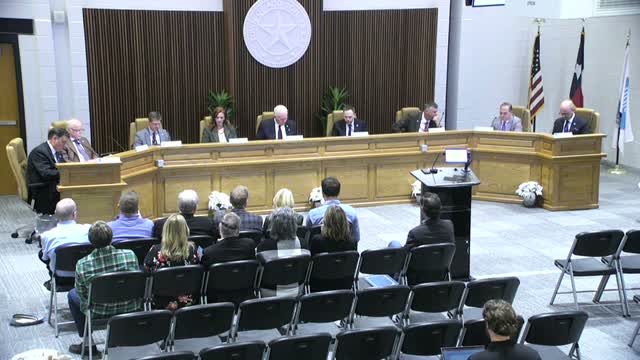
The council opened and closed the required public hearing without public speakers and then voted to approve the resolution. A motion to approve the item was moved and the council recorded the approval by voice vote; the record shows the council approved the financing resolution as presented.
What comes next: the developer intends to finalize design, complete civil review and permitting, and break ground in January 2026. The PFA financing process will continue under Wisconsin statutes and federal tax rules cited in the presentation.