Get Full Government Meeting Transcripts, Videos, & Alerts Forever!
Get email alerts on the Budget topic
No spam. Unsubscribe anytime.
Twin Valley SD sees projected shortfalls; board schedules tax votes and hears staffing concerns
Summary
Board presenters showed a working shortfall and outlined a tax-vote schedule; a teacher and union president urged the board to prioritize people over projects and raised concerns about consultant spending and a planned turf field.
The Twin Valley School District board heard a preliminary budget presentation on April 20 that showed the district continuing to face a multi‑year funding challenge and set public dates for possible tax votes.
Superintendent (speaker 2) told the board that salaries and benefits are the largest line items, comprising about 62% of expenditures, and that the district is overwhelmingly locally funded. A slide in the presentation showed a temporary projected shortfall described as "almost $2,000,000," and presenters later described a working figure of about $266,000 "before any tax increase," saying both numbers are subject to change as updated property assessment data from Berks and Chester counties arrive.
"The bulk of our budget is in our people," the Superintendent said, summarizing the expenditure breakdown and warning that the district must continue to work to close the gap. The presentation also noted that the district's Act 1 index is 44%, a cap-related figure that frames local tax options. The administration announced a public schedule tied to required vote windows: a preview on May 11, a first vote on May 18 and a second vote on June 15, with at least 20 days of public availability between the votes.
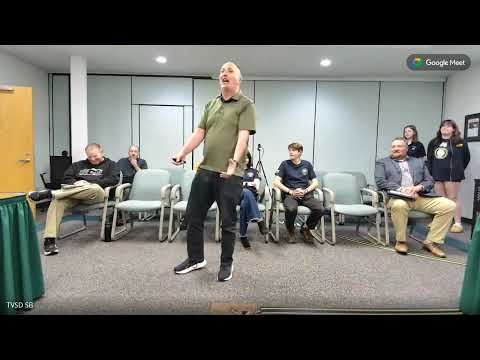
At public comment, Jerry Wilczynski, a seventh‑grade teacher who identified himself as president of the Twin Valley Education Association, urged the board to consider the human impact of budget cuts. "It's people that matter, right?" Wilczynski said, arguing that staffing reductions remove adults who provide day‑to‑day supports for students and that teachers should be included in decisions about caseloads and class sizes. He also raised concerns about administrative consultant spending and questioned the timing of a planned turf field project, noting that project funding (reported to be bond‑funded) cannot be easily reallocated to staffing but saying the board should weigh timing and optics as staffing decisions proceed.
Board members asked about several budget drivers and assumptions: which IT purchases were priorities versus deferrable items, whether a 1:1 Chromebook deployment is producing measurable instructional gains, and how increasing health‑care costs are being forecast. The Superintendent said health‑care pressure is significant (the presentation cited a health‑care line increase of roughly 15% in one year) and that five‑year projections will be updated as assessment and state funding figures are finalized.
The board did not take any votes on the budget at the meeting; presenters emphasized this was an informational review and that figures would be refined before the May and June vote dates.