Get Full Government Meeting Transcripts, Videos, & Alerts Forever!
Get email alerts on the City Budget topic
No spam. Unsubscribe anytime.
Ceres finance director warns of $2.4 million shortfall as pension and fire costs rise
Summary
At a April 20 budget workshop, Finance Director Vanessa Portillo presented a draft FY2027 budget that projects a $2.4 million deficit after applying $3.2 million in balancing strategies; councilors and residents pressed for details on reserves, the Modesto fire contract increase and use of one‑time internal service fund reserves.
Vanessa Portillo, the city’s finance director, told the City of Ceres’ special meeting on April 20 that the fiscal year 2027 proposed budget faces a structural shortfall driven primarily by rising pension obligations and an increased fire‑services contract with the City of Modesto.
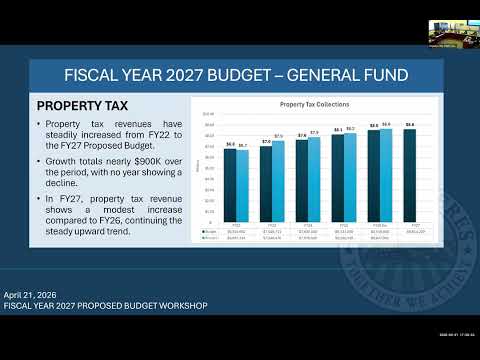
“This workshop is intended to provide a high level overview with a specific focus on the general fund,” Portillo said, then summarized citywide totals: projected revenues of about $86.6 million and expenditures near $84.9 million, and a general‑fund status‑quo gap of roughly $5.6 million. After applying staff balancing strategies of about $3.2 million — one‑time solutions, ongoing reductions and technical allocation adjustments — the recommended budget shows a remaining $2.4 million deficit.
Portillo highlighted pension liabilities as a major pressure. Total pension costs have risen from just over $5 million in FY22 to more than $8 million in the FY27 budget proposal; the general fund’s share increased from about $3.3 million to roughly $5.7 million. She said safety‑employee pension liabilities are especially heavy, with a growing portion of each pension dollar directed toward paying down unfunded liabilities.
The city is also seeing a significant increase in its fire‑services contract. Portillo said the Modesto contract rose by about $1.5 million (approximately 19 percent) for FY27, and that the contract is being renegotiated as the existing five‑year agreement ends. “One of the major increases…is coming from our fire services department contract,” she said.
Sales‑tax revenues have been largely flat in recent years, Portillo added, and charges for services are projected to fall by roughly $387,000, primarily because cannabis‑related revenues tied to a development agreement are expected to decline.
Facing the status‑quo shortfall, staff grouped balancing strategies into three buckets: one‑time uses of internal service fund and facility/IT reserves (~$1.3 million), ongoing reductions such as vacancy assumptions and overtime adjustments (~$1.3 million), and technical cost‑allocation updates (~$570,000). Using those measures would reduce expenditures to about $29.7 million for the general fund and bring the projected FY27 ending fund balance to roughly $2.0 million — about 6.6 percent of general‑fund expenditures — well below the city’s 18 percent reserve policy.
Residents and business representatives who spoke during public comment questioned the timing of workshops and asked for clarity on specific line items. John Warrins urged scheduling that suits working residents, saying, “Having the meeting at 05:30 when most people are still at work surely limits their ability to get here.” Salvador Puga asked about council health‑insurance costs reported in local media; Portillo replied that council health insurance is budgeted at about $47,000 a year, with the general fund covering approximately $18,000 of that total.
Several councilors pressed staff for more detail and for follow‑up analysis. Councilwoman Serena Otero asked whether ARPA funds previously discussed were still available; Portillo answered that ARPA obligations are scheduled to be fully spent through the FY27 budget and noted ARPA‑funded code‑enforcement staffing through December 2026. Council members also raised questions about unfunded and frozen positions, police overtime, and whether contracting out IT services could produce savings; Portillo said the total IT budget is about $1.3 million, with salaries comprising roughly $740,000 of that amount.
Council members discussed the staff proposal to use about $800,000 from facility reserves and other internal service fund adjustments as a one‑time relief for the general fund, and cautioned that such transfers do not solve long‑term structural imbalances. Portillo said the city has changed its ISF methodology and will charge departments based on actuals going forward rather than budgeted amounts, which revealed prior reserve balances.
No formal votes were taken at the workshop. Portillo said staff will return with additional cost‑saving measures and refined projections at the proposed budget meeting scheduled for May 11, 2026, and the final adoption hearing tentatively set for June 8, 2026. Mayor Lopez and staff also discussed offering another public presentation or workshop to broaden outreach before formal budget actions.
The council closed the workshop after asking staff to consult members’ calendars on whether to schedule an extra public session; the meeting video will be posted online.