Lifetime Citizen Portal Access — AI Briefings, Alerts & Unlimited Follows
Hartford Public Schools asks city and state for $60.4M to avert deep cuts, cites $52.5M FY27 baseline deficit
Loading...
Summary
Superintendent Andre Tounsell and CFO Caitlin Richard told the council HPS faces a baseline FY27 deficit of about $52.5M and is requesting $60.4M in total — including $3M for 23 literacy interventionists and $5M to expand in‑district special‑education programming — saying the district has "nothing left to cut."
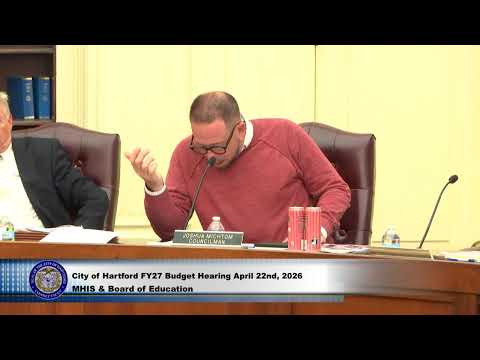
Hartford Public Schools (HPS) officials asked the Operations Management, Budget and Government Accountability Committee on April 22 for urgent state and city support to close a sizable FY27 funding gap.
Superintendent Andre Tounsell said HPS has taken steady cuts over the past decade and "there is nothing left to cut," pointing to $200 million and roughly 600 positions eliminated over the last 10 years and $70 million and 400 positions removed in the last three years. He asked councilors to join the district in advocating to keep Hartford whole.
CFO Caitlin Richard provided a detailed fiscal picture: adopted FY26 revenue and FY27 projected revenue are about $435,900,000, while proposed FY27 expenses total about $496,300,000 — a baseline FY27 gap of roughly $52.5 million. The district’s total ask, which includes new program investments, is about $60.4 million.
Richard identified the primary cost drivers: tuition and transportation. HPS paid about $115,000,000 in tuition last year; roughly $97,000,000 of that was special‑education tuition. Transportation costs are heavily weighted toward specialized curb‑to‑curb services: she cited a transportation budget where about $7,000,000 covers regular bus service while roughly $32,000,000 covers curb‑to‑curb transportation for special‑education students.
The district is proposing program investments intended to reduce future outplacement costs and improve student supports. Those include a request for $5,000,000 to develop more in‑district special‑education programming (estimated staffing: approximately 10 teachers, about 50 paraprofessionals and several social workers) and a $3,000,000 request to fund 23 elementary literacy interventionists (salary and benefits averaged at about $100,000 per position in the district’s estimate). Richard said the literacy interventionist ask is tied to a state statute for Alliance districts and that some schools have used Title I funds ad hoc to hire interventionists but the district seeks consistent, statute‑driven funding.
Richard and Tounsell attributed much of the structural pressure to Connecticut’s school‑choice system and special‑education funding rules: the district bears large tuition bills for students who live in Hartford but attend other magnet or private placements, and state reimbursement for excess special‑education costs is partial (Richard said about $12 million was reimbursed through the excess‑cost grant last year). The district also noted the SEED competitive grant provided $3 million but that represents partial funding relative to overall need.
Council members pressed on contingency planning and timelines. When asked what happens if the FY26 $22 million current‑year shortfall is unresolved by June 30, Richard said the technical result is that the shortfall is absorbed into the city's year‑end reconciliation and the state is conducting an analysis to determine possible supports. Several councilors suggested the city’s available fund balance could be tapped in part to cover shortfalls while continuing to pursue state remedies.
On transportation, Richard said the district’s contract with provider Autumn will come up for rebid after next year and the district plans an analysis to seek efficiencies — including separating regular routes from specialized curb‑to‑curb services or exploring in‑house options — but noted much of the cost is driven by placement decisions and IEP determinations that HPS may not control.
Council members also asked whether school consolidation could yield meaningful savings; HPS leaders said consolidations can produce administrative savings but do not typically eliminate the bulk of instructional costs because students still must be taught and many magnet‑school decisions are governed at the regional/state level.
Tounsell closed the presentation by urging council support for both short‑term assistance and long‑term structural changes to state funding. The committee adjourned after concluding the public questions and answers; further budget hearings will continue on other departmental items.