Get Full Government Meeting Transcripts, Videos, & Alerts Forever!
Get email alerts on the Public Safety topic
No spam. Unsubscribe anytime.
Board approves retroactive payment for Flock license‑plate readers after hours of public testimony
Summary
After more than two hours of public comment both for and against, the Alameda County Board of Supervisors approved a second amendment to its Flock Safety automated license‑plate reader contract, adding $303,600 and extending retroactive coverage through June 30, 2026. The 3–2 vote followed sustained questions about data sharing, federal access and vendor safeguards.
The Alameda County Board of Supervisors voted 3–2 on April 21 to approve a second amendment to the county's contract with Flock Safety for automated license‑plate reader (ALPR) technology, authorizing a $303,600 increase and retroactive coverage through June 30, 2026.
Sheriff Elizabeth Sanchez and Sergeant Fenton Culley urged the board to authorize payment for services the office has continued to use while procurement and policy updates proceed. "The purpose of LPR technology is critical, an investigative tool that allows our deputies to identify vehicles connected to serious crimes, develops leads, and locates suspects," the sheriff said, describing cases in which ALPR hits helped recover stolen vehicles, find missing people and advance investigations.
Why it mattered: Hundreds of residents and dozens of community organizations urged the board either to reject the Flock contract or to strengthen contractual safeguards. Opponents cited reported vendor security lapses, published demonstrations of how systems can be accessed, and the risk that federal authorities could obtain commercially hosted data under existing federal law. Supporters — including victims and small‑business representatives from unincorporated areas — said the technology has helped solve local crimes and closed the gap for communities with fewer officers.
What the board heard: Speakers who opposed the contract warned that Flock’s cloud architecture and past incidents in other jurisdictions make the company a weak steward for sensitive location data. "This data surveillance exposes the county to serious legal risks," said Valerie Bachelor, a community organizer, and other callers cited third‑party access and hacking demonstrations. Several technical and academic speakers said aggregated dashboards increase the temptation to repurpose data beyond original uses.
Sheriff's response and controls: The sheriff's office described a set of policy changes and operational controls: the county office has reportedly disabled a national lookup option, increased auditing, required deputies to select a permitted use and case number for searches, and published a transparency portal with flight and access logs. Sergeant Culley said the office updated its general order to emphasize state prohibitions on sharing data with federal agencies and to expand audits of external access.
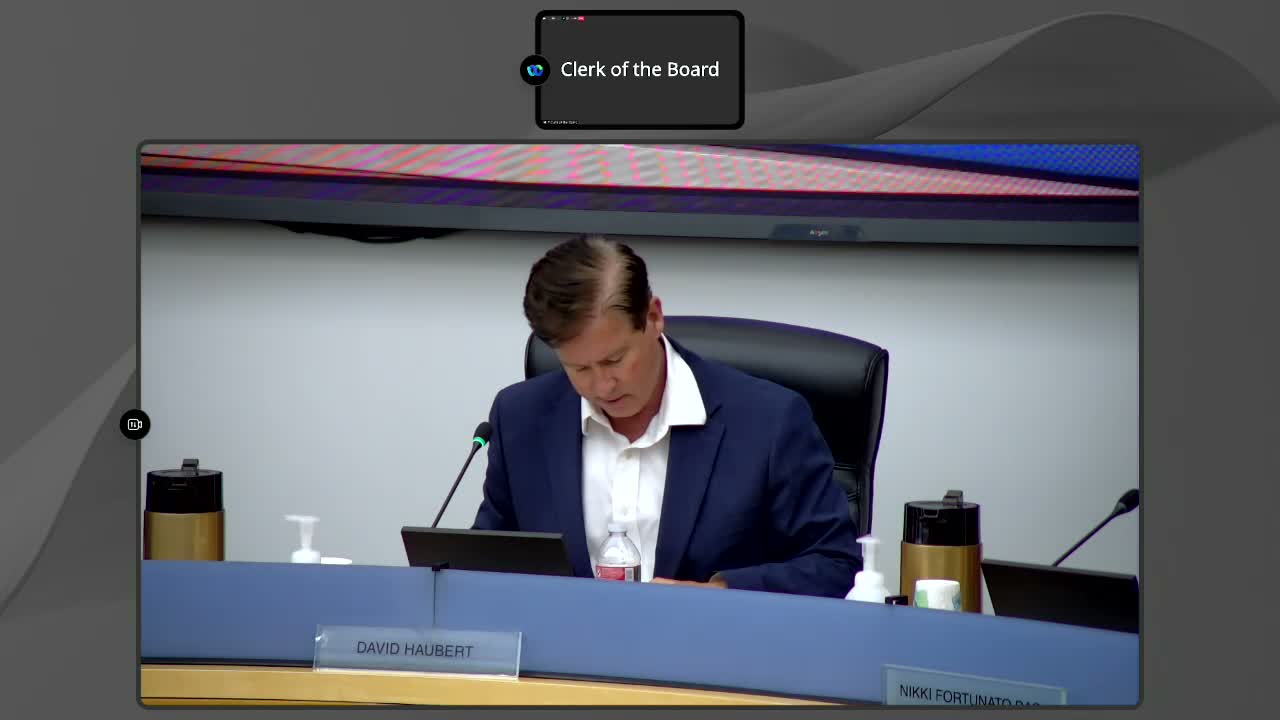
Board action and votes: Supervisor Nate Miley moved to approve the second amendment and to waive competitive procurement for the short, retroactive extension so the county can pay for services already rendered while the sheriff develops an RFP for a future contract. The board's roll call was: Supervisor Marquez — No; Supervisor Tam — Aye; Supervisor Miley — Aye; Supervisor Fortunato Bass — No; President Halbert — Yes. The motion passed 3–2.
What happens next: The sheriff said her office intends to issue an RFP for future ALPR services and strengthen contract language on data access and penalties. Meanwhile the approved amendment covers the vendor’s work through June 30, 2026, and the office will continue day‑to‑day operations and 30‑day audits.
The board’s vote closes the April 21 meeting on a contested item; supervisors and staff said they will pursue stronger procurement and contract safeguards in the next competitive process.