Get Full Government Meeting Transcripts, Videos, & Alerts Forever!
Get email alerts on the Multifamily Safety topic
No spam. Unsubscribe anytime.
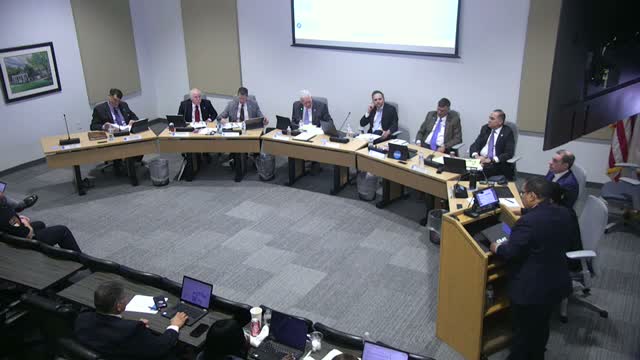
Addison council hears police proposal to use crime indices and 'habitual criminal property' rules to target problem apartment complexes
Summary
Police presented two enforcement models to hold multifamily property owners accountable for criminal activity: a crime‑index comparison and a Dallas‑style habitual criminal property designation. Council asked staff to draft options tailored to Addison's goals and return with data and recommended metrics.
Chris Friess, chief of police, presented two model approaches for adding a public‑safety component to Addison’s rental and lodging registration program for multifamily properties.
The first model, modeled after Carrollton, would calculate an apartment‑level crime index (reportable offenses per dwelling unit) and compare it to a townwide crime index; properties with an index above the city average would face additional oversight and remedial requirements. The chief said certain offenses—traffic incidents, fraud, and family violence—would likely be excluded from the index to avoid unfairly penalizing properties for incidents that did not reflect on property management.
A second model, based on a Dallas approach and Texas Civil Practice & Remedies Code ch.125, would allow designation of a “habitual criminal property” if five or more abatable offenses occur within a 12‑month period; that list includes higher‑level crimes such as aggravated assault, robbery, unlawful weapon possession and arson. The chief said the Dallas model looks at location‑specific, property‑level activity rather than comparing properties to a townwide baseline.
Chief Friess outlined potential enforcement tools for either model—monthly program fees, minimum security staffing, mandated CPTED (Crime Prevention Through Environmental Design) upgrades, surveillance and monitoring systems, tenant screening and lease enforcement, and mandatory owner/property meetings. He emphasized the need for council direction on the program’s goals and the metrics council wants staff to use when drafting an ordinance.
Councilmembers’ remarks focused on fairness and comparability. Several members said they preferred apartment‑to‑apartment comparisons rather than comparing apartments to single‑family neighborhoods (a view Chief Friess said would be handled by the Carrollton‑style index option). Other questions centered on whether metrics would be published, potential executive‑session discussion of enforcement, and staffing or cost implications for police and code teams.
The chief said staff will draft more detailed calculations and ordinance language for council review once council provides guidance on desired outcomes and metrics.
No ordinance votes were taken at this meeting; the item was a request for direction and data modeling.