Get Full Government Meeting Transcripts, Videos, & Alerts Forever!
Get email alerts on the Transit topic
No spam. Unsubscribe anytime.
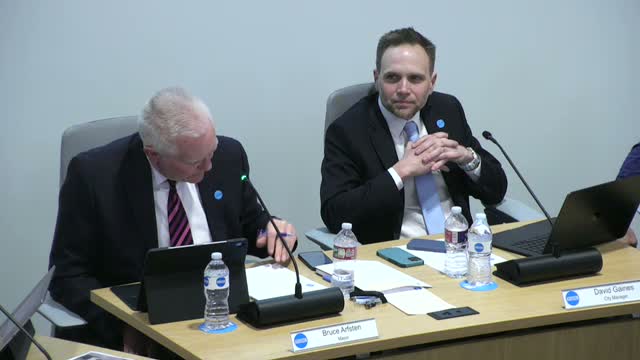
Addison staff lays out paratransit, microtransit and RFP plan ahead of possible DART withdrawal
Summary
Council directed staff to pursue an RFP and short pilot to replace DART services if voters approve withdrawal, with emphasis on matching current paratransit coverage, securing DART ridership data via an open‑records request, and building scalable microtransit options with 10–15 minute wait targets.
Addison staff presented options for town‑run transit as the community prepares for a possible May election on withdrawal from DART, focusing first on preserving paratransit for residents with disabilities and then on scalable microtransit for general circulation. Ashley (staff) told council that "Addison has been a member of DART since 1983…we have contributed over $400,000,000" and said staff will issue an RFP that allows vendors to price multiple service models, from matching DART’s 13‑city paratransit area to a tighter 5–15 mile buffer around Addison.
Why it matters: Council members repeatedly emphasized protecting riders who depend on paratransit while controlling costs. Ashley said Addison currently lists about 1,200 registered paratransit riders with roughly 1,600 rides annually and that about 99% of those trips begin or end in another city, which complicates choices about service area and cost. Council asked staff to submit a narrowly scoped open‑records request to DART to obtain ride origin/destination data and to ask prospective vendors (including Transdev, Via, Rydeco and others) for sample pricing and operational proposals.
The discussion centered on three tradeoffs: the geographic scope (replicate DART’s 13 cities vs. a smaller ring), service model (curb‑to‑curb vs. stop‑to‑stop vs. hybrid), and performance targets (several council members suggested average wait times of 10–15 minutes). Several members urged a day‑one service plan that replicates current paratransit so no riders lose access; others emphasized that the RFP should require scalability and clear performance metrics. Staff recommended vendor presentations by March and a March 24 decision on a recommended contract; staff also proposed adding a short, inexpensive pilot to validate operations and customer experience.
Key quote: "Walkability requires multiple contiguous blocks to work," Mark Albert told the council earlier in public comment about the comprehensive plan. On transit, Ashley said the town needs "metrics" and scalable designs so "as we learn more about the system…we can change." Chad Cook, speaking for the Addison Junction developer, said the developer is "very comfortable" moving forward whether DART stops at the station or not, but would prefer the transit connection.
Next steps: Staff will file an open‑records request with DART for paratransit usage data, finalize RFP scoping reflecting council feedback (service area options, paratransit certification approach, pilot), invite multiple vendors to respond, and bring vendor proposals/presentations to council in March.