Get Full Government Meeting Transcripts, Videos, & Alerts Forever!
Get email alerts on the Education Budget topic
No spam. Unsubscribe anytime.
Southington board reviews $1.6 million reduction that would eliminate or reduce 22 positions
Summary
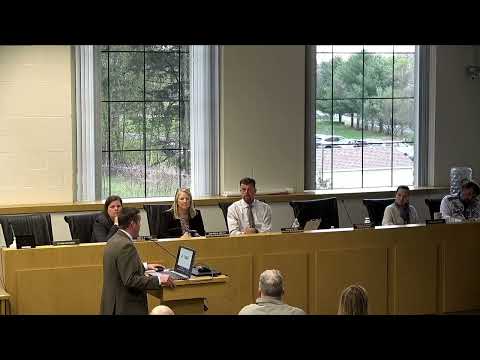
At a special April 23 meeting, the Southington Board of Education reviewed superintendent scenarios to absorb a $1.6 million reduction proposed by the Board of Finance. The plan would likely eliminate or reduce about 22 positions districtwide and could affect literacy supports, paras and electives; the town council hears the budget April 27.
Southington Superintendent Vadancia presented reallocation scenarios on April 23 showing the Board of Finance’s recommended reductions would leave the district with a $126,799,132 budget (a 4.02% increase over last year) but require roughly $1,600,000 in cuts to maintain that level. Superintendent Vadancia said the options "would bring us to $1,600,000" and stressed the board will make the final decision at its May 28 reallocation meeting.
Vadancia told the board the most likely path to that target involves eliminating or reducing "22 total positions" spread across bargaining units and grade levels. "You can't get to $1,600,000 if there's nothing else in your...budget beyond personnel," he said, outlining that the cuts would include classroom teachers (two elementary positions as a minimum, subject to enrollment), middle- and high-school staffing adjustments, math and literacy specialists, paraeducators and some district-level vacancies.
The superintendent cautioned the district about downstream effects of cutting intervention staff. "If you're not giving us what we need to maintain even level services, that is a de facto cut," Vadancia said, adding that reducing literacy coaches and specialists risks increasing special education prevalence and future costs because early interventions would be weaker.
Vadancia also flagged limits on apparent savings from administrative layoffs: contract rules can require an eliminated administrator to be placed in the teacher bargaining unit for the first year, reducing net savings. He urged the board to consider seniority, certifications and enrollment data before naming specific positions.
The presentation included non-personnel options and revenue possibilities. Vadancia described a conservative $50,000 estimate for a pay-for-play athletics program but warned about collection challenges and equity: "Not all families can afford [pay for play]," he said. He also noted a $10,000 athletics training contract approved after the budget was adopted and warned the district’s Chromebook replacement cycle is vulnerable after one-time ARP purchases.
Board members responded with questions and concerns. Board member Naranowsky Anastasia asked why central-office positions were not listed among reductions; Vadancia said central-office staff could be affected but he avoided naming specific incumbents "out of fairness." Board member Carmody, who identified herself as a teacher, urged care for staff and said the proposals cause "pain" for educators. Board member Clark said the outlook "makes me sick," citing the potential loss of literacy supports.
Several members urged advocacy for state aid. Board member Carson cited a regional comparison showing Southington spends under $20,000 per pupil versus $22,000–$25,000 in nearby districts, and urged residents to contact state legislators before the May 6 end of the legislative session. Vadancia encouraged public comment at the town council hearing on April 27 and the council vote on May 11.
Operations questions focused on costs related to layoffs and consolidation. Board member Camuso asked whether merging custodial duties would increase overtime; Mallett clarified that unemployment costs for laid-off employees are billed by the state and paid from the district operating budget (not the medical self-insurance fund), and that typical state unemployment payouts can be about 25% of salary for six months.
Chair Oceana closed by underscoring that these scenarios are options for public review and that the board must weigh difficult trade-offs. The board moved, seconded and adjourned by voice vote. The board’s next formal reallocation meeting is scheduled for May 28; the town council public hearing on the town and education budgets is April 27 and the council vote is May 11.