Get AI Briefings, Transcripts & Alerts on Local & National Government Meetings — Forever.
Industry and development groups tell Alaska Senate tax committee SB280’s tax and disclosure changes risk project delay and legal problems
Loading...
Summary
Trade associations and resource‑industry groups told a Senate tax committee that the committee substitute for SB280 bundles major tax changes — including a pass‑through entity tax, disclosure requirements and lease‑expenditure reallocation — that risk retroactive impacts, antitrust concerns and investor uncertainty without clearer drafting and independent modeling.
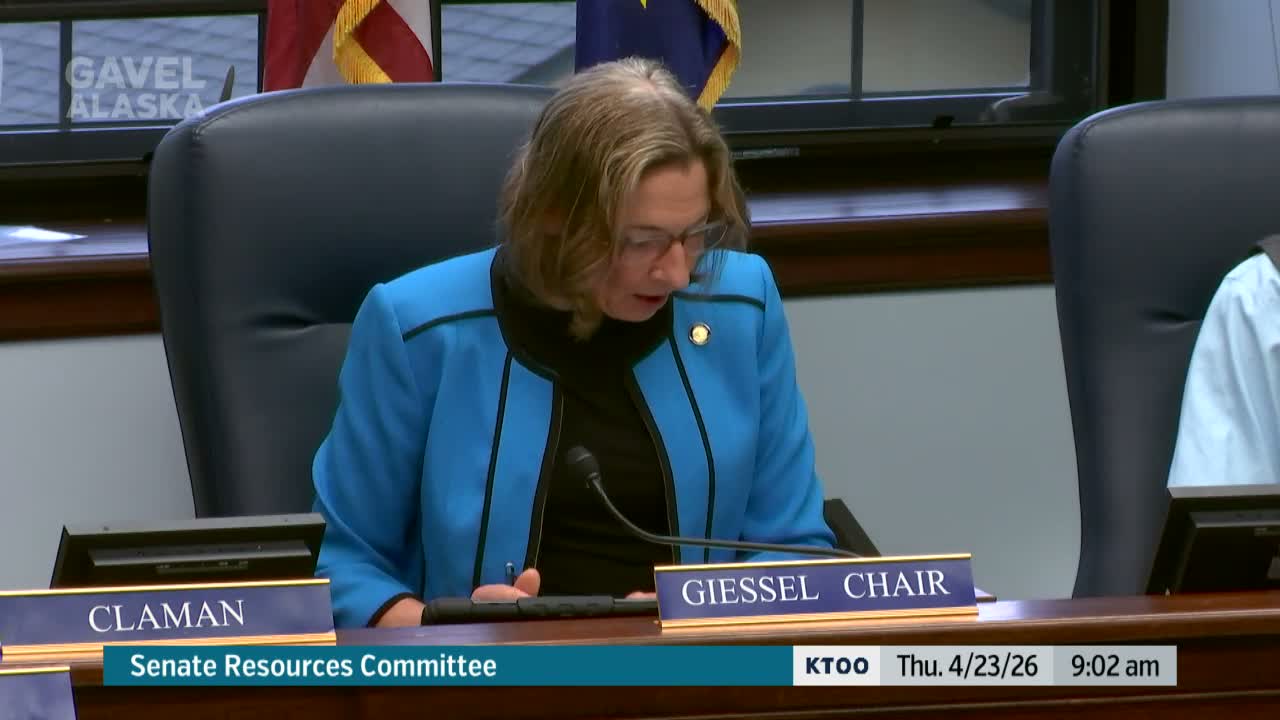
Steve Wilkowski, president and CEO of the Alaska Oil and Gas Association, told the Senate tax committee on April 23 that the committee substitute for Senate Bill 280 goes beyond its stated objective of improving gas‑project economics and includes multiple provisions that would immediately and retroactively affect current oil and gas operations.
Wilkowski said AOGA supports the goal of delivering North Slope gas to Alaskans but warned that sections 20–33 of the CS — including new valuation rules, expanded disclosure of taxpayer information and rules that would decouple lease expenditures for oil and gas — could create ‘‘precipice’’ implementation problems for both taxpayers and the Department of Revenue. He asked that the industry’s McKinley Research Group report, which he said documents the sector’s scale, be entered into the record.
The industry witness cited several quantitative points to underscore the stakes: more than 70,000 industry jobs, roughly $3.5 billion in state and local revenue in fiscal 2025, and an anticipated $22 billion in industry investment from 2025–2030. He said AOGA members paid nearly $720 million in property taxes in FY25, about $576 million of which went to local communities.
AOGA told the committee it opposes sections 28–30 because those clauses could be read to require allocation of lease expenditures to gas even when expenditures arise from integrated oil operations that remove gas as part of producing oil. ‘‘How is a taxpayer supposed to prove that lease expenditures of oil were for oil production when producing that oil necessitates the removal of gas?'' Wilkowski asked, warning that any forced allocation would be ‘‘artificial, subjective, and almost certain to create disputes for both taxpayers and DOR.’’
Marie Evans, AOGA’s vice chair of the tax committee, joined remotely and urged the committee to fix statutory ambiguity in the CS. She said it may be possible to tie application of the new language to a defined natural‑gas project under Title 31, but left drafting details to legal counsel and recommended that the legislature avoid language that could be read in multiple ways and shift interpretation to DOR regulation.
Committee members pressed industry witnesses for modeling and company‑level effects. Senator Myers and others asked whether AOGA or its members had run analyses showing how the pass‑through or S‑corp provision (which in the CS would first apply at taxable income above $1,000,000) would affect rates of return for fields such as Prudhoe Bay and Cook Inlet. Wilkowski and other witnesses said no comprehensive modeling was available at the hearing and offered to provide written analyses later.
Dan Stickel, chief economist at the Department of Revenue, told the committee that implementing a monthly prevailing‑value requirement and broader disclosure regime would be complex and resource‑intensive. Stickel said DOR expects to request additional positions in the fiscal note and would need to work with Department of Law and outside counsel to balance disclosure requirements against taxpayer confidentiality.
AOGA also raised antitrust concerns tied to section 21 and related valuation provisions, saying that public publication or coordinated reporting of competitively sensitive price data could elevate the risk of antitrust inquiries. Marie Evans and Wilkowski said AOGA takes antitrust risk seriously and recommended careful legal review of any disclosure obligations.
Connor Hajdukovich, executive director of the Resource Development Council, told the committee he supports advancing an Alaska LNG project and praised recent federal engagement, but said RDC ‘‘cannot support this committee substitute as drafted’’ because the CS increases upfront costs and contains provisions RDC and industry find difficult to meet. Hajdukovich urged the legislature to craft a tax approach that protects municipalities and reduces early‑stage project burdens without unnecessarily jeopardizing viability.
On municipal compensation, witnesses reminded the committee that local governments rely heavily on oil and gas property taxes for services. Committee discussion contrasted current property‑tax receipts and the governor’s proposal figures; witnesses and senators asked the committee to consider whether community impacts and local revenue loss had been adequately addressed.
The committee did not take a formal vote. Members signaled they expect written follow‑up from industry and RDC and said staff and drafters will work to resolve drafting ambiguities. The chair closed the hearing and scheduled continuation of SB280 discussion for April 24, 2026, with planned testimony from the Alaska Municipal League and the Regulatory Commissioner.
The hearing record includes multiple requests from senators for modeling and company‑specific data, and officials asked legislative staff to return with clarified drafting language to ensure ordinary reinjection and routine operations are not unintentionally taxed.
Next steps: committee staff and witnesses will supply written comments and suggested statutory language; DOR signaled it will quantify implementation costs in the fiscal note and identify staffing needs.