Get Full Government Meeting Transcripts, Videos, & Alerts Forever!
Get email alerts on the Behavioral Health topic
No spam. Unsubscribe anytime.
Colonial Behavioral Health briefs York County supervisors on services, crisis center and staffing challenges
Summary
David Cohen of Colonial Behavioral Health told the Board of Supervisors that the agency—s $25.6 million budget is roughly 48% state-funded, that a new finance director starts March 16, and that a governor-funded crisis services center and expanded mobile crisis work aim to reduce law-enforcement transports.
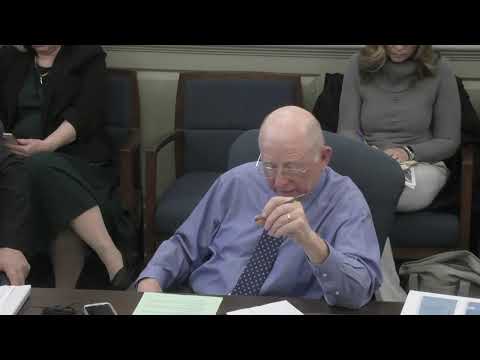
David Cohen, representing Colonial Behavioral Health, told the York County Board of Supervisors on March 3 that the community-services agency operates a budget just north of $25.6 million and relies heavily on state-administered funds. Cohen said “about half” of the agency—s revenue comes from state-administered sources, local governments contribute roughly 18% and a mix of grants and fees covers the balance.
The presentation, given to the board in the county boardroom, emphasized services ranging from mobile crisis response to long-standing contracts for child-development services and group-home care. Cohen said Colonial operates two four-bed group homes for adults with intellectual and developmental disabilities in York County and provides day-services and life-skills training at a Merrimack Trail site.
Why it matters: County supervisors asked for specifics because local funding decisions hinge on understanding volume, who uses services and whether the county—s contribution meets an identifiable need. Cohen acknowledged that some performance metrics were not in his packet but offered to return with detailed call-volume breakdowns and referral-source data.
Cohen said Colonial has faced a recent finance-director vacancy but hired a candidate who begins March 16, shortening what he described as an anxious period for budgeting and audit preparedness. He also said the agency—s front door is "on pace to double" its number of people served this year, but that he did not bring the granular numbers to the meeting and offered to provide them on request.
On crisis response, Cohen described Colonial—s mobile crisis teams as dispatch-based clinical responses that can go to homes, schools or other sites to intervene before police arrests or hospitalizations occur. He said utilization has been rising but that the service is not yet fully saturated. Cohen highlighted workforce shortages at both licensed-clinician levels and among direct-support professionals and said Virginia—s limited access to state-hospital beds complicates some referrals.
A substantive policy update: Cohen provided a construction update for a governor-funded crisis services center the agency calls the Center for Support and Wellness. He said exterior sheathing and brickwork have begun and that the center will include crisis-stabilization capacity (short residential stays or 23-hour observation), a CIT (crisis intervention team) assessment center and a staffed transfer point so law enforcement can hand custody to clinicians for evaluation.
Board members pressed for measurable data. "It would be insightful if you could break that down: percentage of calls coming from public agencies versus direct public calls," one supervisor said, asking the agency to report how often families, schools, hospitals or 911 refer people to Colonial. Cohen offered to supply that referral-source breakdown and front-door statistics to the county.
Cohen also said Colonial is pursuing federal CCBHC (Certified Community Behavioral Health Clinic) designation and described partnerships with local hospitals, child-development resources and the Historic Triangle Drug Prevention Coalition. He offered to organize public outreach or community forums with county help to raise awareness of services and how residents can access them.
Looking ahead: The board did not take formal action on Colonial—s presentation but asked staff to capture Cohen—s data requests and to use the forthcoming statistics to evaluate the county—s ongoing support. Cohen said staff would follow up with the requested call-volume and front-door utilization details.