Lifetime Citizen Portal Access — AI Briefings, Alerts & Unlimited Follows
Senate health committee adopts substitute for SB 281, adds fingerprint checks and reshapes rural health council
Loading...
Summary
The Senate Health and Social Services Committee on April 23 adopted a committee substitute for SB 281 to join four interstate medical licensure compacts, add statutory fingerprinting and criminal-history check language for licensure, and codify a rural health transformation advisory council with revised membership rules.
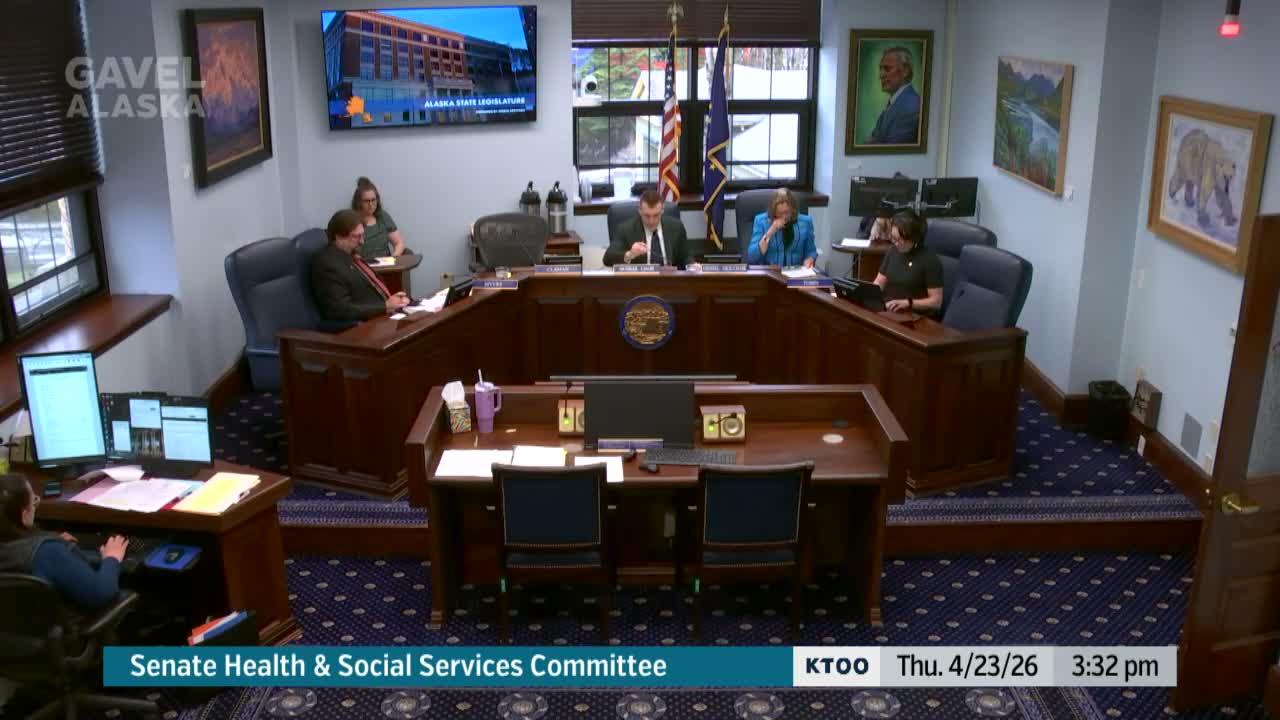
The Senate Health and Social Services Committee on April 23 adopted a committee substitute for SB 281, a bill to enact four medical licensure compacts and create a rural health transformation program advisory council, after hearing a staff recap, agency answers to questions about new fingerprinting language and public testimony in support.
Ariel Harbison, staff to Chair Senator Dunbar, told the committee the substitute preserves the Interstate Medical Licensure Compact, the PA licensure compact, the psychologist compact and the EMS compact, removes proposed PA scope-of-practice changes from this bill, adds statutory language authorizing national criminal-history record checks and requires submission of applicant fingerprints and fees to the Department of Public Safety (DPS) for those checks.
Harbison said the CS deletes multiple sections that had expanded physician assistant scope of practice and instead leaves scope changes to a separate vehicle. "We spoke with the sponsor and felt that this maybe wasn't the best vehicle for this bill," she said.
Senator Tobin pressed whether the new fingerprint requirement would slow military reciprocity or delay traveling clinicians arriving in Alaska. Lisa Purrington, director of the Division of Statewide Services at the Department of Public Safety, said licensing bodies determine whether the compact language triggers a background check and, if so, DPS would process those checks. She cited federal rules governing noncriminal-justice use of FBI criminal-history records and said changes were requested to ensure state statutes comply with those federal requirements.
Sylvain Raab, director of the Division of Corporations, Business and Professional Licensing, told the committee that licensure for service members and their spouses is governed by the federal Service Members Civil Relief Act (SCRA), but that when an applicant comes from a compact state the compact's rules apply. "If we join these compacts and people are coming from a compact state, then the compact takes precedent," Raab said.
Members raised practical concerns about fingerprint processing. Vice Chair Gerry Giesel noted that manual fingerprint-card processes can require multiple submissions to different entities. Purrington said DPS receives most criminal-arrest fingerprints electronically but that many noncriminal licensing fingerprints are still processed manually; she said the department migrated to a modern platform in late January and will explore automating noncriminal fingerprint submissions to reduce delays.
The substitute also revises the rural health transformation program advisory council: it adds tribal health consortium representation, relaxes some membership requirements (for example, not requiring members to be medical-facility executives), designates the Department of Health deputy commissioner (or designee) as a nonvoting chair, allows the council to adopt bylaws and moves certain department reporting from quarterly to annual timelines. Courtney Enright, legislative liaison for the Department of Health, said aligning the statute with the council's existing membership and federal grant rules (Centers for Medicare & Medicaid Services) was the rationale for many changes and that the department still plans to consider geographic distribution during grant evaluation.
Sam Garcia testified in favor of SB 281 on behalf of the Alaska Mental Health Board, saying compacts and telehealth pathways can recruit clinicians more quickly and expand access in rural communities. "SB 281 makes that timely care possible," Garcia said.
A motion to adopt the committee substitute was made earlier in the hearing and, after the staff recap and questions, Chair Senator Dunbar removed his procedural objection and the committee adopted the CS by voice. The transcript does not record a roll-call vote or tally.
Chair Dunbar set an amendment deadline for SB 281 at 5 p.m. Wednesday, April 29, and the committee scheduled its next meeting for April 28 to take up related business. The hearing adjourned at 4:18 p.m.