Get AI Briefings, Transcripts & Alerts on Local & National Government Meetings — Forever.
Committee advances veterans sentencing bill aiming to expand treatment and reduce recidivism
Loading...
Summary
House Bill 299 (Veterans Justice Act) was moved out of committee after testimony from the Veterans Defense Project highlighting veterans treatment courts and a Minnesota example of program success; the bill would create a veterans sentencing program and amends Rules 35 and 43 of the Alaska Rules of Criminal Procedure.
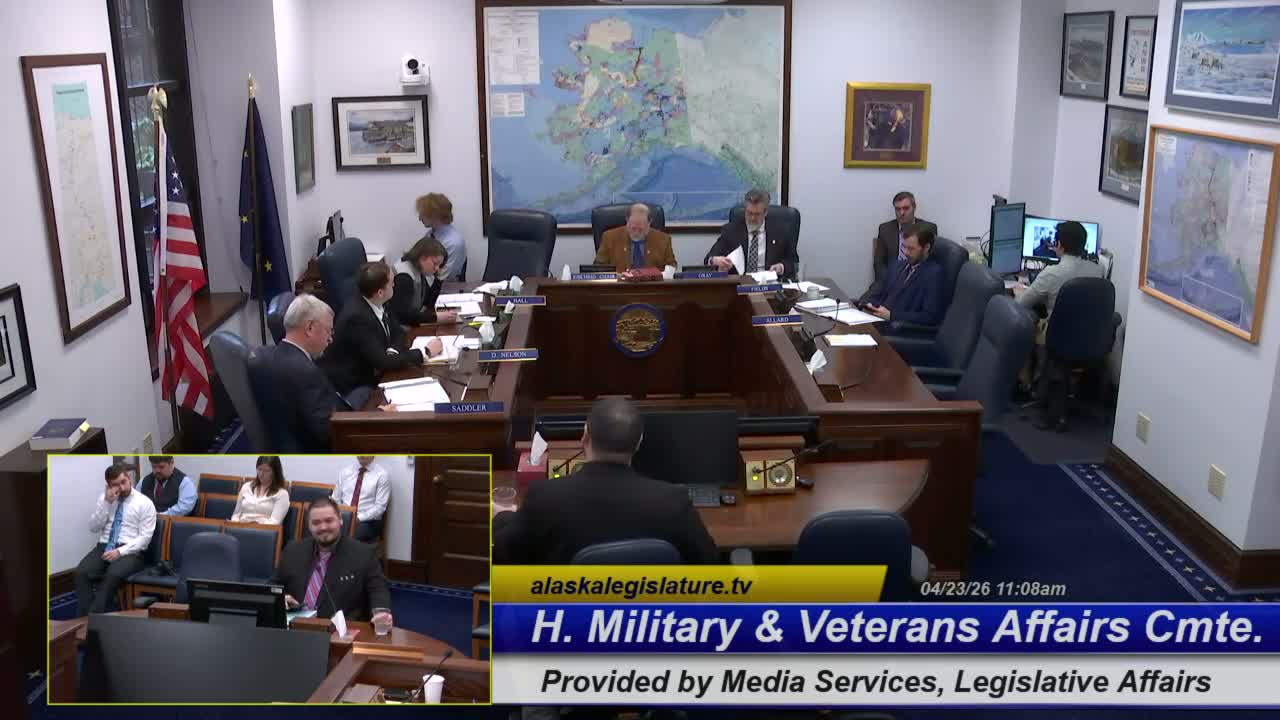
House Bill 299, presented April 23 by Bernard Otto (staff to Representative Staff), would establish the Veterans Justice Act to create a veterans sentencing program giving defendants with veteran status access to deferment and therapeutic interventions as they navigate the criminal justice system. Otto noted prior testimony from Phil Hokanson (chair of the Alaska Veterans Advisory Council) and advocacy groups.
Brock Connor, cofounder of the Veterans Defense Project, testified in support and emphasized implementation and cost issues. Connor said the bill is intended to "use existing resources within the court system and to better and more efficiently tap federal resources from the Veterans Administration," and cited Minnesota's experience: "In Minnesota... 115 veterans who were sentenced under our version of this statute, 91 has successfully completed their program and entered the dismissal of their charges," and that Minnesota reported an estimated net cost savings of roughly $1,000,000 a year.
Committee members had no additional recorded objections in the hearing; Representative Gray moved the bill out of committee with individual recommendations and attached fiscal notes, and the motion passed without objection. Committee materials and earlier testimony referenced amending Rules 35 and 43 of the Alaska Rules of Criminal Procedure to implement the program; specific fiscal estimates beyond the Minnesota example were not provided on the record.
What this means: HB 299 would create a statutory pathway to expand veterans treatment and diversion options statewide, formalizing a process to allow eligible veterans to receive treatment-oriented alternatives to traditional sentencing. Proponents argue such programs reduce recidivism and prison costs; the committee forwarded the bill for further consideration with fiscal notes and legal drafting authority.