Get Full Government Meeting Transcripts, Videos, & Alerts Forever!
Get email alerts on the Comprehensive Plan topic
No spam. Unsubscribe anytime.
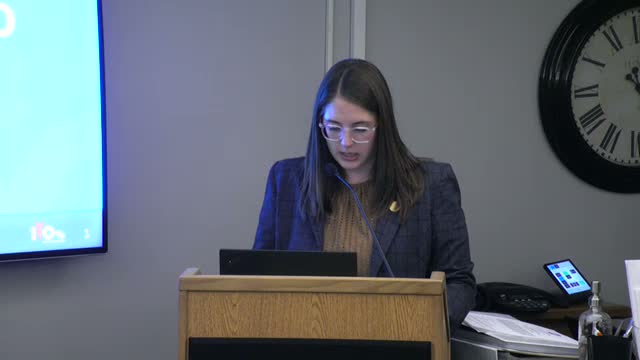
Planning and Zoning Commission narrows Advance Addison 2050 draft, removes deck‑park language
Summary
At a Sept. 16 work session, the Planning and Zoning Commission reviewed the Advance Addison 2050 draft, agreed to remove specific deck‑park language over the Dallas North Tollway, debated parking incentives versus enforcement, and questioned the methodology of the plan's land‑use fiscal analysis.
The Planning and Zoning Commission reviewed draft 6 of Advance Addison 2050 at a work session on Sept. 16, with staff seeking direction on outstanding public comments and technical clarifications.
Staff reiterated that the Unified Development Code "took effect September 1," and noted the plan is in phase 6 — the adoption meetings — after a public comment period in May that yielded several hundred responses, outreach signs and a postcard to every residential address in town, Leslie Nye, director of development and neighborhood services, told commissioners. Nye said staff will maintain a living approach to the document and suggested periodic demographic updates rather than real‑time revisions.
The commission focused on several contested items. On a proposal to include a high‑ambition "deck park" spanning the Dallas North Tollway, commissioners raised practical and jurisdictional concerns — including funding feasibility, safety, and the fact that Dallas and the North Texas Tollway Authority control parts of the corridor. One commissioner warned that leaving explicit deck‑park language could create unrealistic public expectations in the future; staff responded, "Consider it removed," after several commissioners signaled reluctance to keep the idea in the plan as prescriptive language.
Parking also generated extensive debate. Staff presented draft language on parking incentives intended to keep businesses viable and manage street parking in Addison Circle and other mixed‑use areas. Commissioners and local stakeholders discussed alternatives including dedicated short‑term commercial loading zones, commercial‑only curb spaces, partnerships with residential complexes, and stronger enforcement. ‘‘Enforcement is the only way that really works,’’ one commissioner said, arguing that financial incentives for residents are impractical and that adequate nearby street‑level parking is critical for ground‑floor businesses.
A central technical dispute concerned the plan's Land Use Fiscal Analysis (LUFA). One commissioner criticized the LUFA metric — described in the draft as net revenue per acre — as flawed because it allocates costs by acreage rather than by service drivers such as density and population, and because special assets (for example, the airport) post revenue into separate funds and thus distort general‑fund comparisons. The commissioner said the method "is a flawed measurement" and urged that fiscal analysis either be clarified substantially or located in a supplemental educational document rather than drive land‑use policy. Other commissioners asked staff to provide clearer methodology notes and to verify dataset sources before adoption.
Nye said staff will return with revisions and additional information and invited commissioners to submit redlines in the shared OneDrive folder; the commission will resume review at its Oct. 21 meeting, when it may take a recommendation to council.
The work session closed with a reminder that the comprehensive plan is intended as a community‑shaped, visionary document and that staff aims to balance ambition with clarity about costs and jurisdictional limits.